FBI Concealing Footage of Jan. 6 DNC Pipe-Bomber

(Tony Sifert, Headline USA) Revolver News has released an exhaustive “exclusive analysis” showing that the FBI has deliberately withheld footage of the Jan. 6 pipe bomber placing his bomb outside Democratic National Committee headquarters.

Footage from two different security cameras shows the alleged bomber sitting on two benches outside DNC headquarters before 8 p.m. on Jan. 5, 2021.

However, at the time during which the bomber is alleged to have placed the explosive, video from only one camera can be seen, making it difficult to determine the precise moment the bomb was placed (or whether it was placed at all).

“So Camera 1, unless it malfunctioned Epstein-style between 7:48pm and 7:52pm, would have caught the entire action sequence of the pipe bomber taking out and dropping off the DNC pipe bomb, totally unobstructed in a clear shot with nothing blocking Camera 1 at all!” Revolver reported.

Revolver alleged that the FBI is “hiding” this footage, and suggested that the revelation “adds one more disturbing layer to an apparent cover-up of key details relating to the January 6 pipe bomb by the FBI and the Justice Department.”

Given that the FBI is offering a $100,000 reward for information regarding the identity of the bomber, Revolver claimed that his identity “is one of the great unsolved mysteries of our time.”

Other suggestive information provided by Revolver includes the total absence of fingerprint or DNA evidence at the site of the drop and the involvement in the investigation of an FBI special agent-in-charge whose team had previously been involved in helping militia members procure explosive material.

“DC FBI Field Office’s Assistant Director-In-Charge on the night of the pipe bombs was the same FBI special agent-in-charge whose agents sold pipe bomb materials to a right-wing militia just one month before the 2020 election,” Revolver reported.

Revolver also questioned the role of the Secret Service in the investigation, in light of the fact that the Feds had withheld the location of vice-president-in-waiting Kamala Harris on Jan. 6.

Harris’s presumptive location remained a mystery until November 2021, at which point they revealed that Harris was supposed to be in the DNC building on Jan. 6.

BOOK: Former White House Chief John Kelly Spied on Trump’s Phone Calls

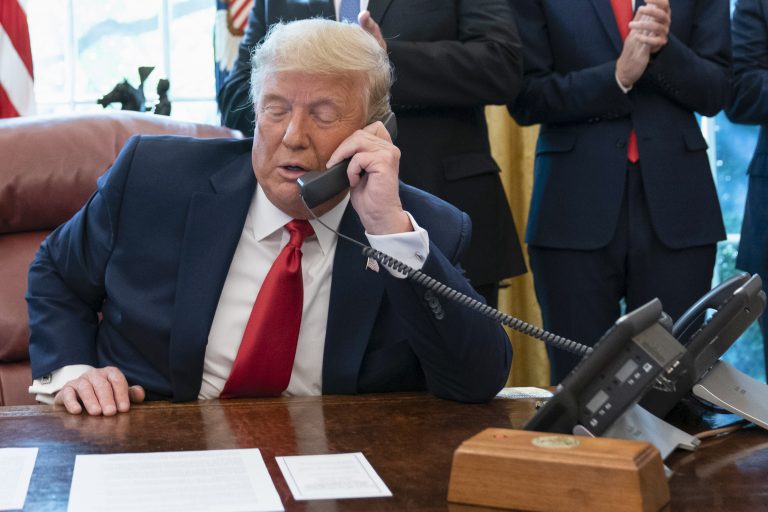
(Headline USA) Former White House chief of staff John Kelly secretly listened in on all of President Trump’s phone calls, according to the former president’s son-in-law Jared Kushner.

In his forthcoming book, Kushner alleged that Kelly, whom Trump fired in late 2018, spied on Trump’s phone calls frequently. Trump had no idea this was happening until incoming acting chief of staff Mick Mulvaney raised the issue in December 2018 just a couple of days before Kelly departed the White House.

“Before we departed, Mulvaney and I met with the president to discuss his upcoming schedule. Then Mulvaney handed Trump a document to sign,” Kushner recalled.

Mulvaney then told Trump, “This will end the practice Kelly started of listening to all of your phone calls.” He explained that Kelly “had given himself the ability to listen surreptitiously to the president’s calls.”

Trump was reportedly furious. “‘Kelly did what?’ the president asked, stunned at the invasion of privacy,” Kushner wrote.

Trump added, “End that immediately.”

Shortly after Kelly left, Trump issued an order preventing any other senior White House staff from eavesdropping on his calls, Kushner said.

According to prior reporting, Trump suspected that Kelly was keeping tabs on who called him, so he would advise contacts to avoid the White House switchboard.

A source familiar with the situation confirmed that Kelly did just that.

It was “wholly inappropriate for the chief — or anyone — to listen in on [Trump’s] calls without telling the president,” the source said, according to the New York Post.

Kelly and Kushner had a tense relationship from the very start of the Trump administration, when Kelly pulled Kushner’s security clearance despite the FBI finding no red flags with Kushner’s application.

Even after the FBI and White House personnel security office chief Carl Kline said Kushner could have the security clearance, Kelly delayed giving it to him because he was “concerned about how it would look,” Kushner alleged.

Hunter Biden Involved in 2018 Deal to Ship Ukrainian Grain to China

(Headline USA) Hunter Biden was involved in a 2018 deal to export Ukrainian grain to China, according to a document from his abandoned laptop.

The document shows Hunter’s signature on a Burisma board resolution dated July 27, 2018 regarding the “Sino Ukraine Silk Road Grain Port” project.

Burisma, a Ukrainian energy company, paid Hunter an estimated $1-million-per-year “consulting” fee beginning in April 2014—while his father, current President Joe Biden, was vice president in the Obama administration—and lasting until April 2019 after public scrutiny posed a potential setback for his dad’s newly-announced presidential campaign.

Hunter and seven other members of Burisma’s board of directors—including former CIA officer Joseph Cofer Black—authorized their adviser, Vadym Pozharskyi, to “represent all Chinese Potential Shareholders for development, negotiation, and contracting issues as well as operation management of the project ‘Sino Ukraine Silk Road Grain Port.’” 

There is no other mention of the venture on Hunter’s abandoned laptop. But the trove of some 128,000 emails has confirmed that he was involved in a number of foreign business deals that were conducted while his father was vice president.

In fact, Joe Biden may have been involved in a few of these deals himself, according to some of the documents.

At least one document makes a reference to giving “the Big Guy” a 10% cut in a deal with a Chinese energy conglomerate. “The Big Guy” has been confirmed to be Joe Biden by two of Hunter’s former business associates.

Joe Biden also met with at least 14 of the foreign business associates with whom Hunter was trying to strike deals.

One email confirms Joe Biden met with Phozarskyi, the adviser referenced in the China–Ukraine grain project. It shows Phozarskyi thanking Hunter for introducing him to then-Vice President Joe Biden in April 2015.

The Biden administration “categorically denied” that the president ever met with Pozharskyi. However, a copy of the dinner’s guest list confirmed his attendance.

“Dad will be there but keep that between us for now. Thanks,” Hunter wrote to one guest a few weeks before the meeting.

China Fires Missiles near Taiwan over Pelosi Visit

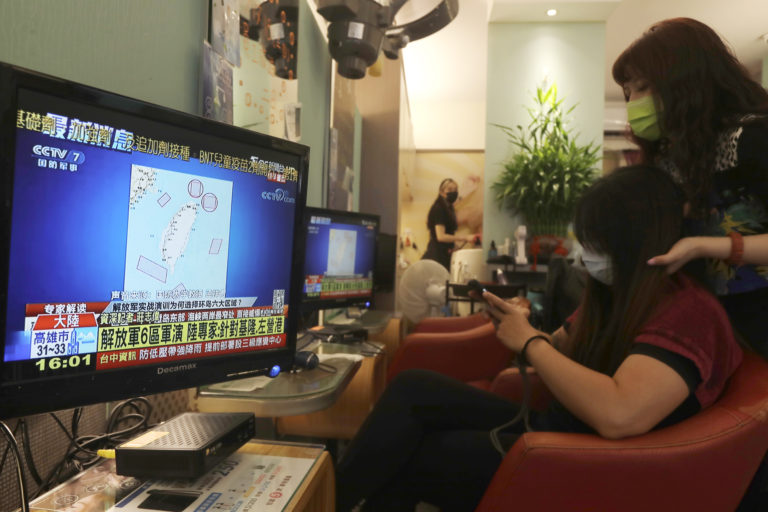
(Headline USA) Taiwan canceled airline flights Thursday as China fired missiles near the self-ruled island in retaliation for House Speaker Nancy Pelosi‘s grandstanding, self-serving visit, adding to the risk of disruptions in the flow of Taiwanese-made processor chips needed by global telecom and auto industries.

China ordered ships and planes to avoid military drills that encircled Taiwan, which the mainland’s ruling Communist Party claims as part of its territory. The Hong Kong newspaper The South China Morning Post called the drills an “effective Taiwan blockade.”

Beijing announced “live-fire exercises” after Pelosi arrived Tuesday for a one-day visit, defying warnings from Beijing and the White House. It earlier banned imports of hundreds of Taiwanese food items including fish, fruit and cookies.

The two sides, which split in 1949 after a civil war, have no official ties but one of the world’s busiest technology and manufacturing relationships.

Taiwanese companies are preparing for Chinese shows of force and possible trade disruptions beyond the four days Beijing says its drills will last, said economist Alicia Garcia Herrero of Natixis CIB, who was meeting businesspeople in the island’s capital, Taipei.

“They are starting to think of solutions, re-routing, delaying orders until they have more clarity,” said Garcia Herrero. “I think people are realizing this is not just a four-day thing.”

On Thursday, at least 40 flights to and from Taiwan were canceled, according to the China Times newspaper. It cited Taoyuan Airport in the capital, Taipei, as saying cancellations were “not necessarily” related to the military drills.

There was no immediate indication of the possible impact on shipping, which has the potential to jolt the global economy.

Taiwan produces more than half the processor chips used in smartphones, autos, tablet computers and other electronics. Chip sales to Chinese factories that assemble most of the world’s consumer electronics rose 24.4% last year to $104.3 billion.

Any significant disruption would “create shockwaves to global industries,” said Rajiv Biswas of S&P Global Market Intelligence in an email.

That could push up already high inflation in the United States and Europe the same way prices spiked after the coronavirus disrupted shipping in 2020-21, said Garcia Herrero.

“If ports can’t operate normally, we can see the consequences,” she said.

The ruling party’s military wing, the People’s Liberation Army, said it carried out “precision missile strikes” in the 100-mile-wide Taiwan Strait that separates the island from the mainland but gave no details about the location.

Taiwan’s Defense Ministry said it tracked the firing of missiles at waters northeast and southwest of the island.

China’s foreign ministry rejected suggestions the drills were dangerous and said the United States was to blame for tension.

“China’s practice is in line with international law,” said a ministry spokeswoman, Hua Chunying.

Washington has no official ties with Taiwan but maintains extensive informal relations and is obligated by federal law to see that the island has the means to defend itself. Pelosi was the highest-ranking elected American official to visit the island since then-Speaker Newt Gingrich in 1997.

Chinese President Xi Jinping‘s government accuses Washington of supporting formal independence for Taiwan, a step Beijing says would lead to war. The Biden administration says it doesn’t support independence but wants the dispute to be resolved peacefully.

Some flights to the mainland would detour through Hong Kong. Taiwan’s transport minister, Wang Kwo-tsai, said Wednesday at a news conference.

Business between the two sides has grown even as Xi’s government stepped up pressure, sending growing numbers of fighter planes and bombers to fly around Taiwan to intimidate its government.

Two-way trade soared 26% last year to $328.3 billion. Taiwan said chip sales to Chinese factories rose 24.4% to $104.3 billion.

Fruit, fish and other foods are a small part of Taiwan’s exports to China, but the ban hurts areas that are seen as supporters of President Tsai Ing-wen.

Beijing has used import bans on bananas, wine, coal and other goods as leverage in disputes with Australia, the Philippines and other governments.

Adapted from reporting by the Associated Press

GOP Hopes to Flip Nashville Seat as Dems Vie to Face Tenn. Governor

(Headline USA) Tennessee Republicans on Thursday will settle a nine-way primary in a reconfigured congressional district in Nashville they are hoping to flip, while Democrats will choose their nominee for governor in a long-shot bid to topple the GOP incumbent as the state enters into what many project will be a red-wave election season.

Democrats are hoping that identity politics will give them the edge needed to oust Republican Gov. Bill Lee.

Two of three Democratic candidates for governor would be the state’s first black Democratic nominee for that office; the third is a physician running for political office for the first time, spurred by Lee’s hands-off response to the COVID-19 pandemic.

However, Lee is running unopposed and will have a strong advantage in the general election of a state that has not elected a Democrat to statewide office since 2006.

Redrawn congressional districts helped put Tennessee among the states where Republicans hope to flip a seat in a push to reclaim control of the U.S. House, providing the main drama in Tennessee’s Thursday primaries. Tennessee holds the only statewide elections nationally that day.

Nashville’s 5th Congressional District drew heavy interest from Republicans after GOP state lawmakers carved Democratic-tilted Nashville into three districts, favoring their party in each seat.

The longtime incumbent in the 5th District, Democratic U.S. Rep. Jim Cooper, decided to retire, saying there was “no way” he could win reelection under the new redistricting maps.

The new district favored Republican Donald Trump over Democrat Joe Biden by 12 percentage points in 2020.

In the other two Nashville-area districts, the Republican incumbents don’t have primary opponents. The new maps weight their districts in their favor.

In the 5th, state Sen. Heidi Campbell has no opponent in her Democratic primary and will take on the Republican winner in November. Two Democrats face off in the new 6th District, which includes more of Nashville, where Republican U.S. Rep. John Rose has a huge fundraising edge.

There is also a full slate of state legislative primary races. Additionally, Thursday is general election night for many local contests. The highlight of those is in Shelby County—which encompasses Memphis—where Republican District Attorney Amy Weirich faces a challenge from Democratic civil rights lawyer Steven Mulroy.

At least in Nashville, anyone who turns on a TV is more likely to see ads for a Republican running for the 5th Congressional District than a candidate for anything else.

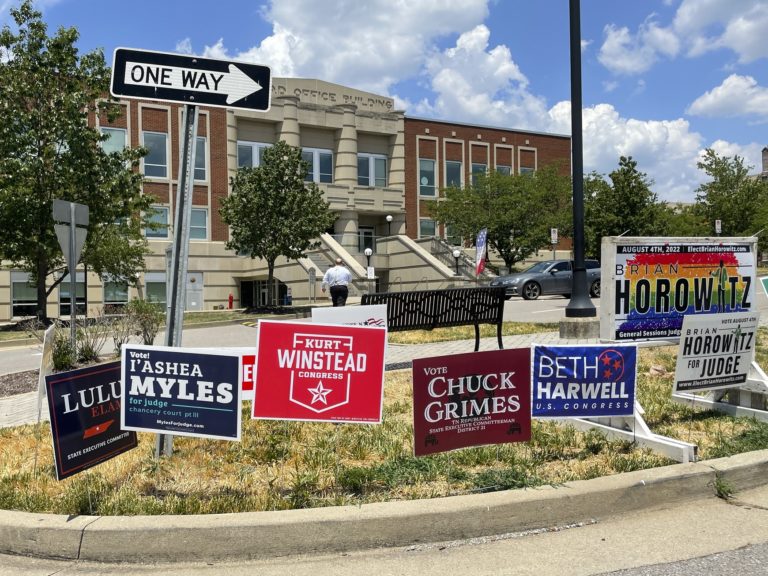
Competing TV attacks—mostly run by generically named outside groups with mega-wealthy donors—are trying to sow doubt about the conservative resumes of the three top fundraising Republican candidates: former Tennessee House Speaker Beth Harwell, retired Tennessee National Guard Brig. Gen. Kurt Winstead and Maury County Mayor Andy Ogles.

Fellow GOP candidate Jeff Beierlein, who flew Blackhawk helicopters in the Army, bought TV ad time to decry the mudslinging.

Other candidates in the race are Geni Batchelor, a retired small-business owner; former state legislative staffer Tres Wittum; Natisha Brooks, who runs a home-school academy; Timothy Lee, a paramedic; and Stewart Parks, a real-estate businessman.

The election marks the first time voters get a say over a seat that had been subject to months of Republican political brokering.

Political infighting over the carefully crafted district—it meanders through six counties—led the state Republican Party to boot three candidates off the ballot, including Trump’s pick, former State Department spokesperson Morgan Ortagus. One of the booted candidates, video producer Robby Starbuck, is attempting a write-in campaign.

The governor, meanwhile, can relax on primary night. He avoided a Republican challenge. The last governor to enjoy an unopposed primary was Democratic Gov. Ned McWherter in 1990, said Tennessee legislative historian Eddie Weeks.

Democrats will be sorting out who will face Lee in November. Memphis City Councilmember JB Smiley Jr. or Memphis community advocate Carnita Atwater would be the first black Democratic nominee for governor in the state’s history.

Critical-care physician Jason Martin, who lives in Nashville, joined the race as a prominent critic of Lee’s pandemic response. Martin has decidedly outraised and outspent the next-highest fundraiser, Smiley.

Weeks said he could not find an African–American nominee for governor, Democrat or Republican, in state history. Yet, he noted that in 1876, William Yardley, an African–American Knoxville official later elected to the county court, ran as an independent when the Republican Party declined to nominate a candidate for governor. Democratic Gov. James Davis Porter won reelection that year.

Tennessee had a black Democratic nominee for U.S. Senate as recently as 2020.

Lee, meanwhile, defeated a Democratic opponent by 21 percentage points in 2018. He goes into November with a huge fundraising edge and the power of incumbency.

Adapted from reporting by the Associated Press

Hawley Is Lone Sen. to Vote ‘No’ on NATO Expansion

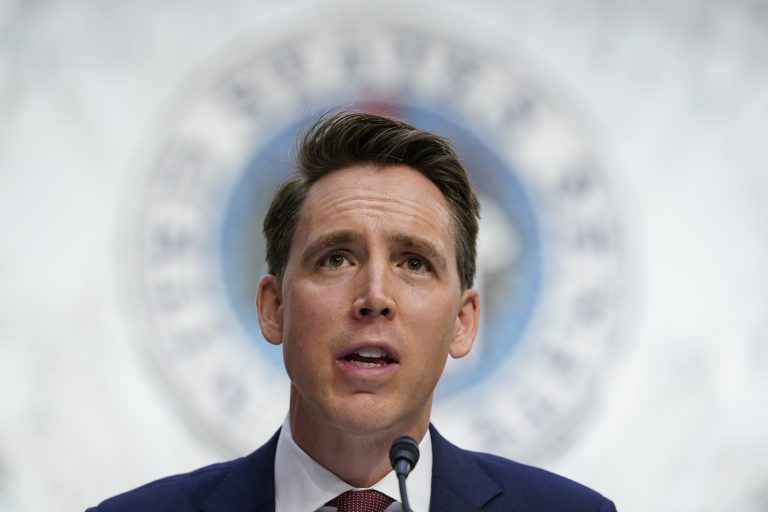
(Tony Sifert, Headline USA) Sen. Josh Hawley, R-Mo., was the lone senator to vote against expanding the North Atlantic Treaty Organization by incorporating Sweden and Finland, The Hill reported.

Senate Resolution 646, which “welcomes Finland and Sweden’s decision to join [NATO],” passed through the Senate on a 95-1 vote, with Sen. Rand Paul, R-Ky., voting “present” after the failure of an amendment by which he sought to secure Congressional authority over declarations of war.

“I sure do hear a lot of people who care a lot about other nations’ borders but don’t seem to care a whole lot about ours,” Hawley told Tucker Carlson after the vote was announced.

Hawley’s explanation of his vote on the Senate floor went viral Wednesday after the senator posted a clip of the speech to his Twitter account.

“Finland and Sweden want to expand NATO because it is in their national security interest to do so—and fair enough,” Hawley said. “The question that should properly be before us, however, is: is it in the United States’ interest to do so?”

Hawley went on to accuse the neoliberal uniparty of attempting to engage in nation-building on behalf of the “liberal world order” and at the expense of American citizens.

In an essay published in National Interest, Hawley suggested that NATO is a one-way street in which Europeans contribute very little.

“Even absent armed conflict, NATO expansion would almost certainly mean more U.S. forces in Europe for the long haul, more military hardware devoted there, and more dollars spent—to the detriment of our security needs in Asia, to say nothing of needs at home,” Hawley wrote.

Sandy Hook Attorney: J6 Committee Asks for Alex Jones Texts after Accidental Leak

(Headline USA) An attorney representing two parents who sued popular right-wing pundit Alex Jones over his statements about the Sandy Hook massacre said Thursday that House Democrats’ partisan Jan. 6 committee has requested two years’ worth of records from Jones’s phone that he obtained by accident from Jones’s legal defense.

Attorney Mark Bankston said in court that the committee investigating the uprising at the U.S. Capitol has requested the digital records.

The House committee did not immediately return a request for comment.

A day earlier, Bankston revealed in court that Jones’s attorney had mistakenly sent Bankston the last two years’ worth of texts from Jones’s cellphone.

Jones’s attorney, Andino Reynal, sought a mistrial over the mistaken transfer of records and said they should have been returned and any copies destroyed.

He accused the Bankston of trying to perform “for a national audience.”

Reynal said the material included a review copy of text messages over six months from late 2019 into the first quarter of 2020.

Attorneys for the Sandy Hook parents claimed they followed Texas’s civil rules of evidence and that Jones’s attorneys missed their chance to properly request the return of the records.

“Mr Reynal is using a fig leaf [to cover] for his own malpractice,” Bankston said.

Bankston said the records mistakenly sent to him included some medical records of plaintiffs in other lawsuits against Jones.

“Mr. Jones and his intimate messages with Roger Stone are not protected,” Bankston said, referring to former President Donald Trump’s longtime ally.

Far-left magazine Rolling Stone, quoting unnamed sources, reported Wednesday evening that the Jan. 6 committee was preparing to request the data from the parents’ attorneys to assist in its illegitimate investigation of the uprising.

A jury in Austin, Texas, is deciding how much Jones should pay to the parents of a child killed in the 2012 school massacre because of Infowars’s claims that the shooting was a hoax created by advocates for gun control.

Jones, who was denied a jury trial to determine his guilt, is likely to appeal regardless as judge-determined verdict appeared to ignore several of the basic parameters needed in establishing defamation.

Among those requirements are that the plaintiff be able to prove statements were false, were made with malicious intent and caused material harm—more than just psychological distress. Jones never mentioned any of the Sandy Hook victims or familys by name in his speculative theorizing about possible conspiracies during the Obama administration, and several proven facts have borne out in his favor, such as the FBI having visited the killer beforehand.

Meanwhile, the Jan. 6 inquisition continues its effort to advance baseless anti-Trump conspiracies of its own surrounding the mostly peaceful protest during Congress’s joint session to certify the Electoral College vote in the 2020 presidential election.

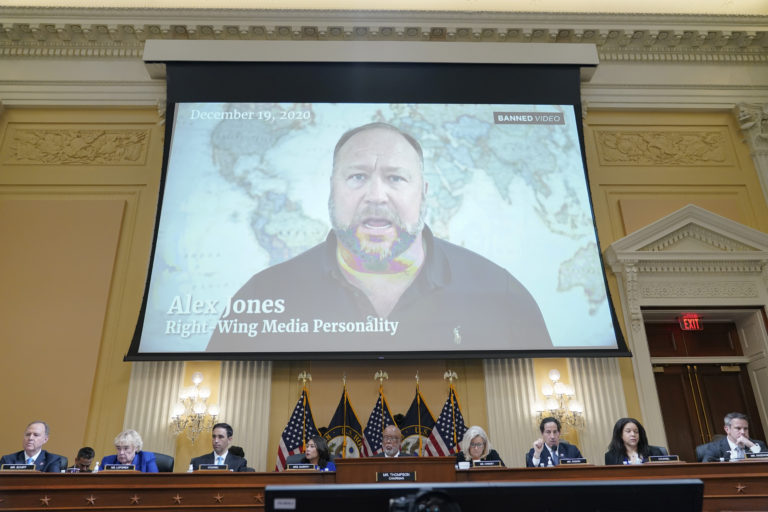
Last month, the J6 committee showed graphic and violent text messages and played videos of right-wing figures, including Jones, and others vowing that Jan. 6 would be the day they would fight for Trump.

The committee first subpoenaed Jones in November, demanding a deposition and documents related to his efforts to promote skepticism about the 2020 election and the “Save America” rally that preceded the breach of the Capitol.

In the subpoena letter, Rep. Bennie Thompson,D-Miss., said Jones helped organize the Jan. 6 rally at the Ellipse. He also wrote that Jones urged his listeners to go to Washington for the rally and march from the Ellipse to the Capitol. Thompson also wrote that Jones “made statements implying that you had knowledge about the plans of President Trump with respect to the rally.”

The nine-member panel was especially interested in what Jones said shortly after Trump’s now-infamous Dec. 19, 2020, tweet in which he told his supporters to “be there, will be wild!” on Jan. 6.

“You went on InfoWars that same day and called the tweet ‘One of the most historic events in American history,’” the letter continued.

In January, Jones was deposed by the committee in a hourslong, virtual meeting in which he said he exercised his Fifth Amendment right against self-incrimination “almost 100 times.”

Adapted from reporting by the Associated Press

‘Atlantic’ Snowflake Declares it’s Racist to Want Peace and Quiet

(Ezekiel Loseke, Headline USA) Xochitl Gonzales recently wrote a lengthy editorial about the racist and imperial nature of silence in The Atlantic.

The article’s central point is a differentiation between “living” and “residing.”

“Residing,” per Gonzales, is the way upper-class people exist. It is the quiet and hushed existence she was forced to endure with great discomfort at an Ivy League College. Residing is fundamentally “WASPY” (of White-Anglo Saxon-Protestants).

Residing creates an environment where, if one takes to hooting and hollering in the quiet space of a library or is yelling boisterously in their dormitory, someone trying to work will ask you to calm down. It is sanitary and disciplined. One is expected to control their volume. This is colonial oppression, according to Gonzales.

“Living,” per Gonzales, is fundamentally lower class. It is the life of ethnic and religious minorities. Living is the capacity to blare loud music through the headphones of a Walkman in the quiet space of a library. It is the ability to sit in one’s dorm room with their friends, loudly arguing about the best rapper of all time while ignoring the fact that someone is trying to sleep amidst the noise pollution.

“Living” requires a different environment than “residing.” “Living” environments are the environment of true freedom, according to Gonzales. “Living” environments are unsanitized, undisciplined and incapable of controlling their own sounds.

Gonzales lists a series of racial and violent acts of her being asked to be quiet for the comfort of others to demonstrate this oppression:

  • Once she and her friends were being loud at his Ivy league school as others were trying to sleep, and someone asked them to be quiet.
  • After college, she and her friends were blaring a radio while eating takeout, and someone knocked on her door and asked them to be quiet.
  • Once, she and her friends were too loud at a brunch in a fancy hotel and were asked to be considerate of those around them.

“In those moments, I felt hot with shame and anger, yet unable to articulate why,” Gonzales bemoaned.

“It took me years to understand that, in demanding my friends and I quiet down, these students were implying that their comfort superseded our joy. And in acquiescing, I accepted that.”

“Living” people require the ability to inconsiderately bombard those around them with loud noises if they are to “live.” “Residing” people oppress living people by asking them to be considerate of our need to work and sleep at regular hours.

SCOTUS Rejection of NY Law Paves Way for Major 2nd Amendment Fights

(Headline USA) A recent Supreme Court ruling that restored the gun rights of New Yorkers may upend firearms restrictions across the country as court battles loom over everything from bans on AR-15-style guns to age limits.

The decision handed down in June already has led one judge to temporarily block a Colorado town from enforcing a ban on the sale and possession of certain semi-automatic weapons.

The first major gun decision in more than a decade, the ruling could dramatically reshape gun laws in the U.S. even as Democrats try to exploit recent tragedies in their longstanding efforts to disarm law-abiding citizens of their firearms—and constitutional rights.

“The gun rights movement has been given a weapon of mass destruction, and it will annihilate approximately 75% of the gun laws eventually,” said Evan Nappen, a New Jersey gun rights attorney.

The Supreme Court decision struck down a New York law requiring people to demonstrate a particular need to get a license to carry a concealed gun in public, saying it violates Second Amendment rights.

Several other states including California, Hawaii, Maryland, Massachusetts, New Jersey and Rhode Island have similar laws expected to be directly impacted by the ruling.

In Massachusetts, for example, police chiefs can no longer deny or impose restrictions on licenses just because the applicant doesn’t have a “good reason” to carry a gun. New York quickly passed a new concealed-weapon law, but Republicans there predict it will also end up being overturned.

In its New York ruling, the high court’s conservative majority also changed a test lower courts had used for evaluating challenges to gun laws.

Judges should no longer consider whether the law serves public interests like enhancing public safety, the opinion authored by Justice Clarence Thomas said. Instead, they should only weigh whether the law is “consistent with the Second Amendment’s text and historical understanding.”

“Basically, the Supreme Court has given an invitation for the gun lobby to file lawsuits against virtually every gun law in America,” said Jonathan Lowry, chief counsel and vice president at the anti-gun group Brady.

The Supreme Court has ordered lower courts to take another look at several other cases under the court’s new test. Among them: laws in California and New Jersey that limit the amount of ammunition a gun magazine can hold and a 2013 ban on “assault weapons” in Maryland.

Gun rights groups are also challenging similar bans in California, New York, New Jersey and Delaware.

“The rifles at issue in this case are the sorts of bearable arms in common use for lawful purposes that responsible and peaceable people across the United States possess by the millions,” a New Jersey lawsuit brought in June by the Firearms Policy Coalition says, referencing the language of the Second Amendment. “And they are, moreover, exactly what they would bring to service in militia duty, should such be necessary.”

The ruling also has come up in challenges to restrictions on gun possession for 18- to 20-year-olds in Texas and Pennsylvania. And it has been cited in a case challenging a federal ban on gun possession for people convicted of nonviolent crimes punishable by more than a year behind bars, as well as a prohibition on concealed guns on the subway in Washington, D.C.

In addition, a gun rights group is suing Colorado over the state’s 2013 ban on magazines that hold more than 15 rounds, saying the high court ruling reinforces the group’s argument that it infringes on Second Amendment rights.

And the ruling even has left-wing, soft-on-crime public defenders in New York City asking judges to drop gun possession cases as part of their broader effort to relax criminal-justice laws.

Not all those lawsuits will necessarily be successful. The Texas attorney general, for example, argues the Supreme Court ruling doesn’t affect the state’s age limit law, and more state and local governments can certainly defend their gun laws as being in line with U.S. history.

Adam Skaggs, chief counsel and policy director at the Giffords Law Center to Prevent Gun Violence, predicted that when the dust settles, only laws “along the margins” will eventually be struck down.

“Most judges are going to see these for what they are, which is overreaching and lacking in any merit,” he said.

Backers of gun restrictions can also look to a concurring opinion from Justice Brett Kavanaugh.

Joined by Chief Justice John Roberts, Kavanaugh stressed that the Second Amendment does allow for a “variety” of gun regulations. He cited the use of background checks and mental health records as part of a licensing process to carry a gun and noted that states can forbid the carrying of firearms in “sensitive places” such as schools and government buildings.

But the Colorado decision handed down last month, while still early in the process, was a rosy sign for gun rights groups.

U.S. District Court Judge Raymond Moore, who was nominated by President Barack Obama, said he was sympathetic to the town’s goal but didn’t know of “historical precedent” for a law banning “a type of weapon that is commonly used by law-abiding citizens for lawful purposes,” so the gun rights groups have a strong case against the ordinance.

Encouraged by that decision, Taylor D. Rhodes, the executive director of the Rocky Mountain Gun Owners, told the Associated Press that his group was considering going after other gun measures in Colorado, where Democrats hold the majority in the state legislature and the governor’s office.

Referring to the Supreme Court’s ruling, Rhodes said: “The Bruen decision gave us a 4-ton wrecking ball.”

Adapted from reporting by the Associated Press

White BLM Activist Who Abused Funds Threatens Reporters Who Exposed Him

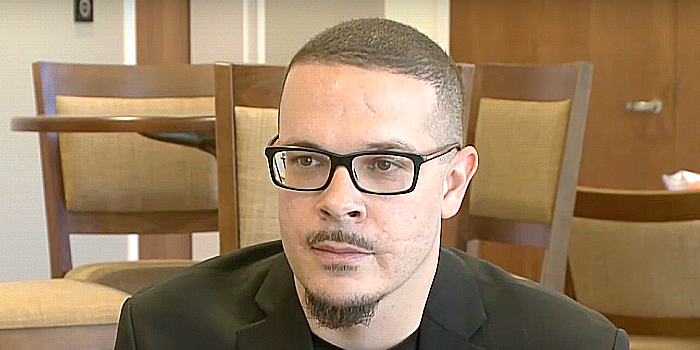
(Tony Sifert, Headline USA) Notorious BLM grifter and alleged black man, Shaun King, has threatened to “dox” two New York Post reporters who penned articles detailing how lavishly he has spent money donated to his Grassroots Law PAC, according to The Daily Beast.

In a series of posts on Instagram and Facebook, King “directed his legion of supporters to send identifying personal information on the two reporters, including of their homes and families,” the Post reported.

King then warned both Kevin Sheehan and Isabel Vincent that he had their addresses and planned to make their lives uncomfortable.

“I know where you live . . . where your family lives,” King wrote. “You can attack me . . . but I’m going to at least make it uncomfortable for you — you aren’t going to post about my personal life without consequence.”

In a July 21, 2021, story published by the Post, Vincent reported on King’s purchase of a $842,000 lakefront home in North Brunswick, New Jersey.

Vincent also reported that King’s spending has been criticized by other activists, including Samaria Rice, whose son was killed by police in Cleveland in 2014.

Earlier this week, Sheehan co-wrote an article with the Post‘s Bruce Golding in which he detailed King’s attempts to justify the purchase of a $40,000 guard dog to protect him from “white supremacists.”

On his The Breakdown podcast Wednesday, King again threatened reporters who look into his finances, the Beast reported.

“Entire media outlets are using misinformation and dangerous information about me to make money to spread stories to harm me,” King wrote. “And I’m just at a point in my life where I’m going to have to redistribute that pain back to them.”