Conservative College’s Curriculum Gets Foothold in S. Dakota

(Headline USA) A few days before middle school teacher Shaun Nielsen joined a work group to develop South Dakota’s social studies standards, he got a thick package in the mail.

Sent from Hillsdale, Michigan, home to a conservative private college that is on the frontlines of a cultural war with activists trying to implant a leftist agenda in schools, it contained materials that would ultimately form what the state’s public schools students could be expected to learn about American history and civics.

“Whoa — these are already written,” Nielsen remembers thinking as he opened the document this spring.

Hillsdale College, which has sought in recent years to “revive the American tradition of K-12 education” by fostering a nationwide network of schools, won new prominence when then-President Donald Trump tapped the school to help develop a “patriotic education” project. Now, in a sign of Hillsdale’s growing influence in public education, South Dakota has proposed statewide standards that contain distinct echoes of Hillsdale’s material.

While Republican governors such as Tennessee’s Bill Lee and Florida’s Ron DeSantis have embraced Hillsdale’s education for K-12 students, South Dakota Gov. Kristi Noem has been perhaps the most enthusiastic. Larry Arrn, the school’s president, even said in a speech last year that Noem had “offered to build us an entire campus in South Dakota.”

That doesn’t appear to be in the works. But it was Noem, widely seen as a 2024 White House hopeful, who turned to former Hillsdale politics professor William Morrisey to develop the state’s social studies standards. The state paid him $200,000, and he tapped Hillsdale’s material, according to members of the standards commission.

The college played an integral part in Trump’s “1776 Report,” a conservative response to work like the highly flawed and historically inaccurate New York Times’ “1619 Project,” which re-examined the founding of the United States with the institution of slavery at the center. Hillsdale followed up by producing “The Hillsdale 1776 Curriculum,” which offers nearly 2,400 pages of lesson plans on American history.

South Dakota’s proposed standards released in mid-August align with the “1776 Curriculum.” Both emphasize the ideals of the country’s founders as an argument for American exceptionalism — an idea popular in conservative circles that the U.S. is uniquely worthy of universal praise.

The documents both define patriotism similarly, as preserving the “good” of the country while correcting its flaws. They teach that progressivism conflicts with the nation’s founding ideals, and assert that most of the founders — including such slave owners as George Washington, Thomas Jefferson and James Madison — wanted to end slavery.

Morrisey declined an interview, and Hillsdale did not grant a request to interview a member of its K-12 Education Office.

Noem’s administration referred questions to Ben Jones, who oversees the South Dakota Historical Society and worked on the commission to develop the standards. Jones defended the scholarship at Hillsdale as respected in higher education and said Morrisey brought the commission a “generic” version of U.S. history that could be found in most textbooks.

“Frankly, it’s a logical fallacy to say that something is bad because it’s associated with this group that I don’t agree with over this other thing,” he said of criticism of Hillsdale.

Jones pointed out that Morrisey’s draft included descriptions of how the first Africans were enslaved and brought to the colonies and how the U.S. broke treaties with Native American tribes.

“The good, the bad, the ugly was all there,” he said.

Jones added that the group discussed and debated the standards over several meetings and by the end, “my sense was that we all made this very much our own.”

When Noem’s administration formed the 15-person commission, it chose three people, including Nielsen, currently certified to teach in South Dakota public schools. The group decided which grade levels should learn the standards and added South Dakota and Native American components to the proposal, Nielsen said.

As the proposal became public last month, Nielsen said he felt conflicted. He said he is a conservative but is careful to separate his political opinions from his classroom teaching. He said he agreed with Noem’s desire to make South Dakota a national leader in social studies education and even with much of the content it covered.

Ultimately, he said, he decided to speak out against the standards because they didn’t originate with South Dakota educators.

“The ‘1776 curriculum’ — it’s pretty much close to that,” he said.

“When you’re handed a set of standards to approve, it’s not a collaborative process at all,” he added. The standards, he worried, were not written with the practical needs of a classroom in mind.

Prominent voices among South Dakota educators agree. The standards — which will be subjected to public hearings this fall before the governor-appointed Board of Education Standards decides whether to adopt them — have been greeted coolly by organizations representing teachers, school boards and school administrators.

“It’s coming from a private, out-of-state college,” said Tim Graf, the superintendent of Harrisburg School District outside Sioux Falls. “I just don’t want it to be political in any way.”

Jennifer Lowery, the superintendent at Tea Area School District, worried teachers for younger grade levels would have to spend more time on social studies at the expense of foundational skills like basic math and reading.

Noem said the new standards are the best in the nation, calling them “a true, honest, and balanced approach to American history that is not influenced by political agendas.” Hillsdale College used similar language when it launched its curriculum.

Jonathan Zimmerman, an education historian at the University of Pennsylvania, suggested high school students could benefit from analyzing the “1619 Project” alongside the Trump administration’s “1776 Report” and learning how to evaluate and debate them. That’s unlikely in South Dakota, since Noem has moved to block teachings like the “1619 Project” from public schools.

“People like Kristi Noem are correct when they say that the fundamental narrative of America is under challenge like never before,” Zimmerman said. “I just think it’s a good challenge.”

Adapted from reporting by the Associated Press
POLL: Americans Give Health Care System Failing Mark

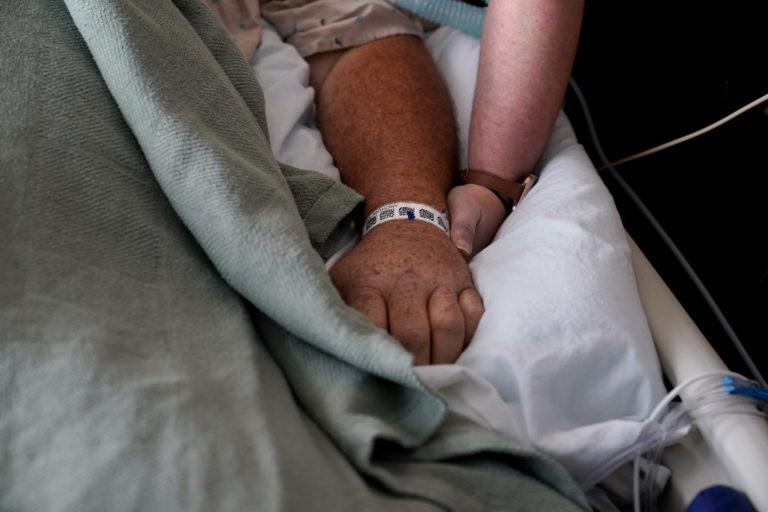
(Headline USA) When Emmanuel Obeng–Dankwa is worried about making rent on his New York City apartment, he sometimes holds off on filling his blood pressure medication.

“If there’s no money, I prefer to skip the medication to being homeless,” said Obeng–Dankwa, a 58-year-old security guard.

He is among a majority of adults in the U.S. who say that health care is not handled well in the country, according to a new poll from the Associated Press-NORC Center for Public Affairs Research.

The poll reveals that public satisfaction with the U.S. health care system is remarkably low, with fewer than half of Americans saying it is generally handled well. Only 12% say it is handled extremely or very well. Americans have similar views about health care for older adults.

Overall, the public gives even lower marks for how prescription drug costs, the quality of care at nursing homes and mental health care are being handled, with just 6% or less saying those health services are done very well in the country.

“Navigating the American health care system is exceedingly frustrating,” said A. Mark Fendrick, the director of the University of Michigan Center for Value-Based Insurance Design. “The COVID pandemic has only made it worse.”

More than two years after the pandemic’s start, health care worker burnout and staffing shortages are plaguing hospitals around the country. And Americans are still having trouble getting in-person medical care after health centers introduced restrictions as COVID-19 killed and sickened millions of people around the country, Fendrick said.

In fact, the poll shows an overwhelming majority of Americans, nearly 8 in 10, say they are at least moderately concerned about getting access to quality health care when they need it.

Black and Hispanic adults in particular are resoundingly worried about health care access, with nearly 6 in 10 saying they are very or extremely concerned about getting good care. Fewer than half of white adults, 44%, expressed the same level of worry.

Racial disparities have long troubled America’s health care system. They have been abundantly clear during the COVID-19 pandemic, with black and Hispanic people dying disproportionately from the virus. Black and Hispanic men also make up a disproportionately high rate of recent monkeypox infections.

Fifty-three percent of women said they are extremely or very concerned about obtaining quality care, compared to 42% of men.

While Americans are united in their dissatisfaction with the health care system, that agreement dissolves when it comes to solutions to fix it.

About two-thirds of adults think it is the federal government’s responsibility to make sure all Americans have health care coverage, with adults ages 18 to 49 more likely than those over 50 to hold that view. The percentage of people who believe health care coverage is a government responsibility has risen in recent years, ticking up from 57% in 2019 and 62% in 2017.

Still, there’s not consensus on how that coverage might be delivered.

About 4 in 10 Americans say they support a single-payer health care system that would require Americans to get their health insurance from a government plan. More, 58%, say they favor a government health insurance plan that anyone can purchase.

There also is broad support for policies that would help Americans pay for the costs of long-term care, including a government-administered insurance plan similar to Medicare, the federal government’s health insurance for people 65 or older.

Retired nurse Pennie Wright, of Camden, Tennessee, doesn’t like the idea of a government-run health care system.

After switching to Medicare this year, she was surprised to walk out of her annual well-woman visit, once fully covered by her private insurance plan, with $200 worth of charges for a mammogram and a pap smear.

She prefers the flexibility she had on her private insurance plan.

“I feel like we have the best health care system in the world, we have a choice of where we want to go,” Wright said.

A majority of Americans, roughly two-thirds, were happy to see the government step in to provide free COVID-19 testing, vaccines and treatment. Roughly 2 in 10 were neutral about the government’s response.

The government’s funding for free COVID-19 tests dried up at the beginning of the month. And while the White House says the latest batch of recommended COVID-19 boosters will be free to anyone who wants one, it doesn’t have money on hand to buy any future rounds of booster shots for every American.

Eighty percent say they support the federal government negotiating for lower drug prices. President Joe Biden this summer signed a landmark bill into law allowing Medicare to negotiate the price of prescription drugs. The move is expected to save taxpayers as much as $100 billion over the next decade.

“Medication costs should be low, to the minimum so that everyone can afford it,” said Obeng-Dankwa, the Bronx renter who has trouble paying for his medication. “Those who are poor should be able to get all the necessary health they need, in the same way someone who also has the money to pay for it.”

The poll of 1,505 adults was conducted July 28-Aug. 1 using a sample drawn from NORC’s probability-based AmeriSpeak Panel, which is designed to be representative of the U.S. population. The margin of sampling error for all respondents is plus or minus 3.6 percentage points.

Adapted from reporting by the Associated Press
Likely Special Master OKed FBI’s Phony FISA Warrants in Russia Hoax

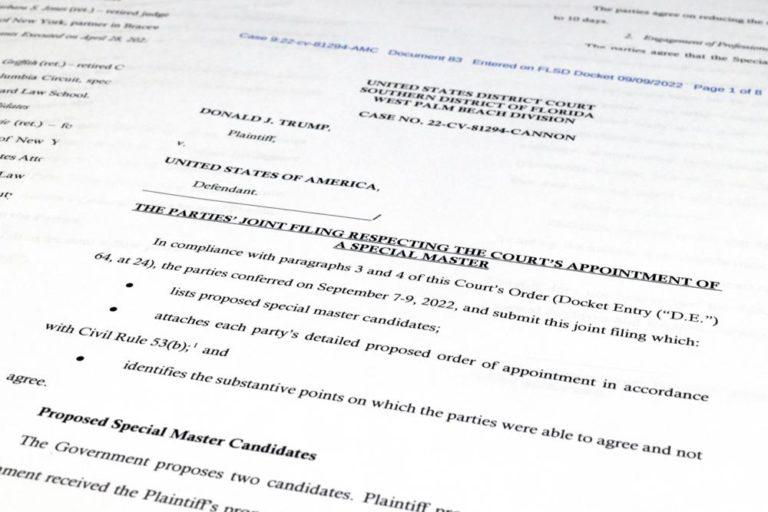
(Jacob Bruns, Headline USA) In a filing earlier this week, the Department of Justice indicated that it would accept Donald Trump’s proposed candidate for special master to oversee a review of the documents confiscated by the intelligence industrial complex in the recent FBI Mar-a-Lago raid.

The Trump legal team nominated Judge Raymond Dearie to oversee the sorting of documents taken during the FBI’s raid, determining which can be overseen by federal prosecutors, and which are illegitimate, Axios reported.

According to the DOJ filing approving of Dearie, his experience makes him a valid candidate.

He has “substantial judicial experience, during which they have presided over federal criminal and civil cases, including federal cases involving national security and privilege concern,” they wrote.

Dearie was appointed by President Ronald Reagan in the 1980s, serving for several decades in the federal court system. He retired in 2011 and now serves as a senior judge on the circuit.

He was, however, one of the judges who signed off on the infamous FISA warrant to monitor former Trump campaign adviser Carter Page, investigating the possibility of Russian intereference in the 2016 election.

Dearie must next be approved by Judge Aileen Cannon, who is overseeing the DOJ proceedings.

Though Cannon blocked the DOJ review of the documents seized from Mar-a-Lago, the agency has decried the decision as having caused “irreparable harm” to the United States government, and to the general public.

In any case, she may yet decide to lift the restriction once the special master is approved.

Up until now, Trump’s attempt at appointing a special master has been resisted by the DOJ in full.

Last month, the DOJ attempted to rush through the investigation in order to avoid the appointment of a special master by saying that it has already completed its process and has identified “a limited set of materials that potentially contain attorney-client privileged information.”

Ga. Gov. Kemp Proposes Modest Education Package in 2nd Term after Federal Free-for-All

(Headline USA) Republican Gov. Brian Kemp said Monday that he wants Georgia to provide grants to school districts to help students catch up on what they might have missed because of the COVID-19 pandemic, expand the number of school counselors, encourage teacher aides to become full-fledged teachers and pass a law requiring school lockdown drills.

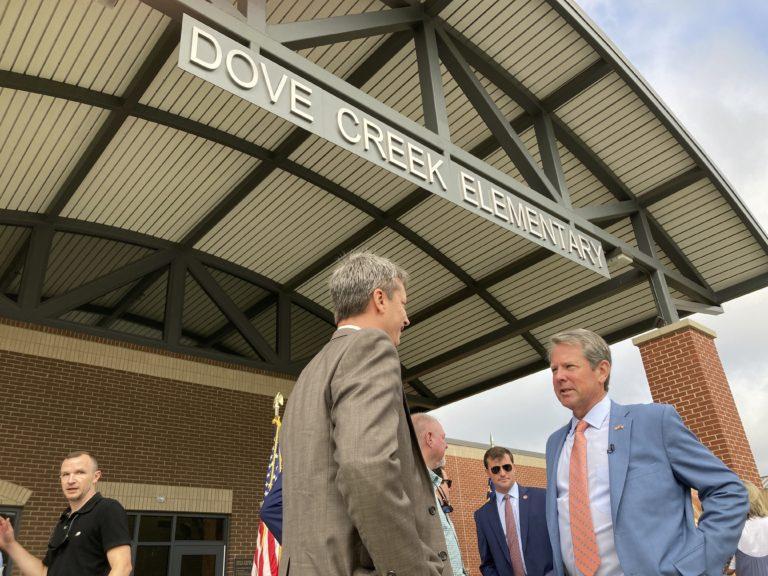
Kemp unveiled a relatively modest set of K-12 education proposals as part of his second-term re-election effort at an elementary school in Oconee County, the same school where one of his daughters was a teacher last year.

“We have more work to do to address pandemic learning loss, bring more educators and counselors into our schools, and keep our students and staff safe,” Kemp said at Dove Creek Elementary School in Statham, just outside Athens.

The proposed funding pales in comparison to the $6 billion in federal aid that Georgia’s 181 public school districts have gotten during the pandemic. School districts must spend more than $750 million of that money improving academic performance.

Kemp made a $5,000 pay raise for teachers a centerpiece of his agenda when he was running in 2018 and delivered the final chunk of the money this year, but he didn’t propose a pay raise for his second term on Monday.

Kemp is currently leading by a significant margin in the polls in his race against Democrat Stacey Abrams, who also lost the 2018 gubernatorial election to him.

His biggest proposal thus far for what he would do in a second term has been a pledge to use $2 billion in surplus state money to provide $1 billion in state income tax rebates and $1 billion in property tax relief.

Abrams, the former minority leader in the state legislature, has proposed a much more ambitious plan that would involve vast amounts of state spending rather than tax cuts. That would include expanding Medicaid, promoting affordable housing, expanding college financial aid, tightening gun laws and blocking further restrictions on abortion.

Despite his more fiscally conservative approach, the incumbent governor noted that pandemic-related drops in test scores warranted the state’s additional investments in education.

During the 2021-2022 school year, 64% of third graders read at grade level or above, according to results from Georgia’s Milestones standardized tests, while 73% of third graders read at or above grade level during the 2018-2019 school year. Officials attribute the drop to pandemic-related disruptions.

Kemp said he would propose to lawmakers that the state should offer $25 million in grants to school districts using state money to provide additional tutoring, hire non-traditional staff or boost existing services.

“By working with our local school systems and providing targeted funding to bring these kids back up to grade level, I am confident we can lend a helping hand to the students who need it most,” Kemp said.

Kemp also said he would recommend giving districts another $25 million to recruit more counselors statewide. Right now, the state funding formula mandates funding for one counselor for every 450 students, but it has never been fully funded.

The governor also proposed spending $15 million to give $3,000 to paraprofessionals who already have four-year degrees to become certified as teachers.

“These funds will help get more teachers in the classroom and assist Georgians already passionate about our students achieve career success,” Kemp said.

Kemp said he would seek to enhance school safety by passing a law requiring schools to offer “intruder alert drills” once each August and September, with a requirement to report drills to the Georgia Emergency Management and Homeland Security Agency. Kemp said his proposal would allow parents to opt students out of the drills.

Kemp said he would also propose letting teachers take school safety and anti-gang training, require that school security plans, already legally mandated, be submitted to GEMA, and recommend continuing education for school resource officers.

Georgia provided $69 million in school safety grants in 2019, Kemp’s first year in office, guaranteeing every school $30,000.

Kemp in 2020 backed a reduction in state-required standardized tests. This spring, he signed a package of conservative education bills that regulate the teaching of race and let the state athletic association ban transgender girls from playing high school sports, and that eased parental challenges to books they view as inappropriate.

Adapted from reporting by the Associated Press
Illinois Gov. Pritzger Uses ‘Tax Rebates’ to Buy Votes for $50 a Pop, Up to $400 per Family

(Headline USA) Democrats who run state government celebrated while announcing that tax-rebate checks—totaling more than $1.2 billion—on Monday began heading to 6 million taxpayers as part of their plan to secure votes in the upcoming November election.

Rebates on income and property taxes are part of a $1.83 billion “inflation-relief” package built into this year’s budget as a result of the near-double-digit price hikes brought about by the leftist Biden administration.

Illinois was a major beneficiary of the federal funds that helped exacerbate the problem, including last year’s roughly $2 trillion American Rescue Act, which helped to bail out insolvent blue states.

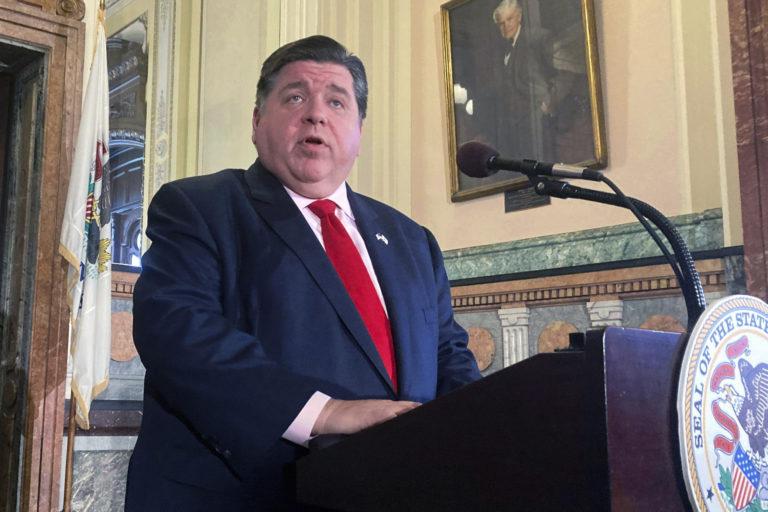
“Everyone knows inflation is a global problem with local consequences,” Gov. J.B. Pritzker said at a Chicago news conference.

“Prices at the pump and at the supermarket have taken Illinois families on a roller-coaster ride over the past months,” added Pritzker, who is up for election this year. “It’s exactly the kind of thing that responsible government should help our residents with and we have, starting today.”

With eight weeks remaining before the November election, the timing is perfect for Pritzker, Comptroller Susana Mendoza, who shared Monday’s spotlight, and virtually every member of the General Assembly.

Rebates will arrive by mail or direct deposit in the closing days of the campaign season, when voters make up their minds.

Individual taxpayers making less than $200,000 will receive a $50 rebate, with $100 to couples filing jointly earning less than $400,000, Revenue Director David Harris said.

Taxpayers will also receive $100 for claimed dependents, up to three. Property tax rebates will be equal to the amount a homeowner claimed as a credit on income tax returns last year, up to $300, Harris said.

The rebates are the capstone to the effort begun last winter by Pritzker, and beefed up by legislative Democrats, to fight near-record inflation, which ran as high as 9% this year.

Other initiatives include a six-month freeze on an increased motor-fuel tax, a year-long suspension of the sales tax on groceries, and a back-to-school sales tax holiday on classroom supplies during August.

At the same time, more than $1 billion is put aside for future emergency expenditures.

“We’ve done something very historic. … And if I had to, in this case, sum it up into kind of two words, I would probably say ‘Cha-ching!’” said Rep. Will Davis, a Homewood Democrat who helped negotiate the package.

Pritzker’s fourth budget is extraordinary in Illinois history, particularly given the state’s woeful economic condition during a 2015 to 2017 spending stalemate between legislative Democrats and ex-Republican Gov. Bruce Rauner.

But despite all the bluster about fiscal discipline and spending sanity, Pritzker and Democratic lawmakers couldn’t pull off the massive tax-savings plan without playing an old game in the Capitol—borrowing from a fund set aside for a special purpose and which has a separate funding stream.

To backfill money lost to the road fund from the freeze on motor fuel taxes, officials took $140 million from the Leaking Underground Storage Tank fund.

Financed by a separate 1.1-cents-per-gallon gas tax, property owners who have cleaned up sites where leaking fuel tanks threatened the environment are already owed at least $900 million, so the diversion of money puts them further behind, advocates said.

Adapted from reporting by the Associated Press
Mich. Supreme Court’s Chief Justice Steps Aside for Whitmer to Install Radical

(Headline USA) The chief justice of the Michigan Supreme Court said Monday she will step down by the end of 2022, an announcement that followed a major decision affecting abortion and more than two years of steering the state’s judiciary through the COVID-19 pandemic.

It also comes as the state’s corrupt, alcoholic  attorney general, Dana Nessel, and equally radical governor, Gretchen Whitmer, both attempt to exploit the legal system they control in order to target their political opponents.

Chief Justice Bridget McCormack, a Democrat, has been on the court since 2013 and still had six years left in her second term.

“After a decade, the time has come for me to move on, to let others lead, and to build on a foundation of progress,” McCormack, 56, said in a written statement.

She said she would resign no earlier than Nov. 22 and no later than Dec. 31. The timing will depend on the appointment of her successor.

Whitmer, who is up for re-election this year, said she will pick a new justice—apparently no matter the results of the Nov. 8 election.

Election victories by McCormack and Justice Elizabeth Welch in 2020 put Democrats in the court’s majority for the first time since 2010.

Those wins came shortly after a Republican majority struck down Whitmer’s sweeping authority to manage Michigan’s response to the pandemic.

McCormack last week was in the 5-2 majority that put abortion on the November ballot. Republican members of a state elections board had rejected the proposed constitutional amendment over the spacing of words on the petition, which had attracted more than 750,000 signatures.

“What a sad marker of the times,” said McCormack, who called it a “game of gotcha gone very bad.”

Before her election in 2012, she was co-director of the Innocence Clinic at University of Michigan law school, working with students to exonerate wrongly convicted people.

Indeed, criminal law has been a specialty. In June, she wrote the court’s unanimous opinion that indictments used to charge former Republican Gov. Rick Snyder and others in the Flint water investigation were invalid.

McCormack has been chief justice since 2019, a role that is decided by the court’s seven members. In that job, she has left her mark across the state, especially during the pandemic, when courtrooms were closed and judges turned to video conferencing to handle cases.

The public suddenly could turn to the internet to watch cases in local courts. Video access is still available in many courts.

Before the pandemic, the state Supreme Court ordered all Michigan courts to allow visitors to carry laptops, tablets and phones. Some counties complained they would lose revenue if people could copy public documents with their devices.

But McCormack said the change ensures the “doors to our courts are open to all,” especially poor people who had to stash a phone in bushes before entering some courts.

Justice Elizabeth Clement, a Republican, said McCormack has been independent and fair.

“In a world that has become increasing partisan and angry, she is a voice of reason, compassion and thoughtfulness,” Clement said.

Adapted from reporting by the Associated Press
New York Imposes Radical New Oversight of Private, Religious Schools

(Headline USA) New York Gov. Kathy Hochul’s far-left administration is imposing new oversight of private and religious schools following allegations that the schools are promoting faith-based values which conflict with Democrats’ woke, anti-religious indoctrination efforts.

Critics claim thousands of children are graduating from Orthodox Jewish schools lacking basic academic skills, including the ability to read English—although the same is true of the deep-blue state’s public-school system in places like New York City.

Illiteracy in the Big Apple has skyrocketed since a push by former Mayor Bill de Blasio to lower standards and eliminate meritocracy under the pretense of promoting racial “equity.”

Nonetheless, a Board of Regents committee unanimously approved guidelines Monday to make sure instruction at the state’s private and religious schools is equivalent to that of its public schools.

The rules would apply to all of New York’s 1,800 nonpublic schools but would have the greatest impact on the Orthodox Jewish schools, called yeshivas, some of which provide rigorous religious instruction but little or no teaching in secular subjects like English, math, science and history.

Defenders of the schools say parents have the right to send their children to programs consistent with their beliefs and traditions.

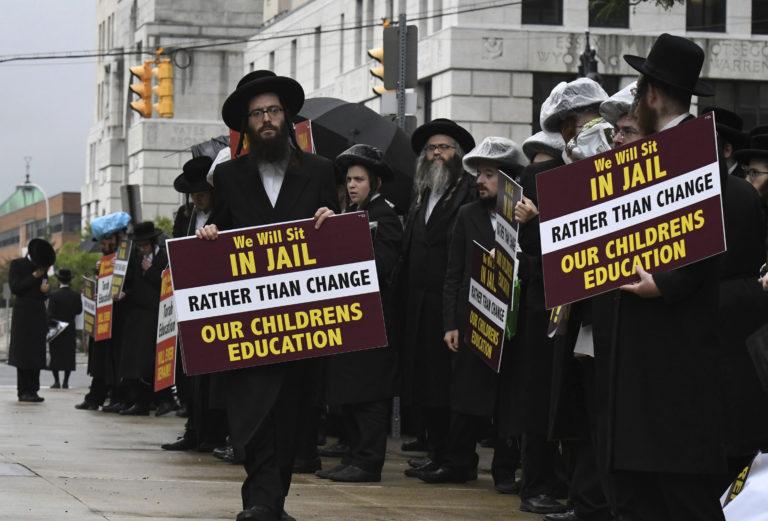
As the Regents met Monday, protesters assembled outside, some with signs reading: “We will sit in jail rather than change our childrens [sic] education.”

Many yeshivas in New York state are modern Orthodox schools that provide a full secular curriculum along with religious studies. But there have been complaints that some yeshivas run by strictly observant Hasidic Jews were not meeting basic academic standards.

A New York Times investigation published Sunday cited instances of English teachers speaking only Yiddish to students, teachers using corporal punishment and graduates who said they were woefully unprepared for life or employment outside of their communities.

Virtually all of the Hasidic boys who took state standardized math and reading exams in 2019 failed, the report said.

A final vote was scheduled for Tuesday on new Board of Regents rules that would give private schools multiple pathways to show they meet a longstanding legal mandate to provide an education that is “substantially equivalent” to that of a public school.

Among the criteria is that primary subjects be taught in English.

“We are trying to obviously adhere to the law but also create some flexibility around that as well,” state Education Commissioner Betty Rosa said.

State education officials have spent years trying to strike a balance.

An initial set of guidelines released in 2018 was struck down by a state judge who said they were not implemented correctly. The department reviewed about 350,000 public comments following the release of the latest proposal and made adjustments in response, authorities said.

“The regulation respects that parents have a constitutional right to send their children to an independent school and that we respect the worldviews of the schools and their communities,” assistant commissioner Christina Coughlin said.

The group Parents for Educational and Religious Liberty in Schools, which represents yeshivas, said families choose to pay for private or religious schools because they believe in their educational approach.

“A government checklist, devised by lawyers and enforced by bureaucrats, hampers rather than advances education,” the group said in an email. “Parents in New York have been choosing a yeshiva education for more than 120 years, and they are proud of the successful results, and will continue to do the same, with or without the blessing or support of state leaders in Albany.”

Under the rules, a school can demonstrate equivalency, for example, by using state-approved assessments or operating a high school registered by the Board of Regents. It also can be reviewed by the local school district.

Groups representing Roman Catholic and Christian schools said they are confident their schools meet the substantially equivalent standards.

Naftuli Moster, who founded a group to improve secular standards at yeshivas, said he worried the schools would use the issue of cultural sensitivity to exploit loopholes without clearer guidance on how the regulations will be enforced, something the state is expected to address in the next few months.

“How you teach it or what you incorporate into the teaching is not what matters,” Moster said by phone. “It’s objective whether you teach science. There’s no Jewish science. It’s objective whether you do or do not teach social studies.”

Private schools that fall short of the threshold will be given time to adjust their instruction, state education officials said.

But those that may refuse to comply could lose state funding and their standing as a school with the state.

Parents who continue to send their children to such a school could find themselves in violation of the state’s compulsory education law requiring that children between the ages of six and 16 be provided with a program of instruction, either at a public school or elsewhere.

Daniel Morton Bentley, a lawyer for the state Education Department, said Friday that much of the public pushback has focused on “philosophical opposition to state regulation of nonpublic schools,” which he said is required by law and not changed by the Regents’ action.

Public school districts would be required to complete initial reviews of nonpublic schools within their boundaries by the end of the 2024-25 school year.

Adapted from reporting by the Associated Press
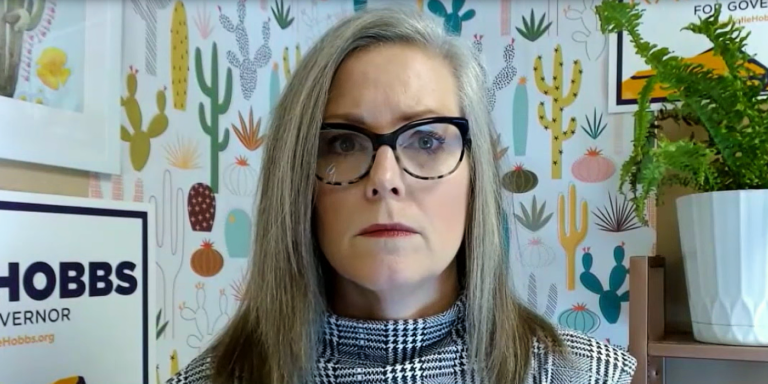
Ariz. Dem. Katie Hobbs Is 1st Candidate in Decades to Refuse State-Run Debate

() Katie Hobbs will be the first candidate for Arizona governor in decades to refuse an invitation to debate her opponent in a state commission-organized event.

Hobbs, the current Democratic secretary of state, announced Sunday that she would “respectfully decline” the Arizona Citizens Clean Elections Commission invitation to reach terms on debating her Republican opponent, former Fox 10 anchor Kari Lake.

No other candidate running for office in November has declined an invitation, nor has any candidate for governor done so since the commission began holding debates in 2002.

“Secretary Hobbs remains willing and eager to participate in a town hall style event, such as the forum she participated in last week in which Arizonans were able to hear directly from Sec. Hobbs about her in-depth policy plans and how she would approach governing this state,” Hobbs’ campaign manager, Nicole DeMont, claimed in a statement.

“Unfortunately, debating a conspiracy theorist like Kari Lake—whose entire campaign platform is to cause enormous chaos and make Arizona the subject of national ridicule—would only lead to constant interruptions, pointless distractions, and childish name-calling.”

The AZCCEC met last week to discuss Hobbs’s request for separate town hall-style Q&A sessions with the commission’s chosen moderator. They denied that request and gave staffers a week to figure out a setting where Hobbs would join Lake on stage.

Lake’s campaign didn’t respond to a request for comment on Hobbs declining the invitation but posted several comments on Twitter.

“Arizona can’t afford to elect a shrinking violet like [Hobbs] as their Governor and turn a beautiful red state into a purple mess,” Lake’s campaign tweeted Monday.

State GOP Chairwoman Kelli Ward said Monday that Hobbs’s refusal to face Lake is a statement of its own.

“Voters should be very suspicious that Katie Hobbs, a sitting secretary of state, is unwilling to stand side by side with Kari Lake and answer questions in a head to head matchup,” she said. “What is Katie Hobbs trying to hide?”

Polls have shown the two in a close race.

Pa. Legislature Advancing Election-Integrity Measures

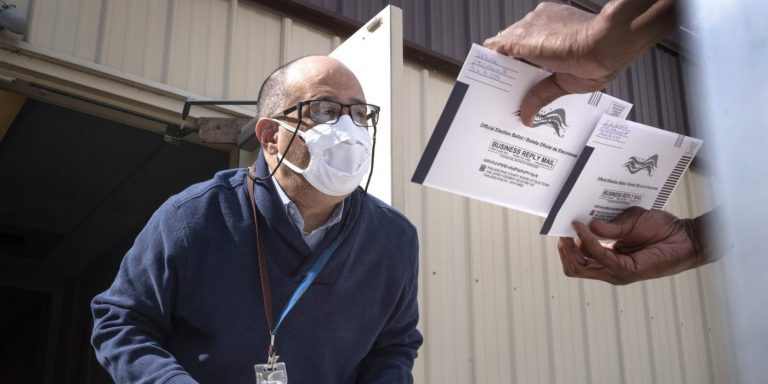
(A trio of bills is working its way through the Pennsylvania Legislature to enhance the security of election ballots and remove deceased residents from the voter rolls.

The House State Government Committee met on Monday to vote on House Bill 34, House Bill 143, and House Bill 2484, advancing all three of them past first consideration. The bills will need to get through three considerations before a final vote can be held.

HB34, sponsored by Rep. Gary Day, R-New Tripoli, would create guidelines to track election ballots during transportation.

“It will require ballots to be transported in transportation containers that are sealed with numbered plastic tags and have a Bill of Lading included with the shipment,” Day wrote in a legislative memo. “Generally, it will call for a hard plastic container, sealed by a numbered plastic tag to ensure the shipment has not been tampered with, nor added or subtracted from.”

Day proposed the bill to “let voters feel like there are more protections,” he said.

An amendment to the bill, which would allow registered independent voters to vote in Democratic or Republican primaries, was proposed by Rep. Jared Solomon, D-Philadelphia, but failed.

“It would allow over 1.2 million Pennsylvanians who are currently shut out of our election system—to give them the ability to vote. That is all this amendment does,” Solomon said.

Day cited an instance where “hundreds of ballots” in a precinct in his district would not have been counted due to a missing USB drive that was found after he noted a discrepancy between the number of counted votes in the precinct and the voting totals Day had predicted.

“We need to be very, very careful even as we strengthen security around our election to not infer that our elections currently are not safe,” said Rep. Malcolm Kenyatta, D-Philadelphia. “I think that they are; if we can do something even better … sign me up for that.”

A similar rationale for making elections more efficient was proposed by Rep. Russ Diamond, R-Lebanon, with HB143. The bill would require the Department of Health and Department of State to collaborate monthly to remove deceased individuals from state voter rolls. Currently, removal can take up to three months.

“A more efficient process of cleaning up our voter rolls will not only eliminate future lawsuits, but also further safeguard the integrity of our elections,” Diamond wrote in a legislative memo.

He noted the law is modeled on the Department of Aging’s approach to removing deceased individuals from solicitation for state benefits.

Rep. Seth Grove, R-York, the committee chairman, emphasized the importance of cleaning voter rolls, noting the commonwealth was sued over having 21,000 deceased individuals on them previously.

“Anything we can do to continue to clean that up would be a positive thing,” Grove said.

The committee also passed HB2484, sponsored by Rep. Lori Mizgorski, R-Allison Falls, to require write-in candidates to file a statement of financial interest during an election. Currently, candidates of a political party are required to, but the law left out write-in candidates.

“I believe that every candidate should be treated the same,” Mizgorski said.

WaPo Editorial Board Calls for Fetterman to Release Health Records

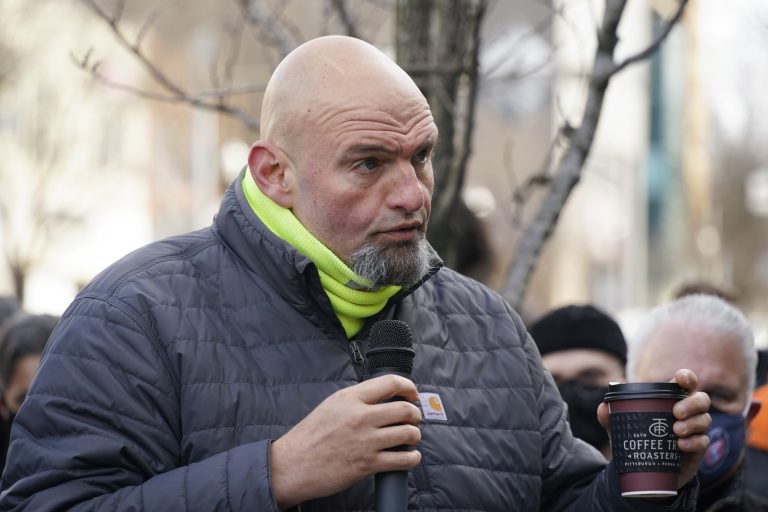
(Jacob Bruns, Headline USA) The left-slanted Washington Post became the latest media outlet to call for Pennsylvania Lt. Gov. John Fetterman, a stroke victim and Democrat senatorial candidate, to come clean about his serious health issues by making his medical records public, the Gateway Pundit reported.

“The campaign’s response to questions about Mr. Fetterman’s health is to point to a doctor’s note, released more than 14 weeks ago, which said ‘he should be able to campaign and serve in the U.S. Senate without a problem’ if he takes his medications and exercises,” wrote the Post editorial board on Monday.

But according to the editorial, “that’s not good enough” for voters.

“Mr. Fetterman is asking voters for a six-year contract without giving them enough information to make sound judgments about whether he’s up for such a demanding job,” it said.

“We have called for full disclosure of health records from candidates for federal office in both parties, including Donald Trump and Joe Biden, and we believe Mr. Fetterman should release his medical records for independent review,” the editorial added.

Since having a stroke in May, shortly before winning his primary race, Fetterman has avoided participating in numerous campaign activities.

In the appearances he has made, Fetterman has appeared to be far more affected by the stroke than he has acknowledged, struggling at times to form coherent sentences.

Stoking even more concerns surrounding the candidate’s health, Fetterman appeared in public without a hoodie on for the first time recently, revealing a large, protruding bulge on the back of his head.

Only after facing scathing criticism from one of the state’s leading newspapers did Fetterman finally agree to debate his Republican opponent, celebrity doctor Mehmet Oz—but not until late October, when many of the state’s universal mail-in ballots already have been returned.

“We’re absolutely going to debate Dr. Oz,” Fetterman said last week.

“And that was really always our intent to do that,” he continued. “It was just simply only ever been about addressing some of the lingering issues of the stroke, the auditory processing, and we’re going to be able to work that out.”