Hillary Slams Biden’s Open Borders, Setting Up 2024 Showdown

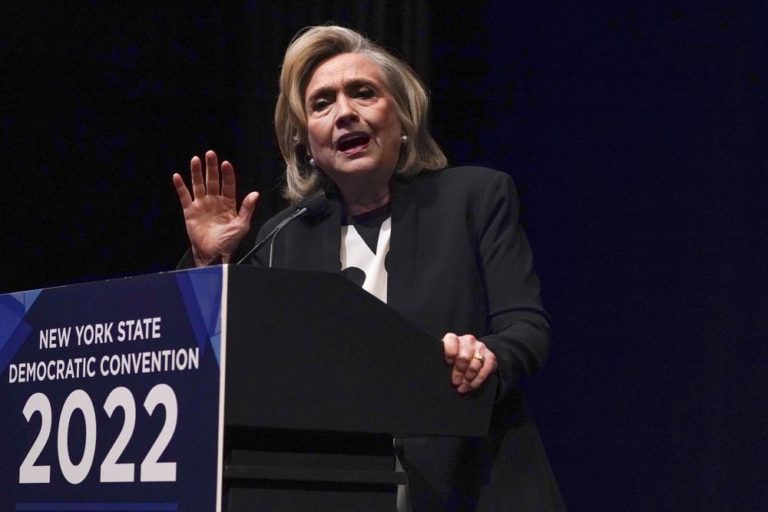
(Jacob Bruns, Headline USA) Twice failed presidential candidate Hillary Clinton appears to be setting herself up for yet another run at the White House.

In particular, she recently went out of her way to slam President Joe Biden for his open border immigration policies, differentiating herself by pretending to take the middle ground, the New York Post reported.

“So many other Americans — I happen to believe still the majority of Americans — are good-hearted and generous and when people end up on their doorstep in need, they’re going to respond,” she said while promoting her own organization.

“They’ll feed them and house them, and the kids in the AP Spanish class will be let out of high school so they can go and translate. That’s the kind of American spirit that we try to celebrate at the Clinton Global Initiative.”

“Nobody wants open borders who has any idea of how government and countries work,” she continued, alluding to Biden’s failed border management.

According to veteran political consultant Dick Morris, Hillary is imitating exactly what her adulterous husband Bill Clinton did in order to get his 1992 campaign rolling.

“These are all signals that she is going to be the moderate candidate for president,” Morris said. “She’s going to say after the election, ‘See, the Left cost us the House and the Senate. If we stay with a Left-wing candidate in 2024, we’re going to lose the White House. I’m the only one who will tack to the center and give us a chance at victory​.'”

“​Hillary is just dusting off Bill‘s playbook that I wrote for him and applying it herself this year,” he added.

Clinton’s apparent interest complicates things further for the Democrats, who will already have to deal with a historically unpopular President in Joe Biden.

Vice President Kamala Harris and her camp seem to have swung back and forth, while California Gov. Gavin Newsom has postured for a run.

UN Official Declares ‘We Own the Science’ During WEF Disinfo Panel

(Molly Bruns, Headline USA) During a portion of a World Economic Forum anti-disinformation panel, a United Nations representative announced that the UN’s globalist administrators “own the science” when referencing “climate information.”

At the WEF’s “Sustainable Development Impact Meeting,” participants from the UN, CNN and Brown University discussed best ways to control the flow of information in the “Tackling Disinformation” panel, the Post Millennial reported.

Melissa Fleming, the UN’s undersecretary-general for global communications, mentioned the UN’s partnership with tech companies TikTok and Google, both of which assist in the control of the climate-change narrative.

She said that when Google users search the term “climate change” in the engine, many UN resources will be the first to appear.

“We started this partnership when we were shocked to see that when we Googled ‘climate change,’ we were getting incredibly distorted information right at the top,” she said.

“We’re becoming much more proactive. We own the science, and we think that the world should know it, and the platforms themselves also do,” she said.

Fleming also mentioned that the UN collaborated with TikTok on a project they called “Team Halo,” which worked to boost specific COVID narratives on the Chinese-owned video platform.

“We had another trusted messenger project, which was called ‘Team Halo’ where we trained scientists around the world and some doctors on TikTok, and we had TikTok working with us,” Fleming said.

She also admitted that a way they countered people’s distrust of institutions—such as the UN in relation to COVID—was to get influencers to send out their messaging.

“Another really key strategy we had was to deploy influencers,” she said, adding, “influencers who were really keen, who have huge followings, but really keen to help carry messages that were going to serve their communities, and they were much more trusted than the United Nations telling them something from New York City headquarters.”

Joy Reid: Defending Against Hurricane Looters is RACIST

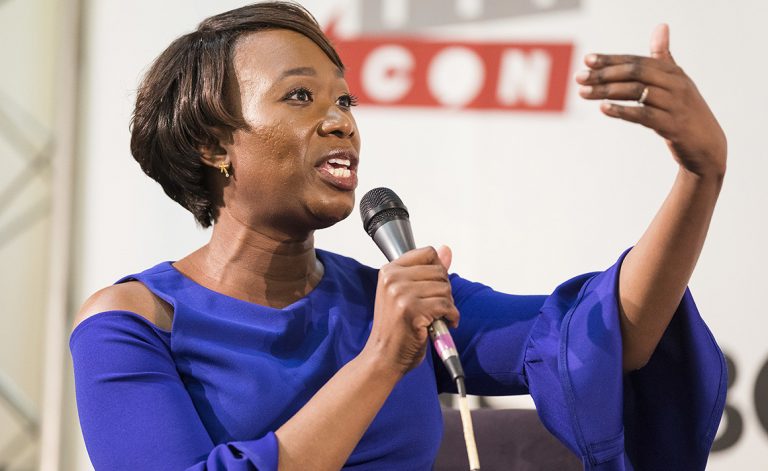
(Molly Bruns, Headline USA) MSNBC Host Joy Reid smeared Ron DeSantis as a “segregationist” after his announcement warning looters that they may face armed resistance, as Florida is “a Second Amendment state.”

“We want to make sure we’re maintaining law and order,” DeSantis said. “Don’t even think about looting. Don’t eve think about taking advantage of people in this vulnerable situation.”

Reid compared DeSantis to Miami’s former sheriff, Walter Headley, who used heavy-handed tactics to suppress race riots in 1967, saying “when the looting starts, the shooting starts,” Newsbusters reported.

Reid also linked to an NPR story decrying Trump when he made the comment in late May 2020 at the beginning of the Black Lives Matter riots.

The former Miami police chief used the phrase in the midst of hearings on crime in the city, which hearkens back to Eugene “Bull” Connor, who was a notorious public safety commissioner in Birmingham, Alabama.

Connor was a reported segregationist who used police dogs and fire hoses against civil rights demonstrators.

Reid did not explain what was racist about DeSantis’s request, however—a question that was burning in the minds of many Twitter users.

Dem Official: Kids May Be Killed by Parents if Teachers Disclose ‘Gender Identity’

(Molly Bruns, Headline USA) Acting chairman of the New Hampshire Democratic Party, Raymond Buckley, made the wild claim that if public schools are not allowed to withhold information from parents regarding their child’s behavior in school—particularly in the case of “gender identity”—that parents will beat their children to death.

According to the Daily Wire, Buckley made the claim on social media, responding to a tweet initially directed at Rep. Chris Pappas, D-N.H.

“Should parents have the right to know if their children are receiving gender identity counseling at school, or is Manchester school district right to keep it secret from moms and dads?” the New Hampshire Journal asked on Twitter.

Conservative commentator Michael Graham responded, “The most interesting part of this story out of #NHPolitics is that @RepChrisPappas is unabashedly arguing that parents should NOT have the right to know about behavior of their own children.”

Buckley responded to Graham’s tweet, accusing him of endangering children.

“You’re purposely going after children, endangering their lives, mental health & safety & its disgusting,” he tweeted. “Not all families are the same, some kids will be kicked out or beaten (to death) or commit suicide. All to try to get votes for Karoline? #NHPolitics”

Buckley’s remarks also targeted challenger for New Hampshire’s 1st Congressional District, Karoline Leavitt.

Leavitt, who is running against Pappas, tweeted in response to Buckley.

“The Biden administration labeled parents as ‘domestic terrorists,’ and now the chair of the New Hampshire Democrat Party is claiming Granite State parents beat their kids to death,” Leavitt said.

“The Democrats’ hatred for parents who simply want to be involved in their children’s education is disgusting,” she continued. “It’s rooted in the fact that Democrats like Chris Pappas are funded by powerful teachers unions who want total control over our public education system. While Pappas continues to side with Joe Biden and radical bureaucrats, I will continue to stand with Granite State mothers and fathers.”

Other Twitter users were also disgusted with Buckley’s blatant, dishonest emotional manipulation.

Study Questions Left’s Perennial Claim of Widespread Teacher Shortages

() New research on the demand for teachers highlights the lack of information about teacher shortages at all levels of government.

A working paper from Brown University found that “teacher shortages are still poorly understood, and it remains unclear whether there is a shortfall of teachers on the national scale or if shortages are localized—a key component of the current debate around teacher shortages.”

The authors—Tuan Nguyen and Chanh Lam from Kansas State University and Paul Bruno from the University of Illinois at Urbana-Champaign—gathered information on shortages from across the country. After reviewing information from all 50 states, the authors estimated the extent of the shortage.

“Some back-of-the-envelope math implies teaching vacancies amount to 1.67% of positions nationwide and about 5.16% of positions are held by underqualified teachers,” according to the working paper.

The report found 11 states “with clear vacancy.” Those states were Arizona, Colorado, Connecticut, Florida, Illinois, Minnesota, Missouri, Nebraska, Oklahoma, Pennsylvania and Utah. It further found 26 states plus Washington D.C. “with less clear vacancy” and 13 states “with unknown vacancy.”

However, the authors emphasized the extent of teacher shortages remains unclear.

“While we present what we believe is the most comprehensive nationwide evidence to date about the scope of teacher shortages, perhaps the most important takeaway from our analyses is how limited the data are,” they wrote. ” … In sum, what our data cannot tell us about teacher shortages is in many ways more important than what they can tell us.”

The authors recommend more robust reporting at all levels to provide more information about the scope of supply and demand issues, which they note “are known to vary substantially, even for different positions in the same school.”

“Even though there are many policy and news reports of teacher shortages, these often focus on specific districts or states, and as of yet, there has not been a concerted and systematic effort to examine what teacher shortages look like nationally,” the authors wrote.

“This both hampers research into the teacher shortages and complicates potential policy efforts to addressing them, for instance by making it difficult to know whether and how to encourage prospective teachers to complete teacher preparation programs and take jobs in schools experiencing shortages,” they said.

The paper also gave attention to other problems with data regarding potential shortages including inconsistencies in the ways teacher vacancies were defined.

“Some parties (e.g., economists) might use the term ‘shortage’ to refer to a situation where the number of applicant teachers is insufficient to fill available positions, while others (e.g., school administrators) might use ‘shortage’ to refer to situations where they wish there were more or better applicants,” the authors wrote.

The authors recommend state policymakers make school-level data on teacher qualifications available, require districts to include in public-facing report cards detailed information on staff shortages and qualifications at the school level and that districts or other statewide authorities maintain and make accessible data on job postings and unfilled teaching positions.

The authors further recommend those numbers be put in context with the size of the school system or vacancy rate per 10,000 students.

“The apparent severity of teacher shortages can vary considerably depending on whether numbers are expressed as raw counts or relative to the size of the school system,” they wrote in the working paper.

The concerns in the national study were echoed by another research organization looking at teacher shortages in Michigan.

The Citizens Research Council of Michigan reported in 2019 and again in 2022 that a lack of data confounded efforts to research a teacher shortage in that state.

“Early warnings of teacher shortages in some districts and subject areas may portend a broader trend that will affect schools across the state, but statewide analysis of the issue is made more difficult by a lack of relevant data about Michigan’s existing, former and would-be teaching professionals,” the Citizens Research Council reported in 2019.

“Understanding and addressing the real and potential shortages is hampered by the lack of clear data about the teaching workforce,” it continued. “Michigan has not prioritized studying this labor market and the shortage issue, so analysis is somewhat stymied by a shortage of available, timely and relevant information.”

The nonprofit research organization said the issues had not been resolved in 2022.

“In terms of bad news (or the not-so-good news), the State of Michigan is making these new investments without a clear and full understanding of the nature and scope of the different staffing challenges faced by local districts,” the Citizens Research Council wrote in August 2022.

“This is due, in large part, to the fact that the state has not invested in the data and information systems necessary to quantify the genuine extent of the problem(s) being addressed,” it said.


In 2 Years, 327 Virginians Had Firearms Confiscated through Red-Flag Laws

(Hundreds of Virginians have had their guns confiscated from them through red-flag laws since those rules went into effect more than two years ago, according to data in the Virginia Firearms Transaction Center.

Red-flag laws allow police to seize firearms from a person if a judge deems him or her to be a threat to himself or others, even if that person has not been convicted of a crime, charged with a crime or even accused of a crime.

The laws passed the General Assembly when Democrats had control of both chambers and were signed by former Democratic Gov. Ralph Northam. The legislation received staunch opposition from the Republican minority at the time.

Virginia judges have issued at least 327 emergency substantial risk protection orders, which allow police to temporarily confiscate firearms to address an immediate risk.

Judges have issued 257 permanent substantial risk protection orders, which confiscate the guns permanently, unless overturned through the court system.

The statistics run from July 1, 2020, when the law went into effect, through August 2022. They do not state how many guns were confiscated from the individuals.

Gun-rights groups have been critical of the law ever since it was proposed because of how much authority is granted to a judge and because a person might have his guns seized before he has a chance to defend himself in court.

“Red Flag laws are an invention of the gun-control crowd and are unconstitutional due to their usurpation of Due Process,” Philip Van Cleave, the president of the Virginia Citizens Defense League, told The Center Square.

“Red Flag laws are an easy way for [the] government to confiscate guns without getting a person any help or giving the person a chance to defend against any false accusations for up to two weeks,” Van Cleave said. “The person has no idea that they have been accused of anything until the police show up at their door to get their guns.”

Van Cleave said the commonwealth already has two better laws in place: the temporary detention order and the emergency custody order.

These laws allow magistrates to temporarily detain a person who may be a risk to himself or others due to a problem with mental illness and provide them with mental health services.

Red-flag laws, he noted, do not even direct people to mental health treatment after confiscating their firearms.

Erich Pratt, senior vice president of Gun Owners of America, told The Center Square that these laws are contrary to due process protections.

“Red Flag gun confiscation orders turn our legal system on its head,” Pratt said.

“For centuries, the standard has been ‘innocent until proven guilty,’” he continued. “But Red Flag laws reverse that standard into ‘guilty until proven innocent,’ because they throw real Due Process out the window—revoking someone’s Second Amendment rights without a jury trial or right to counsel.”

Pratt pointed out the obvious, yet paradoxical, fact that the law was most likely to infringe on the rights of law-abiding citizens and not those it was designed to prevent.

“Not surprisingly, at least a third of red flag orders are initiated against innocent people—and the guns which are erroneously confiscated can take up to nine months to return,” he said. “These laws have even been used to disarm women—such as the case in California where a cheating husband used the state’s red flag law to disarm his wife, who was a concealed carrier.”

Republicans have introduced legislation to repeal red-flag laws in Virginia, but have been unsuccessful. Although the state now has a Republican governor and a Republican-controlled House of Delegates, the Senate has a Democratic majority.

Judge Exposes Big Lie Underlying Abram’s Career

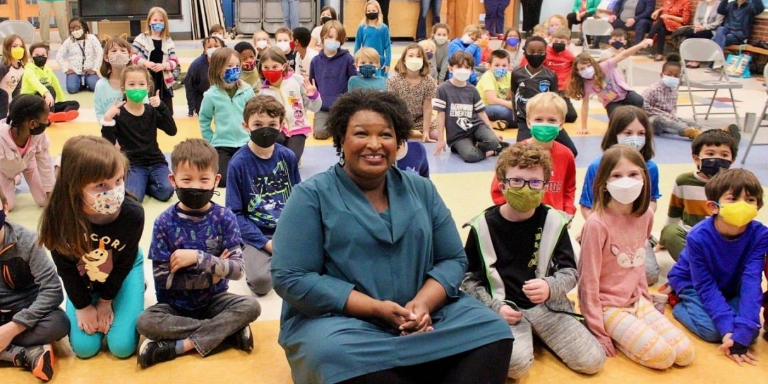
(Headline USA) When radical leftist Stacey Abrams lost the Georgia governor’s race to Republican Brian Kemp four years ago, she threw a temper tantrum.

She ended her campaign with a nonconcession that acknowledged she wouldn’t be governor, while whining that Kemp had cheated by using his post as secretary of state to improperly purge likely Democratic voters. Abrams founded Fair Fight Action, a group focused on fair elections, which within weeks filed a wide-ranging federal lawsuit alleging “gross mismanagement” of Georgia’s elections.

She lost that lawsuit Friday. This final loss comes more than a year after the judge had tossed most earlier claims.

Republicans are now using the loss to show the big lie that underlies Abrams’ career. They label her claims that Georgia’s election system has been discriminatory as a fraud she used to enrich herself and aggrandize her political career after her 2018 loss.

“This is existential to who Stacey Abrams has become as a public and political figure,” Georgia Attorney General Chris Carr, a Republican who defended the case, told The Associated Press on Saturday. “She put herself in the political spotlight nationally, potentially globally, all over the narrative that she lost the governor’s race because of voter suppression. And here you have a federal judge saying, it’s all untrue. It didn’t happen.”

Secretary of State Brad Raffensperger said that “stolen election and voter suppression claims by Stacey Abrams were nothing but poll-tested rhetoric not supported by facts and evidence.”

Adapted from reporting by the Associated Press

Supreme Court’s Top Cases for New Term

(Headline USA) The Supreme Court opens its new term Monday, hearing arguments for the first time after a summer break. The court has said it will decide cases on a range of major issues including the rights of Christians to refuse to cater homosexual ‘weddings,’ affirmative action, and voting regulations. The justices will add more cases to their docket in coming months.

A look at some of the cases the court has already agreed to hear. The justices are expected to decide each of the cases before taking a summer break at the end of June:

CHRISTIAN RIGHTS

A new clash involving homosexuals and Christian businesses will be before the justices. The case involves Colorado graphic and website designer Lorie Smith who wants to expand her business and offer wedding website services. She says her Christian beliefs would lead her to decline any request from a same-sex couple to design a wedding website, however, and that puts her in conflict with a Colorado anti-discrimination law. The case is a new chance for the justices to confront issues the court skirted five years ago in a case about a baker objected to making cakes for same-sex weddings. The court has grown more conservative since that time.

AFFIRMATIVE ACTION

In cases from Harvard University and the University of North Carolina, the court could end any consideration of race in college admissions. If this seems familiar, it’s because the high court has been asked repeatedly over the past 20 years to end affirmative action in higher education. In previous cases from Michigan and Texas, the court reaffirmed the validity of considering college applicants’ race among many factors. But this court is more conservative than those were.

VOTING RIGHTS

The court agreed to further reconsider the 1960’s remaking of American voting laws known as The Voting Rights act in its third major consideration in 10 years.

ELECTIONS

Litigants are asking the justices to embrace a Constitutional legal concept that would limit state courts’ oversight of elections for Congress. Litigants argue that state courts have no role to play in congressional elections, including redistricting, because the U.S. Constitution gives that power to state legislatures alone. Four conservative justices have expressed varying levels of openness to the “independent state legislature” theory.

CLEAN WATER

This is yet another case in which the court is being asked to discard an earlier ruling and loosen the regulation of property under the nation’s chief law to combat water pollution. The case involves an Idaho couple who won an earlier high court round in their bid to build a house on property near a lake without getting a permit under the Clean Water Act. The outcome could change the rules for millions of acres of property that contain wetlands.

IMMIGRATION

The Biden administration is back at the Supreme Court to argue for a change in immigration policy from the Trump administration. It is appealing a ruling against a Biden policy prioritizing deportation of people in the country illegally who pose the greatest public safety risk. Last term, the justices by a 5-4 vote paved the way for the administration to end the Trump policy that required asylum-seekers to wait in Mexico for their court hearing. In July, also by a 5-4 vote, the high court refused to allow the administration to implement policy guidance for deportations. A Trump-era policy favored deporting people in the country illegally.

NATIVE AMERICAN ADOPTION

In November, the court will review a federal law that gives Native Americans preference in adoptions of Native children. The case presents the most significant legal challenges to the Indian Child Welfare Act since its 1978 passage. The law has long been championed by Native American leaders as a means of preserving their families and culture. A federal appeals court in April upheld the law and Congress’ authority to enact it. But the judges also found some of the law’s provisions unconstitutional, including preferences for placing Native American children with Native adoptive families and in Native foster homes.

BACON LAW BACKLASH

Also on the menu for the justices: a California animal rights law. The case stems from a 2018 ballot measure where California voters barred the sale of pork in the state if the pig it came from or the pig’s mother was raised in confined conditions preventing them from laying down or turning around. Two agricultural associations challenging the law say almost no farms satisfy those conditions. They say the “massive costs of complying” with the law will “fall almost exclusively on out-of-state farmers” and that the costs will be passed on to consumers nationwide.

ART WORLD

The court’s resolution of a dispute involving pieces by artist Andy Warhol could have big consequences in the art world and beyond. If the Warhol side loses a copyright dispute involving an image Warhol made of the musician Prince, other artworks could be in peril, lawyers say. But the other side says if Warhol wins, it would be a license for other artists to blatantly copy.

Adapted from reporting by the Associated Press

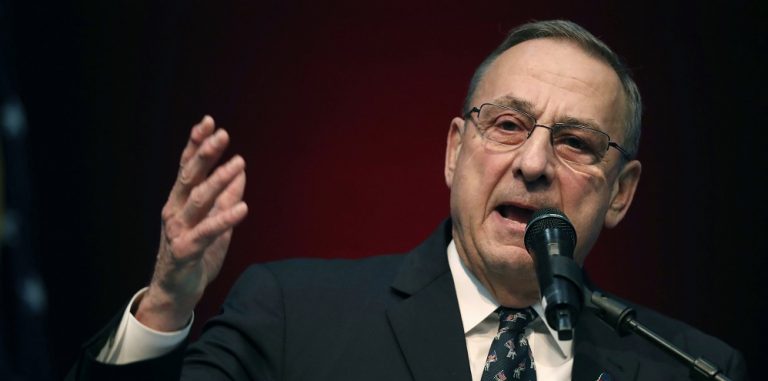
Ex-Maine Gov. Paul LePage Shies Away from MAGA Movement to Get Elected

(Headline USA) When then-Maine Gov. Paul LePage endorsed President Donald Trump in 2016, he credited himself as a prototype for the insurgent presidential candidate.

“I was Donald Trump before Donald Trump became popular, so I think I should support him since we are one of the same cloth,” said LePage, whose two terms in office were punctuated by brash behavior and frequently offensive comments.

Now, as LePage is running for a third term after a brief retirement to Florida, he rarely talks about Trump in public, and his advisers say LePage’s hiatus from politics changed him. He’s eager to show he’s smoothed over some of his own rough edges, though flashes of his fiery personality broke through recently at an event at a riverfront boatyard in Yarmouth, where he pledged to take on Democratic “elitists.”

“I came from the streets. I was a fighter all my life,” LePage told workers. “I had to scrimp and save to eat and survive. I am a fighter.”

As LePage seeks to unseat Democratic Gov. Janet Mills and become the longest-serving governor in Maine history, he is banking on an approach familiar to other Republican candidates in liberal- and moderate-leaning states who are trying not to alienate swing voters they would need to win a general election. LePage’s efforts at putting distancing from Trump are particularly notable given LePage once invited comparisons to Trump — and made them himself.

The race is shaping up to be among a dozen or so competitive contests for governor this election year. The way in which the campaign plays out with voters weary of political ugliness may be a harbinger for Trump’s White House aspirations in 2024.

LePage and Mills’ adversarial relationship goes back years.

When LePage left office in 2019, prevented from seeking a third consecutive term by the Maine Constitution, he declared he was decamping for Florida, where the taxes were lower, and leaving politics behind.

He didn’t stay away long. Soon, he was headed back to Maine for what supporters described as “LePage 2.0.”

LePage served as Trump’s honorary state chairman and once sought a job in his administration, but he now won’t say whether he would vote for Trump for president if Trump runs again in 2024.

The former governor made no reference to Trump while touring Yankee Marina & Boatyard, even though Trump remains popular in rural Maine, where he twice won an electoral vote while losing the statewide vote.

LePage largely tries to steer clear of Trump’s observations of the 2020 election. LePage says that Biden is president but declines to address whether he thinks the election was legitimate. LePage also avoids the issue of abortion after the U.S. Supreme Court overturned the constitutional right to an abortion.

Poland Protects the Unborn by Registering Pregnancies

0

(Headline USA) A new regulation in Poland requires pregnancy information to be added to the national health system.

Anti-life groups are whining that the Health Ministry regulation would enable authorities to monitor pregnancies and protect babies from infanticide.

The government of Poland said the regulation stems from European Union directives and will help doctors treat patients by providing them with vital information quickly.

Krystyna Kacpura, the head of an anti-life group admitted the concerns are not based upon the regulation, laws, or reality. She whined that “In today’s Poland every change relating to reproduction … is met with suspicion of bad intentions.”

Poland’s pro-life government seriously opposes infanticide. In Poland abortion is only allowed if the pregnancy threatens the woman’s health or results from crime like rape or incest.  Contra the paranoid anti-life activists, women are not penalized for abortions, but “doctors” who violate their hippocratic oath by committing infanticide are punished.

Poland also opposes the Eugenics that Planned Parenthood was founded on. A provision allowing mothers to kill their disabled and unborn children was pronounced unconstitutional by Poland’s top court.

Progressive Americans, unlike Catholic Poland, have traditionally been in favor of Eugenics. Progressive hero, Supreme Court Justice Oliver Wendell Holmes, in his infamous Buck v. Bell decision, proclaimed that it was good for the government to sterilize disabled people because “three generations of imbeciles are enough.”

Adapted from reporting by the Associated Press