Gas Prices Rise for Two Straight Weeks, OPEC Expected to Drive Them Higher

(Casey Harper, The Center Square) Gas prices have continued to rise over the past two weeks, and now OPEC has announced a major decision that will likely drive those prices higher.

OPEC said Wednesday that it would reduce oil production beginning in Nov. by 2 million barrels per day.

Joe Biden helped lower prices by releasing one million barrels per day from the Strategic Petroleum Reserve since April, but the reserves – meant for emergencies like natural disasters or in the event of war – are now near decades-low levels.

“In any event, we will continue to take steps to protect American consumers,” White House Press Secretary Karine Jean-Pierre said during Tuesday’s press briefing.

“Our focus, and it’s been very clear for the past several, several months, has been on taking every step to ensure markets are sufficiently supplied to meet the demand for a growing global economy.”

Biden told reporters earlier this week he was “concerned” about OPEC’s announcement, calling it “unnecessary.”

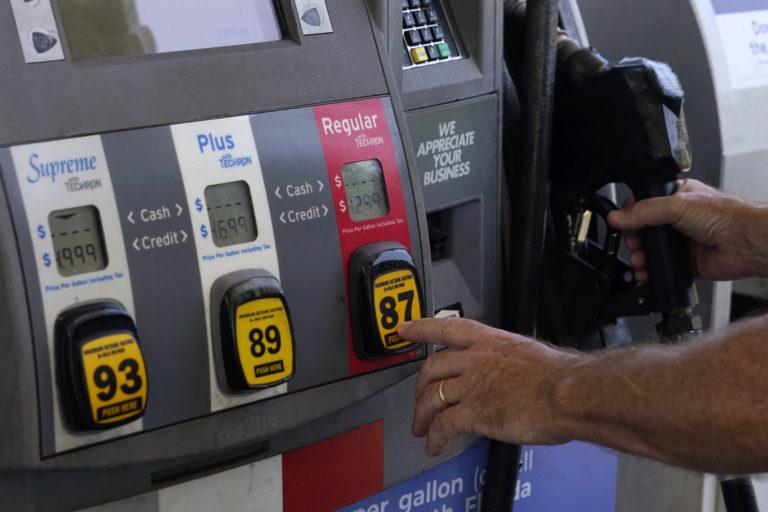
According to AAA, the current national average price for a gallon of regular gasoline is $3.83, up from $3.77 a week ago. The recent rise in gas prices is due in part to the effects of Hurricane Ian.

Patrick De Haan, a petroleum expert with Gas Buddy, said he expects OPEC’s decision to drive prices up 15 to 30 cents per gallon.

“Ouch… and up goes oil after OPEC recommendation…” he wrote on Twitter.

“It’s VERY nuanced right now because of refinery kinks, but high [gas prices] will soon fall in the West Coast, Great Lakes and others where they exploded while rising in the Gulf, South, [Southeast], East Coast and [Northeast] because of OPEC’s decision.”

Prices hit an all-time high in June, surpassing $5 per gallon before declining. Current prices, though, are still much higher than when Biden took office. The average price one year ago was $3.20 per gallon.
Senator Files Bill to Stop IRS from Hiring 87,000 Employees

(Brett Rowland, The Center Square) U.S. Sen. Roger Marshall has introduced two bills to restrain the Internal Revenue Service [IRS] ahead of the agency’s planned expansion.

Marshall, R-Kansas, filed the Preventing Frivolous Actions by IRS Agents Act, which would allow taxpayers making less than $400,000 annually who were wrongly subjected to failed IRS audits or legal actions to collect compensation for costs associated with the audit or legal action.

“Defending a frivolous audit is expensive and the IRS should pay the bill, not innocent Americans who were wrongly targeted by an overzealous federal accountant,” Marshall, a physician, said in a statement.

The senator introduced another bill to force the IRS to sell off about $700,000 worth of ammunition.

“This ammo must be sold before federal law enforcement can potentially use it to threaten and oppress citizens,” Marshall said.

The Inflation Reduction Act would add $78 billion to the IRS. A treasury report from May 2021 projects that type of investment in the IRS would mean 86,852 more FTEs but doesn’t specify how those jobs would be allocated.

IRS Criminal Investigation is the sixth-largest law enforcement agency in the U.S.

“Special agents investigate criminal tax violations and other related financial crimes – namely in the money laundering, Bank Secrecy, National Security and National Defense matters,” Anny Pachner, spokesperson for IRS Criminal Investigation, said.

“In order to carry out their daily duties, which include search warrants and arrests, CI special agents carry firearms.”

IRS Criminal Investigation has 3,000 employees, and 2,100 are special agents, according to the IRS. Only special agents carry firearms, Pachner said.

Investigations include “currency violations, tax-related identity theft fraud and terrorist financing that adversely affects tax administration,” according to the agency.

The IRS completed 2,766 criminal investigations in 2021, according to agency records.

Dems Polling Poorly on Top Two Voter Issues Going into Midterms

0

(Molly Bruns, Headline USA) A month before the midterm elections, surveys of voters have made it clear that rising crime and the declining economy are the two issues that are top of mind, and they trust Republicans to handle these issues better.

According to Just the News, inflation consistently ranked the current record-breaking inflation as a number one priority, as rising prices continue to make it difficult for some Americans to make ends meet.

The Bureau of Labor Statistics released data showing that food costs spiked 11.4% over the past year and housing related expenses—including rent and mortgage rates—went up 6.2%.

Wages have failed to increase alongside rising prices according to the Labor Department, which reported that average weekly earnings decreased 3.4% in 2022.

Estimates show that average households will lose the equivalent of thousands of dollars due to inflation rising faster than wages.

Polls also show crime as a top concern for voters, with 72% of American voters ranking it second to inflation.

According to Rasmussesn Reports, 62% of Americans believe crime is getting worse.

The Justice Department reported that violent crime in urban areas rose 29% between 2020 and 2021, but even that survey does not include an increase in murder rates. The FBI stated that murders in the U.S. also rose in that time period.

Reports for 2022 also show a spike in violent crime across the nation.

Polls have been showing that voters trust Republicans more than Democrats on the handling of both crime and the economy by a 20 point margin.

Polling has also found that the majority of Americans do not approve of President Joe Biden’s handling of both of these issues, despite the slight increase in his overall approval rating in recent days.

The Gallup poll has long asked voters, “Which political party do you think can do a better job handling the problem you think is most important — the Republican Party or the Democratic Party?”

Respondents picked Republicans over Democrats by 48%-37% for 2022, a comfortable 11 point margin in favor of Republicans—larger than any party has experienced in at least 20 years.

While it is possible that the situation could change in the month leading up to the midterms, it seems as if Democrats may be in for a harsh awakening.

PayPal Walks Back Plan to Fine Users $2,500 for ‘Misinformation’

(Molly Bruns, Headline USA) PayPal walked back a shocking policy announcement that users who are responsible for what they deem to be “misinformation” could face fines of up to $2,500 per offense, claiming it was a mistake after the a report went viral.

The financial services company, which is guilty of deplatforming organizations and individuals for their political views, announced that the policy change was an error a day after The Daily Wire reported the story.

“An [Accepted Use Policy] notice recently went out in error that included incorrect information,” a PayPal spokesperson said. “PayPal is not fining people for misinformation and this language was never intended to be inserted in our policy. We’re sorry for the confusion this has caused.”

The original announcement said the company would be expanding its “existing list of prohibited activities in early November.

The changes included the prohibition of “sending, posting, or publication of any messages, content, or materials” that “promote misinformation” or “present a risk to user or safety wellbeing.”

Users were also barred from “the promotion of hate, violence, racial or other forms of intolerance that is discriminatory.”

Deliberations were to be made at the “sole discretion” of PayPal, and the user may have been subject to damages—hence, the $2,500 charge.

The original report made it clear that while legal, PayPal’s move was absolutely ill-advised.

“Under existing law, PayPal has the ability as a private company to implement this type of viewpoint-discriminatory policy,” Aaron Terr, a senior program officer at the Foundation for Individual Rights and Expression, explained to The Daily Wire. “Whatever motivation PayPal has for establishing these vague new categories of prohibited expression, they will almost certainly have a severe chilling effect on users’ speech.”

“As is often the case with ill-defined and viewpoint-discriminatory speech codes, those with unpopular or minority viewpoints will likely bear the brunt of these restrictions,” Terr concluded.

PayPal has been quietly cancelling accounts and censoring conservatives such as Toby Young, a commentator who runs a nonprofit called Free Speech Union, who had his PayPal account cancelled three times.

Catholic Demographic Split on Support for Biden

(Philip Wegmann, RealClearWire) A clear majority of Catholic voters would prefer that President Biden not return to the Oval Office.

When asked if the president should run for a second term, 58.4% replied “no.” Only 22.2% said “yes.” Rough results, but Biden shouldn’t take them too personally.

According to a recent RealClear Opinion Research survey done in concert with Catholic television network EWTN, these voters would like to see a change in the leadership of both major political parties. Catholics have also soured on Biden’s predecessor, and another clear majority, 63.3%, report that they do not want to see Donald Trump on the ballot in 2024.

The results are telling, given that Catholics were a key demographic in the last presidential election. And while they continue to be a significant subset of the electorate, representing roughly one-fourth of U.S. voters, their views increasingly mirror the concerns of non-Catholics.

Like the rest of the country, the Catholic view of the Catholic president is split. They might worship the same way on Sunday, but then this demographic diverges over the way Biden does his job the rest of the week.

A slight majority, 51.8%, disapprove of his performance. Another 46.2%, meanwhile, approve. There is a notable difference in intensity of feeling: 47.2% report “strong disapproval” of the president compared to just 14.2% who “strongly approve” of him.

Biden World has had to develop thick callouses to handle overwhelmingly negative polling. In fact, the president has been underwater since last summer, a position that has improved somewhat but not completely. Today in the RealClearPolitics Average, Biden has an approval rating of just 42.4%.

Catholic voters are obviously concerned about the economy like everyone else. Inflation, according to 34.2% of respondents, was the top problem facing the country. The economy and jobs were a related but distant second with 19.7%.

An overwhelming majority, 53.9%, ranked those intertwined challenges as their top concern. Abortion and immigration tied for a distant third place in the minds of Catholic voters, with 10% each.

Inflation is the defining challenge of the Biden administration. The president has said as much.

His solution: The Inflation Reduction Act, legislation which he declared in the Rose Garden two weeks ago was not just “the single most important legislation passed in Congress to combat” that problem, but also “one of the most significant laws in our nation’s history.”

The problem for the president is that Catholics don’t share that faith. A weaker dollar has brought them pain, with 41.9% reporting that it has affected their finances “a great deal.” Another 39% say inflation has affected their wallets “some.”

A clear plurality, 41.1%, point the finger at Biden and his administration for this issue, while 31.7% said it was fault of the global slowdown caused by the COVID-19 pandemic. Just 9.4% believed that consumer prices were increasing because of the Russian invasion of Ukraine. A pessimistic but indecisive 15.5% reported the problem was “all of the above.”

Catholic voters do not believe that Biden’s prescription will tackle the problem anytime soon. Some 45.5% reported having no confidence in the Inflation Reduction Act, the legislation the president celebrated in the Rose Garden, while 14.1% held out hope that the spending package would help “a great deal.”

Adapted from reporting by RealClearPolitics; made available via RealClearWire.

Serial ‘Jogger Rapist’ to be Released from Oregon Prison

(Headline USA) An Oregon serial rapist is set to be released from prison in mid-December after serving nearly 36 years behind bars, almost all of his maximum sentence.

Richard Gillmore, arrested in 1986 and called the “jogger rapist” because he staked out victims as he ran by their homes, admitted to raping nine girls in the Portland area in the 1970s and 80s but was only convicted in one case because of the statute of limitations.

In 1987, a jury found him guilty of raping 13-year-old Tiffany Edens, his last known victim, in December 1986.

Edens has spoken out about the assault and recently wrote on social media that she received a voicemail in August from the state’s Victim Information and Notification Service telling her of his impending release.

“I have been slowly processing the reality of it all,” she wrote.

The Oregonian, citing prison officials, reported that Gillmore was transferred in August from Two Rivers Correctional Institution in Umatilla to the minimum-security Columbia River Correctional Institution in Portland to help him prepare for his re-entry into the community. He will be 63 at the time of his release in December.

KOIN, which first reported his upcoming release, said Gillmore will remain under supervision until 2034 and could be sent back to prison if he violates his parole.

A judge in the Edens case sentenced Gillmore to at least 30 years in prison with a 60-year maximum. But a parole board cut his sentence in half in 1988, the year after he was convicted.

Danielle Tudor, who has said she was a teenager when Gillmore raped her in 1979, has spoken out against his release.

“If he had been able to have been charged for all the rapes he committed, he’d never be getting out,” Tudor told KOIN.

Gillmore has been classified as a sex offender at the lowest risk of reoffending. He will have to register as a sex offender for the rest of his life due to his rape conviction, but the classification means the state and county aren’t required to notify surrounding residents that he’s living near them.

His victims are angered that Gillmore isn’t considered a high-risk sex offender, which would require notification to the community wherever he lives or moves.

The Oregonian reported that Tudor said she didn’t understand why he was being classified as a low-level sex offender.

“He was designated as a dangerous offender at trial,” Tudor said.

Adapted from reporting by the Associated Press.

Biden Issues Federal Marijuana Pardon, Asks Governors to Do Same

(Tom Gantert, The Center Square) Joe Biden on Thursday pardoned thousands of people convicted under federal law of simple marijuana possession and urged governors around the country to do the same with state offenses.

Not all governors, however, have such unilateral authority.

The proclamation specified it applied to only the “offense of simple possession of marijuana.”

The Libertarian Party estimated the pardon would affect about 6,500 people.

“As I often said during my campaign… no one should be in jail just for using or possessing marijuana,” Biden said in a statement.

“Sending people to prison for possessing marijuana has upended too many lives and incarcerated people for conduct that many states no longer prohibit.”

Biden said he’s also asking the secretary of Health and Human Services, Xavier Becerra, and Attorney General Merrick Garland to review how marijuana is regarded under federal law. Biden said marijuana is considered the same class of drug as heroin and LSD and is on a higher schedule of classification than fentanyl and methamphetamine.

The Department of Justice released a statement saying it would launch a “scientific review” of how marijuana is scheduled under federal law.

The Democratic political action committee MeidasTouch said the pardon was historic.

“… Biden pardoning all prior federal offenses of simple marijuana possession may just be the single-most transformative, morally right, politically smart use of the pardon power in history. It’s impossible to overstate just how massive this news is,” MeidasTouch posted on Twitter.

Occupy Democrats tweeted it was the “greatest presidential mass pardon in history.”

The move comes just more than four weeks before Election Day. Analysts quickly seized on the announcement as a plea to voters, especially younger, non-white voters.

Biden’s announcement does not decriminalize marijuana under federal law. In 1970, the Controlled Substances Act made it what is labeled Schedule 1. This means it has “no currently accepted medical use and a high potential for abuse.”

Many states have since made all uses of marijuana legal, and others have made medical marijuana legal.

The Republican Party’s national website and the Twitter feed of its chairwoman and chairman did not have an immediate response at the time of this publication.

‘Nearly Doubled’ Foreign Investment in U.S. Farmland Comes Under Scrutiny

(Casey Harper, The Center Square) A coalition of 130 lawmakers sent a letter to a top federal watchdog raising the alarm about a spike in foreign ownership of U.S. farmland.

The letter calls for the Government Accountability Office to conduct a full review of that foreign ownership, its potential impact on trade, national security, food security and what the federal government is doing about it if anything.

The U.S. Department of Agriculture reports that foreign investment in agricultural land in the U.S. nearly doubled from 2010 to 2020.

“While investors from Canada, Germany and the United Kingdom are regularly among the top foreign investors, investors from countries such as China and Saudi Arabia have increased their investment in U.S. agricultural land,” the letter said.

“One of the largest groups of foreign investors is renewable energy companies, causing some to raise concerns that farmland is being removed from agricultural production.”

According to the USDA, foreign entities and individuals held an interest in 37.6 million acres of U.S. agricultural land as of the end of 2020, “representing 2.9 percent of all privately held agricultural land and 1.7 percent of all land in the United States.”

“This growing trend has elevated concerns regarding national security in a time of uncertainty that is already compounded by challenges to our supply chain infrastructure, high input costs for farmers and geopolitical pressures,” said the senior Republican on the House Committee on Agriculture, U.S. Rep. Glenn Thompson, R-Penn.

“It is critical for Congress to have a thorough understanding of foreign investment in our nation’s agricultural land.”

China in particular is a major investor in U.S. agriculture, further raising national security concerns.

“China’s ownership of U.S. farmland is a threat to our food security and national security. An affordable, reliable food supply is critical to our nation’s well-being and prosperity and we must ensure America maintains control of our nation’s resources,” said U.S. Rep. James Comer, R-Ky, the ranking Republican on the House Committee on Oversight and Reform.

“We are calling on the Government Accountability Office to report on the scope of this threat to our food supply to inform Congress how we can best protect the security of the American people. Americans need transparency about the federal government’s efforts to address this growing problem.”

The scrutiny from lawmakers comes as food prices have soared in the U.S. well above the already high inflation rate.

According to the U.S. Bureau of Labor Statistics, the food at home index increased 13.5% in the last year, “the largest 12-month increase since the period ending March 1979.

“The index for other food at home rose 16.7 percent and the index for cereals and bakery products increased 16.4 percent over the year,” BLS said.

“The remaining major grocery store food groups posted increases ranging from 9.4 percent (fruits and vegetables) to 16.2 percent (dairy and related products).”

Federal Data: Job Creation Slowed in Sept.

(Casey Harper, The Center Square) The U.S. economy added 263,000 nonfarm jobs last month, the lowest number of total new jobs for a month all year.

The U.S. Bureau of Labor Statistics released the data, which showed the unemployment rate declined slightly to 3.5%.

“The unemployment rate edged down to 3.5 percent in [Sept.], returning to its July level,” BLS said. “The number of unemployed persons edged down to 5.8 million in [Sept.]”

That rate varies by demographic.

“Among the major worker groups, the unemployment rate for Hispanics decreased to 3.8 percent in [Sept.],” BLS said.

“The jobless rates for adult men [3.3 percent], adult women [3.1 percent], teenagers [11.4 percent], whites [3.1 percent], blacks [5.8 percent], and Asians [2.5 percent] showed little change over the month.”

The number of part-time workers who couldn’t find a full-time job decreased as well.

“The number of persons employed part-time for economic reasons decreased by 306,000 to 3.8 million in [Sept.]. These individuals, who would have preferred full-time employment, were working part-time because their hours had been reduced or they were unable to find full-time jobs,” BLS said.

“The number of persons not in the labor force who currently want a job was little changed at 5.8 million in [Sept.] and remains above its [Feb.] 2020 level of 5.0 million. These individuals were not counted as unemployed because they were not actively looking for work during the 4 weeks preceding the survey or were unavailable to take a job.”

Democrats and some economists touted the economic numbers, but the Dow dropped 400 points immediately after their release.

“Among those not in the labor force who wanted a job, the number of persons marginally attached to the labor force was little changed in [Sept.] at 1.6 million,” BLS said.

“These individuals wanted and were available for work and had looked for a job sometime in the prior 12 months but had not looked for work in the 4 weeks preceding the survey. The number of discouraged workers, a subset of the marginally attached who believed that no jobs were available for them, increased by 119,000 to 485,000 in [Sept.].”

Poll: 74% Are Becoming More Concerned About Inflation

(Casey Harper, The Center Square) Nearly three out of four Americans are becoming more concerned about rising prices, according to a new poll.

BMO Financial Group released survey data on the economy and inflation that showed that 74% of Americans say they are becoming increasingly worried about rising costs due to inflation.

“More than 70% feel their financial momentum is threatened by higher grocery bills (78%) and the rising cost of gas (76%),” the group said.

“In order to prepare for a potential recession, 76% of Americans said they are making lifestyle changes such as delaying large purchases on a house or car, paying down debt and cutting back on holiday spending.”

The poll, conducted with Ipsos, also found that “significantly fewer U.S. consumers feel confident about their financial situation compared to last quarter.”

That concern varies by age group.

“Older Americans report feeling more concerned than younger generations,” BMO said.

“Between ages 55-64, 82% said their concerns about inflation have increased over the last three months, compared to 62% of those between ages 18-24 and 70% of those aged 25-34.”

The survey comes as the latest federal inflation data shows prices have continued to rise on a range of goods and service.

The overall inflation rate has dipped in the past several weeks, but that is in part due to a decrease from record-high gas prices in June. After dipping for a couple of months, gas prices are now on the rise again.

Americans are also concerned about the impact of a recession.

“Nearly 8 in 10 Americans (76%) said they plan to adjust their lifestyles in response to recession concerns,” the survey said, with 34% “delaying major purchases, like buying a new home or car,” as well as 28% cutting down holiday spending, and 24% putting more money in savings.

“Americans who report being ‘more’ financially secure decreased to 39% from 50% a year ago and 47% last quarter,” BMO said.

“Americans who said they feel ‘less’ financially secure, rose to 27% from 16% in the same quarter a year ago. The number of Americans who said they are making financial progress decreased to 54% from 62% a year ago. More than 40% of Americans under age 35 do not have enough savings to cover an emergency.”

The survey queried 3,402 American adults from July 27 to Aug. 29.