Inflation Data: Prices Continue to Rise with Food Costs Soaring

(Casey Harper, The Center Square) Prices continued to soar in Sept., newly released federal inflation data shows, as Americans struggle to afford rising food and other consumer prices.

The U.S. Bureau of Labor Statistics [BLS] released its consumer price index data Thursday, which showed consumer prices rose 0.4% in Sept., contributing to an 8.2% increase in the previous 12 months.

“Increases in the shelter, food and medical care indexes were the largest of many contributors to the monthly seasonally adjusted all items increase,” BLS said.

“These increases were partly offset by a 4.9-percent decline in the gasoline index. The food index continued to rise, increasing 0.8 percent over the month as the food at home index rose 0.7 percent. The energy index fell 2.1 percent over the month as the gasoline index declined, but the natural gas and electricity indexes increased.”

In recent weeks, the national average gas price for unleaded gas has inched back up, approaching $4 per gallon. If that increase continues, it may lead to notably higher inflation data for Oct.

“The indexes for shelter, medical care, motor vehicle insurance, new vehicles, household furnishings and operations and education were among those that increased over the month,” BLS said.

“There were some indexes that declined in [Sept.], including those for used cars and trucks, apparel and communication.”

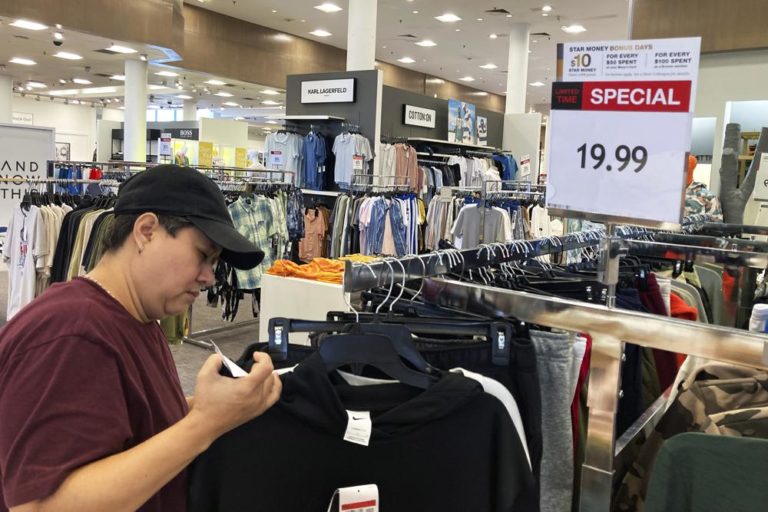
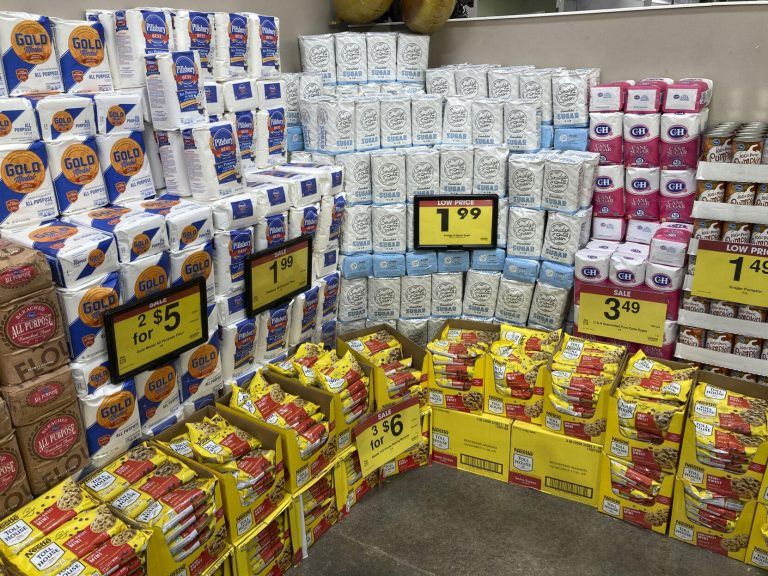
Food prices in particular have soared in the last year.

“The food at home index rose 13.0 percent over the last 12 months,” BLS said.

“The index for cereals and bakery products increased 16.2 percent over the year and the index for dairy and related products rose 15.9 percent. The remaining major grocery store food groups posted increases ranging from 9.0 percent (meats, poultry, fish and eggs) to 15.7 percent (other food at home).”

This data came after BLS released producer pricing data Wednesday showing the same 0.4% increase for producer prices, more than expected, which is part of an 8.5% increase in the previous 12 months.

“Over a quarter of the [Sept.] increase in the index for final demand services can be traced to a 6.4-percent advance in prices for traveler accommodation services,” BLS said in its producer price data release.

“The indexes for food and alcohol retailing, portfolio management, machinery and vehicle wholesaling, oil and gas well drilling services and hospital inpatient care also rose. In contrast, prices for long-distance motor carrying fell 0.4 percent.”

These costs are making it hard for Americans to make ends meet and putting extra pressure on small businesses.

The National Federation of Independent Business released a survey reporting that 30% of small business owners cited inflation as the single most important problem in operating their business.

“Inflation and worker shortages continue to be the hardest challenges facing small business owners,” said NFIB Chief Economist Bill Dunkelberg.

Inflation is No. 1 Concern for Struggling Small Businesses

(Casey Harper, The Center Square) Newly released polling data shows inflation is a top concern for small businesses as prices continue to rise.

The National Federation of Independent Business [NFIB] released a survey, which shows that 30% of owners named inflation as the single most important problem in running their business.

“Inflation and worker shortages continue to be the hardest challenges facing small business owners,” said NFIB Chief Economist Bill Dunkelberg. “Even with these challenges, owners are still seeking opportunities to grow their business in the current period.”

In response, many business owners have had to raise their prices, passing some of those costs on to consumers.

“The net percent of owners raising average selling prices decreased two points from [Aug.] to a net 51% (seasonally adjusted),” NFIB said.

“Unadjusted, 9% of owners reported lower average selling prices and 59% reported higher average prices. Price hikes were the most frequent in retail (73% higher, 11% lower), construction (69% higher, 3% lower), transportation (68% higher, 5% lower) and wholesale (64% higher, 0% lower). Seasonally adjusted, a net 31% of owners plan price hikes.”

New consumer pricing data is expected to be released this week, but the U.S. Bureau of Labor Statistics released producer pricing data Wednesday that confirms businesses’ reason for concern.

The data showed that producer prices rose 0.4% in Sept., twice the increase expected by Dow Jones. Overall, producer prices rose 8.5% over the previous 12 months.

“Over a quarter of the [Sept.] increase in the index for final demand services can be traced to a 6.4-percent advance in prices for traveler accommodation services,” BLS said.

“The indexes for food and alcohol retailing, portfolio management, machinery and vehicle wholesaling, oil and gas well drilling services and hospital inpatient care also rose. In contrast, prices for long-distance motor carrying fell 0.4 [%].”

Those increases have small businesses worried. For those businesses making less money, they cited inflation as the top cause.

“The frequency of reports of positive profit trends was a net negative 31%, up two points from [Aug.],” NFIB said.

“Among owners reporting lower profits, 42% blamed the rise in the cost of materials, 21% blamed weaker sales, 12% cited labor costs, 8% cited lower prices, 6% cited the usual seasonal change and 3% cited higher taxes or regulatory costs. For owners reporting higher profits, 44% credited sales volumes, 24% cited usual seasonal change and 18% cited higher prices.”

Schools Spending Federal Relief Money on Employee Bonuses

(The Center Square) School districts across the country are spending federal COVID-19 relief money on bonuses to employees, saying their employees earned it for their work during the pandemic.

The bonuses vary from district to district, ranging from $250 to more than $20,000 per employee.

Flint Public Schools in Mich. gave each of its teachers a $22,500 bonus in 2021.

Tucson School District in Ariz. is going to pay $7,500 retention bonuses to all of its full-time employees spread over three payments starting Dec. 2, 2022, through Dec. 1, 2023.

Gaston County Schools in N.C. approved $5,000 in retention bonuses for all of its permanent employees during the 2021 and 2022 school years.

District officials cited additional responsibilities employees “have endured” since the pandemic and said the bonuses helped improve the stability of the district’s workforce.

The Los Angeles Unified School District is paying teachers a 3% retention bonus in 2022-23 and 2023-24. That would be about $2,200 for a fifth-year teacher with a base pay of $72,696. The district also gave nurses a $20,000 salary increase.

“… the District recognizes the hard work and dedication of our employees and the need to compensate them fairly in the current economic environment,” the district stated in a Sept. news release.

The National Council on Teacher Quality surveyed 148 school districts and reported that about 40% offered some kind of retention bonus to teachers in 2021-22.

But it’s not just teachers getting bonuses.

Boston Public Schools is paying part-time cafeteria attendants and bus monitors a $250 bonus for every 10 days worked through the 2022-23 school year.

Some politicians wanted to give out even more federal money.

In Mich., Gov. Gretchen Whitmer proposed adding a state retention bonus on top of what school districts were already paying.

Whitmer’s plan was to spend $2.3 billion on K-12 public education workforce recruitment and retention bonuses in 2022.

It would have given bonuses to an estimated 200,000 employees working in public schools and teachers could get up to $11,000 in bonuses over four years, above and beyond what their districts are already paying in bonuses.

The public policy research nonprofit Citizen’s Research Council concluded Michigan’s K-12 workforce had increased by 11,000 employees in 2021-22 and stated, “it is hard to see the justification for the broad scope of the [Gov.’s] statewide school employee retention bonus spending proposal.”

“A more targeted intervention, one that would be less costly to taxpayers, would focus funding on those schools most adversely affected by high employee turnover and that face the greatest difficulties staffing specific positions.”

Whitmer’s bonus plan was not included in the budget lawmakers passed in July, according to the Mich. Department of Education.

Christian Barnard, the senior policy analyst at Reason Foundation, said retention bonuses could be a good use of federal COVID-19 emergency dollars because they don’t come with any long-term commitments, such as a new hire.

“However, it’s important that districts target retention bonuses to staffing categories with the greatest retention challenges – for example, science and math teachers and special education teachers,” Barnard said in an email.

AOC Demands Taxpayer Funds to Fix New York’s Illegal Alien Surplus

(Molly Bruns, Headline USA) Representative Alexandria Ocasio-Cortez, D-NY, stated that the Biden administration needs to give New York City more taxpayer money to help illegal immigrants.

She also argued that the Unites States should accept every border crosser and immediately make them citizens.

According to The Post Millennial, all of this occurred at a sparsely attended town hall meeting in the Bronx.

“Those federal resources should come to New York City, and those federal dollars should come to places that want to take care of people, and we need that financial support,” the congresswoman argued.

The southern border has seen a record high number of illegal immigrants crossing, with more than two million encounters in a single fiscal year.

The surplus of immigrants crossing the border has led to historic drug and human trafficking.

“We have foreign nationals by the millions pouring in illegally, flooding our country,” one of the attendees said.

“You are a member of Congress. Writing our immigration laws… What will you do with the immigration law to secure the southern border?”

“If we don’t want people here illegally then we should document them,” AOC shouted back at him.

The attendee also mentioned that the great majority of immigrants are economic migrants hoping to get higher paying jobs.

“It’s legal to seek asylum at the United States border. It’s legal. It’s legal. It’s legal to claim asylum,” AOC said in response.

“When we talk about undocumented people, my priority is about opening legal pathways to citizenship. And making sure they are open,” she said.

As GOP governors of southern border states continue to bus illegal immigrants to New York City, Mayor Eric Adams has called a state of emergency due to their inability to take care of the immigrants.

Ocasio-Cortez said she is working with Adams to get more grant money from the Office of Housing and Urban Development for emergency service housing.

Rural Backlash Against Renewable Energy Surges

(Robert Bryce, RealClearWire) The hype about wind and solar energy keeps colliding with the hard reality of land-use conflicts. Nowhere is that more obvious than in Ohio, where 41 townships have rejected or restricted the expansion of wind and/or solar projects since last November.

In addition, at least eight Ohio counties have implemented restrictions on Big Wind and Big Solar over that same time period.

The soaring number of rejections – all of which are documented in the Renewable Rejection Database – brings the total number of solar rejections in the U.S. this year to 67.

That total includes the October 12 unanimous vote by the Linn County, Iowa, Board of Supervisors to implement a moratorium on solar projects in their county. In all, since 2017, 94 communities across the U.S. have rejected or restricted Big Solar.

Wind projects are also facing fierce resistance, particularly in Ohio, a swing state that is critical to presidential candidates.

Thus far in 2022, 46 local governments, 40 of which are in Ohio, have rejected or restricted wind projects. Furthermore, since 2015, 370 communities from Maine to Hawaii have rejected or restricted wind projects.

These hundreds of rejections are routinely ignored by big media outlets. Further, they don’t square with the schemes being promoted by academics from Princeton, Stanford, and other elite universities who routinely claim that the U.S. can build thousands of megawatts of new solar and wind capacity in rural America and do so in just a few years.

On August 23, the Ohio Capitol Journal reported that “At least 10 Ohio counties have passed resolutions blocking the development of new utility-scale wind and solar projects within all or part of their jurisdictions in the last year. At least two more counties are actively considering such a prohibition.”

The moves in Ohio, as well as the recent rejection by supervisors in Linn County, Iowa, prove yet again that the Midwest has become the epicenter of the rural backlash against Big Wind and, increasingly, Big Solar.

A New York City Homeless Shelter Wasted $2.4 Mil

(Adam Andrzejewski, RealClearWire) A non-profit that runs a New York City-funded homeless shelter couldn’t say how it spent almost $2.4 million in funding over three years.

The organization, the Institute for Community Living, received the funds from the city’s Department of Homeless Services, which “did not complete required expenditure reviews,” according to an audit from New York State Comptroller Thomas P. DiNapoli.

The report also found that the non-profit may have wasted more than 155,000 meals worth nearly half a million dollars from 2016 to 2019.

“Our audit found a shelter charged expenses to the city with little or no explanation and unconscionably and regularly threw mountains of food into the trash,”

DiNapoli told the New York Daily News. “New York City has a homelessness crisis and must demand more accountability from shelter providers, who are paid millions of dollars.”

The Institute for Community Living was in contract with the city Department of Homeless Services since 2014 through December 2021 to provide shelter and medical care to mentally ill and drug-addicted women at the Tillary Street Women’s Shelter, the Daily News reported.

DiNapoli focused on the period of 2016 to 2019, finding that the nonprofit claimed $24.5 million in reimbursable expenses from the city but that $1.2 million in personal service costs weren’t eligible to be reimbursed and that $1.1 million “in indirect and other expenses were also ineligible,” the Daily News reported.

While conducting the audit, DiNapoli asked the organization for employee time records, something the non-profit couldn’t provide.

The audit also had few records for other expenses the organization claimed to have, including more than $71,000 in utility expenses, $61,000 in insurance costs, and nearly $52,000 in facility repairs, the Daily News reported.

Adapted from reporting by RealClearWire.

Law Enforcement Group Argues that Leftists Drove 40% Spike in Murders

(Casey Harper, The Center Square) Some law enforcement groups and police experts are blaming rising violent crime on a “toxic trio,” pointing the finger at anti-police rhetoric, lax prosecutors and the “defund the police” movement.

“Defaming and defunding police has cops running for exits, as violence surges and we need them now more than ever,” said Jason Johnson, president of the Law Enforcement Legal Defense Fund.

“This should be a wake-up call.”

The comments come after recently released FBI crime statistics showed homicides increased in 2021, even though 2020 was a record-high year.

Rape also increased, and vehicle thefts have risen more than 20% since 2019. Murder is up nearly 40% since 2019, the most significant increase since crime statistics of this kind have been tracked.

“This report confirms there are two inextricably like public safety crises happening,” Johnson said.

“Crime, especially murder, has risen precipitously since the summer of 2020 while law enforcement has been demoralized, debilitated and in some cases defunded. Homicides are up almost 40% since 2019, while most large police departments are hemorrhaging officers.”

Recent polling shows crime is a top issue for voters. An ABC News/Washington Post poll released last month showed that 69% named crime as a “highly important” issue, more than abortion, immigration or climate change. At the same time, voters favor Republicans’ handling of crime by 14 points, according to the poll.

Cully Stimson, a former prosecutor and legal expert at the Heritage Foundation, said that “this narrative that crime rose as a result of the pandemic is just baloney.”

“It’s important to put this in the bigger context. The last crime spike in our country ended in 1992, 93 and since then we have had a 30-year serious decline in violent crimes and crime in general,” he said.

“And because incarceration always trails behind crime rates, either rising or falling, incarceration rates have been dropping dramatically since 2007, 2008.”

Stimson pointed to a recent shift fueled largely by discouraging police and empowering “rogue prosecutors” who are much laxer, often refusing to prosecute entire categories of crimes.

“But what we’ve seen since about 2015 … two things started happening. The first, [George] Soros bought-and-paid-for prosecutor Kim Foxx was elected in Chicago and then you saw after the George Floyd murder and other notorious police-involved shootings crime in those cities start to go up,” Stimson said.

“And in every major city that has elected a Soros-bought-and-paid-for rogue prosecutor, crime has exploded. And not coincidentally, those cities… are also ‘defund the police’ cities.”

Stimson pointed to the “toxic trio.”

“So what I’ve called this is the toxic trio of the rogue prosecutor, defund the police and demoralize the police because in some instances they don’t defund police, they only threaten to defund the police or discredit the police,” he said.

“And when city officials or public officials don’t have the backs of the police, the criminal element does feel emboldened…”

Biden has pushed back on claims that Democratic policies have fueled rising crime, arguing Republicans are the ones who want to defund police, though that claim was met with widespread pushback.

The “Defund the Police” message has been carried almost entirely by Democratic leaders at the federal and local levels.

The FBI crime data this year is less reliable than in years past because it omits multiple major cities as they transition to a new reporting system.

Analysis: DeSantis Outraises Other Incumbent Governors Running for Reelection

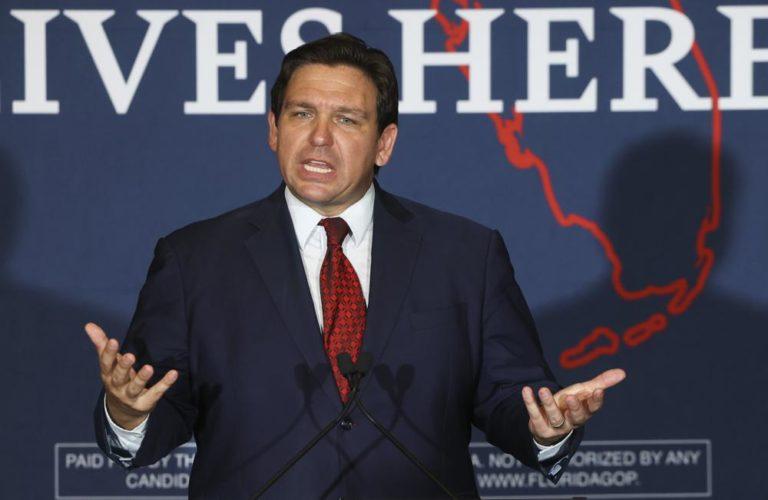
(The Center Square) Fla. Gov. Ron DeSantis has outraised other governors running for reelection in the United States.

As of Sept. 2, his campaign had raised $166,578,634, Transparency USA reports. His top donor was the Republican Governors Association, which gave $17.35 million.

DeSantis is running for his second term against Democrat Charlie Crist, a former Republican Gov. of Fla. who switched parties to run for Congress as a Democrat.

According to an Oct. 5 Mason-Dixon poll, DeSantis is projected to beat Crist by a vote of 52%-41%. A RealClear Politics average of polls has him leading by 11 points.

None of the other six governors running for reelection evaluated by Transparency USA have raised anywhere near the amount that DeSantis has.

The evaluation excludes Democratic Illinois Gov. J.B. Pritzker, who has largely self-funded his political campaign, giving himself $110 million this year alone.

According to an Oct. 14 Chicago Sun-Times/PPP poll, Pritzker leads his Republican challenger by 15 points.

The governor who raised the second largest amount behind DeSantis on Transparency USA’s list was Republican Texas Gov. Greg Abbott. Abbott, who’s running for his third term, raised $69,538,463, according to reporting data from Jan. 1, 2021, to June 30, 2022.

Abbott’s largest donor, after himself, was S. Javaid Anwar, who gave $1.8 million. Anwar is the owner and president of Midland Energy, Inc., Petroplex Energy, Inc. and Western T. Corporation.

According to an Oct. 12 Marist poll, Abbott leads his Democratic challenger by 8 points.

The third- and fourth-highest fundraisers among incumbents running for reelection in Transparency USA’s analysis are the Democratic governors of Wis. and Mich.

Gov. Tony Evers raised $26,110,543 and Gov. Gretchen Whitmer raised $26,046,921.

Evers’ top donor was the Democratic Party of Wis., which gave over $8.3 million.

Whitmer’s five top donors each gave $250,000, including Gov. Pritzker.

According to recent polls published by RealClear Politics, both Evers and Whitmer appear to be in statistical ties with their Republican opponents.

Republican Ohio Gov. Mike DeWine raised over $15 million, Calif. Democratic Gov. Gavin Newsom raised over $14.8 million and Democratic Minn. Gov. Tim Waltz raised $6.3 million, according to the report.

DeWine’s top donor was the Ohio Republican Party State Central Committee, which gave over $1.9 million. Newsom’s and Waltz’s top donations came from aggregated unitemized contributions of over $1.7 million and over $2 million, respectively. Waltz’s top six donors each gave $8,000.

DeWine, Newsom and Waltz are all expected to win their races, according to the latest polls.

In addition to Pritzker, the analysis excludes campaign finance data for numerous incumbent governors running for reelection, including Ga. Gov. Brian Kemp, Iowa Gov. Kim Reynolds, Kan. Gov. Laura Kelly and S.D. Gov. Kristi Noem, among others.

Gabbard to Stump for N.H. GOP Senate Candidate

(The Center Square) Fresh off her pledge to leave the Democratic Party, former congresswoman Tulsi Gabbard is planning a trip to N.H. to stump for Republican U.S. Senate candidate Don Bolduc.

Bolduc said Thursday that Gabbard, a 2020 Democratic presidential candidate, will be visiting the Granite State to speak to voters about his challenge to incumbent Democratic Sen. Maggie Hassan ahead of the Nov. 8 midterm elections.

He said he and Gabbard “don’t agree on every issue” but she shares his view that “the status quo is broken.”

“Tulsi is a fellow change agent and an independent-minded outsider willing to speak truth to power,” Bolduc said in a release.

“I am going to spend every day between now and Election Day building a wide coalition of supporters that includes Republicans, independents and even disaffected Democrats.”

Bolduc said Democrats are “ignoring” what he described as the three most important issues in the upcoming midterm elections: “inflation, inflation and inflation.”

“People are choosing between heating and eating, they’re not being listened to and fear and uncertainty and control is what they see,” he told Fox News on Thursday.

“They feel that they have lost their ability for self-governance.”

N.H. Democratic Party dismissed news that Gabbard will be coming to the state to campaign for the GOP candidate. Hassan has held leads in most polls.

“Tulsi Gabbard is a Vladimir Putin apologist who has pushed conspiracy theories and stood with dangerous tyrants over the United States,” the party said in a statement.

“By campaigning with a pro-Putin, extreme conspiracy theorist like Gabbard, Don Bolduc is making only more clear how out of step he is with N.H.”

The announcement follows Gabbard’s announcement earlier this week that she is leaving the Democratic Party over disagreements on Washington policies and thorny social issues.

“I can no longer remain in today’s Democratic party,” Gabbard said in a podcast.

“It’s now under the complete control of an elitist cabal of warmongers… driven by cowardly wokeness.”

Bolduc, a retired U.S. Army brigadier general, narrowly edged out N.H. Senate President Chuck Morse, a moderate, in the Sept. 13 state primary to win the GOP nomination.

Hassan is a former N.H. governor who defeated Republican Sen. Kelly Ayotte in a narrow race in 2016 to win the seat.

She is seeking another four-year term by highlighting Bolduc’s support for former Republican President Donald Trump’s “divisive” policies and claims that the 2020 election was stolen.

The nonpartisan Cook Political Report has rated the U.S. Senate seat as “lean Democrat” in the upcoming general election.

Despite that, National Republican and Democratic groups have poured tens of millions of dollars into the general election race, with control of Congress in the balance, and more spending is expected ahead of the general election.

N.Y. Concealed Carry Gun Law Back in Full Effect – For Now

(The Center Square) A federal circuit judge on Wednesday issued a temporary stay to an injunction issued last week by a lower court regarding N.Y.’s recently passed concealed carry gun law.

The ruling by U.S. Circuit Judge Eunice C. Lee means that the complete law will remain in effect until a three-judge panel from the 2nd U.S. Circuit Court of Appeals considers a full stay.

N.Y. State Attorney General Letitia James sought the stay earlier this week after U.S. District Judge Glenn T. Suddaby granted a temporary injunction last Thursday that would have suspended several aspects of the law legislators passed earlier this year.

“I am pleased that the full Concealed Carry Improvement Act [CCIA] will stay in effect and continue to protect communities as the appeals process moves forward,” James said in a statement.

“My office will continue our efforts to protect the safety of everyday New Yorkers and defend our common-sense gun laws.”

N.Y. passed the law on July 1, just days after the U.S. Supreme Court overturned an existing state law that required gun owners to get a permit to carry in public.

[CCIA] prohibits guns in certain locations, such as tourist spots like Times Square. It also requires gun owners to seek a property owner’s approval before carrying on that property.

CCIA also incorporates social media account checks on some weapons purchases and mandates background checks before ammunition purchases.

The new law took effect on Sept. 1.

Suddaby’s injunction only covered parts of the law, including the social media account reviews and the requirement applicants needed to show “good moral character.”

In a statement, Democratic Gov. Kathy Hochul praised the ruling.

“The interim administrative stay of the district court’s temporary restraining order is an important and appropriate step and affirms that the [CCIA] will remain in effect during the appeals process,” she said.

“My top priority will always be to keep New Yorkers safe, and we will continue working with the Office of the Attorney General to defend our gun safety laws.”

A message to the Gun Owners of America was not immediately returned.