Mich. Public Schools’ COVID Cash Used for D.C. Field Trips, Equity Consulting

(The Center Square) – Grand Rapids Public Schools in Michigan received more than $100 million of COVID relief to help 14,000 kids recover from pandemic learning loss.

The recovery spending ranged from teacher consulting, field trips more than 600 miles away, tutoring programs and summer programs to replace some experiences lost during remote learning.

Of the $49 million last tranche of Elementary and Secondary School Emergency Relief, the most significant chunks are $18.7 million for operations and maintenance, $17.2 million for basic programs, $4.6 million for central support services, and $3 million for pupil transportation.

The Center Square obtained an initial 2021 ESSER III spending plan through records requests. Some spending was modified after consulting with the Michigan Department of Education. For example, the district initially planned to spend $550,000 for Tammy Campbell, a national equity coach who runs an education consulting firm called The Scholar First. However, that amount didn’t reach the final spending plan.

So far, the eighth largest district statewide has spent $106,000 of ESSER II and III funds on services from The Scholar First and $168,000 on instructional coaching with other agencies, GRPS Director of Communications Leon Hendrix told The Center Square in an email.

“The return on investment has been immeasurable when it comes to galvanizing our team behind common goals of improving education for our scholars,” Hendrix wrote in an email.

GRPS aimed to spend $425,000 on technology supporting recruitment and online enrollment to return some of the 800 students it lost during the pandemic, the district said in its ESSER application.

GRPS spent $6.8 million on classroom technology, including video projectors, interactive whiteboards, and other teaching tools for 635 classrooms. It spent $1.5 million on Chromebooks and iPads.

The highest cost of operations and maintenance was $12.4 million to staff custodians at 40 schools for two years. Also, $5.8 million funded security staffing for two years.

Different projects include a First Robotics program, nearly $250,000 for SAT prep, and dual enrollment classes at community colleges and university camps such as NASA, STEAM, coding for girls, and gaming.

GRPS paid for student tutoring before and after school, summer art camps, music lessons outside school, art trips, music festivals, and trips to Historically Black Colleges and Universities. It also allocated $515,000 for Washington D.C. trips for 140 students and chaperones to visit over three years.

One elementary music program for teachers costs $15,000 per session.

GRPS spent $48,000 to train all elementary music teachers in ORFF music professional learning, which is “an elementary general music pedagogy that is highly engaging for students. It includes playing hand percussion, singing, and ORFF instrument – mallet percussion.”

The district paid 20 staff members $33,750 in stipends to attend two weeks of ORFF training. GRPS says that research supports the instruction as “highly successful” for poor students. It spent another $3,000 on related additional training and supplies.

GRPS paid $450,000 for Orton Gillingham teacher training, a research-based diagnostic way to teach literacy. The funding will train 500 teachers at $900 per teacher.

GRPS planned to spend $340,000 for the GoGuardian software to monitor students on online devices for two years.

The software filters internet content and notifies staff “about online activity that indicates a risk of suicide, self-harm, or possible harm to others,” according to its website.

Ga. Supreme Court Reestablishes Abortion Ban

(The Center Square) — Georgia’s six-week abortion ban will take effect while an appeal proceeds, the Georgia Supreme Court ruled on Wednesday.

The move stayed a lower court’s ruling.

“We are pleased with the court’s action today. However, we are unable to provide further comment due to the pending appeal,” Kara Richardson, a spokeswoman for Attorney General Chris Carr told The Center Square.

Last week, a Fulton County judge ruled the state could not enforce an abortion ban lawmakers passed before the U.S. Supreme Court struck down Roe v. Wade.

Fulton County Superior Court Judge Robert McBurney ruled that two sections of House Bill 481, the Living Infants Fairness Equality Act, which Georgia lawmakers passed in 2019, “were plainly unconstitutional when drafted, voted upon, and enacted.” As a result, they “must be reenacted in our post-Roe world if they are to become the law of Georgia,” the judge wrote.

The state immediately appealed the decision.

“If it seems odd that the Superior Court would nevertheless rely on the overruled Roe decision to invalidate the LIFE Act, that is because it is,” the state said in its motion. “No other court has ever held that an overruled judicial opinion can, like a zombie rising from the grave, invalidate otherwise perfectly valid laws.”

Before the state case, a federal judge initially blocked the law, commonly called the “Heartbeat Bill,” because the U.S. Supreme Court had previously upheld the 1973 Roe v. Wade ruling. After the U.S. Supreme Court overturned Roe v. Wade as part of Dobbs v. Jackson Women’s Health Organization, a federal appeals judge ruled the Georgia law could take effect, prompting a pro-abortion coalition to file a lawsuit in Fulton County.

“Appropriate reproductive health care had restarted in this state and it will be traumatic for Georgia’s women and couples to again lose their right to make personal, private decisions about their lives,” Andrea Young, executive director of the ACLU of Georgia, said in a statement. “It also now becomes even more important that we protect access in other states by preventing the U.S. Senate from passing a federal ban on abortion.”

World Cup Fans Put Off by Prices, Beer Limits Commute by Air

(Headline USA) Travel at this World Cup was supposed to be easy in the tiny host nation of Qatar, after fans had to take long flights between cities at the last three tournaments.

The eight stadiums in Qatar are in or near the capital, so fans don’t have to go too far to get to matches — in theory. The country billed its World Cup as environmentally sustainable in part because of how compact it is, but the reality is quite different.

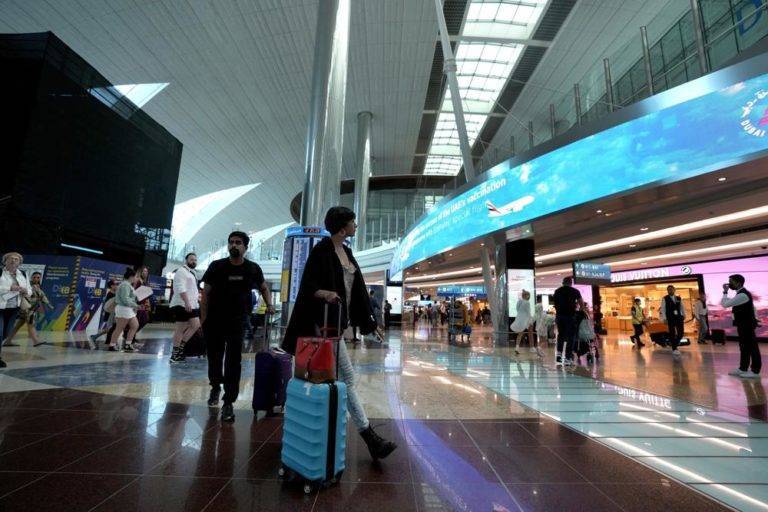
Tens of thousands of foreign fans are turning to shuttle flights between Doha and neighboring Dubai for a number of reasons — high hotel prices, a scarcity of accommodation and alcohol limits.

It might sound extreme and expensive, but the daily flights have become a popular choice as fans opt to sleep somewhere other than Qatar.

Dubai, the freewheeling commercial capital of the United Arab Emirates, is the region’s top destination outside Doha. State airlines like FlyDubai, the emirate’s budget carrier, are marshaling resources, operating 10 times the number of usual flights to Doha.

Neighboring Abu Dhabi and Saudi Arabia also have organized air shuttles to cash in on the World Cup tourism boom. Every few minutes, a Boeing or Airbus rumbles overhead Doha’s old airport.

Unlike fans who had to take long-distance flights at the World Cups in South Africa (2010), Brazil (2014) and Russia (2018), the Dubai-Doha route is shorter in most cases.

But short flights, often defined as trips shorter than 311 miles, are more polluting than long ones per person for every kilometer traveled because of how much fuel is used for take off and landing.

More than a dozen World Cup fans interviewed Thursday who chose to stay in neighboring countries said it came down to cost. Many couldn’t find an affordable place to sleep in Doha, or any place at all. As hotel prices soared in the months leading up to the tournament, frugal fans scrambled for spots in Qatar’s far-flung fan villages filled with canvas tents or shipping containers.

“We wanted to stay for five days in Doha. But it was too expensive. We didn’t want those weird fan zones,” said Ana Santos, a Brazilian fan arriving at Doha’s airport on Thursday with her husband.

“In Dubai, we found a fancy hotel for not too much money. … The flights are so crowded so we’re not the only ones.”

After eight years of lying idle, Doha’s former airport is back to life as thousands of shuttle flight passengers squeeze through its halls. On Thursday, Qataris in traditional dress passed out juicy dates and Arabic coffee to arriving fans who cheered and snapped photos while draped in their national flags.

Other fans on shuttle flights were turned off by Qatar’s alcohol restrictions. The city’s few hotels are almost the only places allowed to serve alcohol, after a last-minute ban on beer in stadiums. Doha’s sole liquor store is open only to Qatari residents with an official permit.

Meanwhile Dubai’s pulsing nightclubs, pubs, bars and other tourist spots are awash with spirits — and at lower prices than in Doha, where a single beer goes for $14 at the official fan festival. Even in Abu Dhabi, the United Arab Emirates’ more conservative capital, tourists can buy alcohol at liquor stores without a license.

“We want to have a Dubai experience. That’s more interesting for us,” said Bernard Boatengh Duah, a doctor from western Ghana who bought an all-inclusive Dubai hotel package that gives him match-day flights, as well as unlimited food and alcohol. “We wanted more freedom.”

Many fans described the shuttles as a fairly seamless process — arriving at the Dubai airport less than an hour before takeoff, zipping through lines without luggage and flying for about 50 minutes before landing in Doha just in time for their game.

But others found it stressful and draining.

“These are long days. It’s exhausting,” said Steven Carroll, a lab technician from Wales, whose flight back to Dubai was delayed an hour, returning him to his Dubai hotel worn-out at 4.a.m after a 24-hour day.

“The problem is you have to arrive in Qatar a good while before the match and you have to allow even more time to go through the airport.”

Fernando Moya, a 65-year-old Ecuador fan from New York, said he regretted flying in from Abu Dhabi. A technical problem with his friends’ Hayya cards, which act as Qatar entry visas, stranded his companions in the UAE capital.

Moya spent his Thursday speaking to customer service in the Doha airport and shelled out nearly $2,000 to fly them over on a new flight.

“The logistics of this whole system are very complicated for people,” he said.

The airport on Thursday was teeming with fans from Saudi Arabia, whose citizens have bought more World Cup tickets than any other nationality after Qatar and the Untied States. The Saudi team’s shock victory over Argentina this week stoked even more excitement.

Riyadh, an aspiring tourism destination, has sought to benefit from the regional boost, offering those with Hayya cards two-month visas to the kingdom. Saudi student Nawaf Mohammed said World Cup fever in Riyadh is palpable, with more Westerners visible in the capital’s airport and carnivals.

The prospect of shuttle flights from the UAE or Saudi Arabia would have been unthinkable mere years ago. In 2017, the two Gulf Arab states, along with Bahrain and Egypt, imposed a boycott on energy-rich Qatar, cutting off trade and travel links over the emirate’s support for political Islam and ties with Iran. Qatar refused to back down and the embargo ended last year.

Even so, tensions linger. Bahrain, just a 45-minute flight from Doha, continues to squabble over politics and maritime borders with Qatar. Fans sleeping in the island kingdom enjoy no such easy flights.

Eyad Mohammed, who chose to stay at a beach in Bahrain, had a layover in eastern Saudi Arabia on Thursday.

“This region is not always convenient,” he said.

Adapted from reporting by the Associated Press

Biden Admin. Policies Frustrating Shoppers as Inflation Makes Bargains Elusive

(Headline USA) Shoppers are reeling from the soaring costs on just about everything, driven by the Biden administration’s failing domestic policies that have fueled inflation, and it could get worse.

Consumers holding out for big deals may be disappointed as they head into the busiest shopping season of the year.

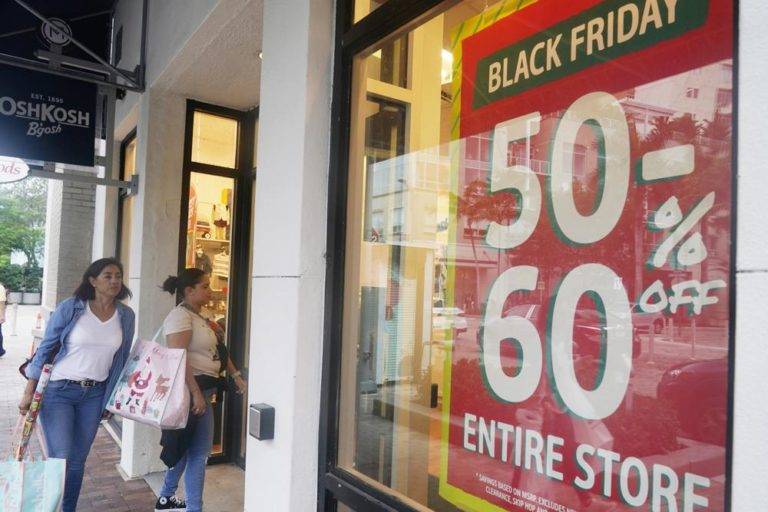
While retailers are advertising sales of 30%, 50% and 70% off everything from TVs to gadgets, many items will still cost more than they did last year because of inflation and finding a true bargain may prove to be a challenge.

From September through October, shoppers paid roughly 18% more for furniture and appliances than they did a year ago, according to a recent major data analysis by analytics company DataWeave, which tracks prices for hundreds of thousands of items across roughly three dozen retailers including Amazon and Target. For toys, they paid roughly 2% more.

Things looked a bit better for consumers shopping for clothing — they paid nearly 5% less compared with last fall, according to DataWeave. Meanwhile, prices held steady for footwear.

“It’s just a weird time for everybody to figure out what is the right price, and what is the real price,” said Nikki Baird, vice president of strategy of Aptos, a retail technology firm. “Consumers are really bad at discount math, and retailers are fully aware of it and do everything they can to take advantage of it.”

“I do feel like everything’s more expensive,” said the Brooklyn, New York, resident. “But I mainly keep track of it with small items, like food.”

The latest government retail sales report shows retail sales rose last month even when adjusting for inflation. That underscores some resiliency among shoppers heading into the Black Friday weekend, the kickoff to the season.

But cracks are forming.

Third-quarter earnings results from major retailers show shoppers aren’t willing to pay full price and waiting for deals. Kohl’s, Target and Macy’s all noted Americans have also slowed their spending in the past few weeks.

It’s a dramatic change from last year’s holiday period when shoppers began their holiday items as early as October for fear they wouldn’t get what they needed amid pandemic-infused clogs in the supply chain, once again driven largely by a lethargic and inadequate response from the Biden administration. Biden’s solution was to hand out free money, so consumers were also flush with cash from government stimulus money. Retailers were struggling to bring in items so they didn’t need to discount as much.

Michael Liersch, head of advice and planning at Wells Fargo, said this holiday shopping season, it’s more likely that things will “appear discounted or feel discounted, or it will seem like there are big offers” but that between inflation and “shrinkflation” — when manufacturers quietly shrink package sizes without lowering the price — it’s often not the case.

That trend played out in a recent spot check by DataWeave of different items. For example, a Cuisinart two-speed blender, listed at $59.99 but discounted at 25%, was available for $44.99 at grocery chain Fred Meyer. But it was still more expensive than last year’s blender, available for $39.99, after a 20% discount off a lower list price of $49.99.

At Kohl’s, shoppers paid more for Nunn Bush Baker Street men’s dressy shoes this past fall than last year when discounts were actually bigger, and the list price was lower. The shoes were available for $79.99 after a nearly 16% price cut from the $95 suggested price; last year, the shoes were available for $59.99 after a 29% discount on a lower list price of $85.

Kevin Brasler, executive editor of Consumers’ Checkbook, a nonprofit consumer organization, noted its researchers spent 33 weeks starting Feb. 9 tracking sale prices at 25 major retailers. They found most stores’ sale prices — even those that promote big savings — are bogus discounts, with retailers offering the same “sale price” more than half the time. In fact, at many retailers, the “regular price” or “list” price listed is seldom, if ever, what shoppers pay, Brasler said.

Still, inflation-battered shoppers like Yoki Hanley are willing to take their chances and hold out for a bargain. So far, she doesn’t feel like she’s getting good deals for her eight grandchildren and plans to delay her buying until the last week before Christmas.

“Everything went up so my little nest egg disappeared a whole lot quicker than I expected,” said the St. Croix resident. “I will wait until the last minute. They’ll get it, but it’s coming late.”

Adapted from reporting by the Associated Press

‘Bioethicist’ Endorses Illegal Abortions as ‘Civil Disobedience’

(Dmytro “Henry” Aleksandrov, Headline USA) Alleged “bioethicist” Matthew Wynia this week told NPR’s Morning Edition that doctors may perform illegal abortions as an act of civil disobedience, and kill unborn babies with a socially-cleansed soul.

“I have seen some very disturbing quotes from health professionals essentially saying, well, look – it’s the law. We have to live within the law,” said Wynia, the director of the Center for Bioethics and Humanities at the leftist University of Colorado, according to Breitbart.

“And if the law is wrong and causing you to be involved in harming patients, you do not have to live to that law,” he added without saying that abortion is a procedure that is designed to kill a baby.

Wynia also said caregivers find themselves performing illegal abortions to avoid being accused of the fact that they kill innocent human beings.

“There’s actually a long history of civil disobedience around abortion,” NPR’s Selena Simmons-Duffin said. “… for many decades, starting in the 1900s, there was kind of a don’t-ask, don’t-tell silence around abortion.”

According to host Rachel Martin, the fear of pro-life laws caused some doctors to delay or deny the murder of unborn babies.

“Some doctors are asking themselves tough questions. When they are forced to choose between their ethical obligations to patients and the law, should they defy the law?” Martin asked.

Simmons-Duffin also pointed out that Wynia argued that hospitals should forget about the Hippocratic Oath and start supporting abortionists in their desire to kill little human beings because they “decide to follow the standard of care for a patient, even when that violates state abortion laws.”

“[Laws banning abortion] can compel doctors to choose between harming patients and breaking the law,” he said. “… professional ‘conscience’ protections should apply equally to physicians refusing to participate in abortions and those who are compelled by conscience to provide abortion care.”

He then compared abortion restrictions with forced-sterilization programs in the United States and Nazi Germany, the use of psychiatric hospitals as political prisons in the Soviet Union and “police brutality” under apartheid in South Africa.

Wynia then dared to argue that allowing the murder of babies in the wombs would repair the moral fabric of the United States.

“Professional civil disobedience may be what is required to repair the moral fabric of our country and the integrity of our profession, which have been so injudiciously ruptured by the Supreme Court,” he said.

NYT Compares Mankind to Sea-Blob to Peddle ‘Radical Empathy’

(Ezekiel Loseke, Headline USA) In a telling essay from the New York Times, mankind was compared to an unidentifiable blue sea-blob for the purpose of developing “radical empathy.”

The essay was entitled, “Are You Really So Different From the Blue Sea Blob?”

This summer, scientists found an unidentifiable, but living, blue sea blob attached to “brown sludge” that was more than 1,300 feet below the surface of the ocean.

The author of the essay, Sabrina Imbler, said she penned the piece to establish “radical empathy.” She wished her reader to “try [this method] in your everyday life.” If one does, she argued the practice “offer[s] openness, wonder and care toward other creatures’ incomprehensibility.”

We are to do this, of course, by not noticing that we are not animals. Imbler notes that we can easily identify with animals that look like us, like bonobos, or animals that act like us, animals with families, mates, friends and children.

But, this does not cover the phenomena of the blue sea blob.

“Instead of gawking at such creatures as bizarre, I find it more fulfilling to seek connection with them across and because of our differences,” she said, and instructed readers, “When you encounter a life-form so unfamiliar that you find it uninteresting or repulsive, reach inward to find glimmers of resonance.”

Fortunately, she attempted to clarify what she meant by giving a few examples of how we can identify with these critters who neither look nor act as we do.

“Maybe … like a city pigeon, you can trace your presence in the United States back to colonialism,” she offered.

Radical empathy is, apparently, possible by adopting radical racial politics.

Envy is another form of radical empathy, according to Imbler, who wrote that, “maybe appreciation comes through your differences, such as the mystical ease with which a sea star regenerates an arm or an amoeba engulfs its prey.” She concludes, “Who wouldn’t envy such bodily freedom?”

The strange article was on a well-trodden path for Imbler. Her writings focus on a range of subjects relating humans and animals in heterodox ways. This includes oceanic pollution being described as snow, a description of sea creatures “steering” a sunken ship and an essay entitled “If You Haven’t Thought About Corona Virus in Animals, You Should.” Perhaps her writing is clearer there.

What was abundantly clear from this strange essay is that Imbler wants us to lose sight of the uniqueness and dignity of man. Man’s answer to the question, “Are You Really So Different From the Blue Sea Blob?” is, “Yes.”

But the real question is, why does the mainstream media want you to forget humans are unique and bear a unique dignity? Maybe it’s the same impulse that led Cracker Barell to offer vegetarian options.

Whatever the reason, as the viral meme argues, “I will not live in a pod and I will not eat the bugs.”

China’s Lobbyists, Business Chiefs Still Hold Influence over White House

(Molly Bruns, Headline USA) Meetings between Chinese government officials and politically-connected US citizens continue to crop up as China attempts to maintain its influence in the White House.

It was recently discovered that Maurice Greenberg, CEO of Starr Insurance Companies,  along with other hand-picked business leaders and former government officials hosted a meeting with representatives from the Chinese People’s Institute of Foreign Affairs to discuss geopolitical issues such as Taiwan, North Korea and the Russian invasion of Ukraine.

The Biden administration was briefed after the conference, days before President Joe Biden met General Secretary Xi Jinping in Indonesia.

According to the Daily Caller, Greenberg has had his fingers in the political pie for several decades, donating money to less-than-promising GOP political candidates like Jeb Bush and befriending more successful politicians along the way.

Several of those politicians accompanied him to the CPIFA meeting, including former Democratic Senator for Connecticut, Joe Liebermann, and former ambassador to China, Max Baucus.

Both of these men are part of a coalition created by Greenburg, whose stated goal is to “re-establish a constructive bilateral dialogue” with the Eastern nation.

“They are either demonstrating extreme naïveté or they are fully aware of who they are meeting with,” Peter Schweizer, author of Red-Handed: How American Elites Get Rich Helping China Win, said.

“None of these individuals strike me as naïve.”

There is speculation concerning the CPIFA’s motives in the United States. Some allege that the group acts as a representative for the interests of the United Front Work Department.

The UFWD has an extensive history of spying, propagandizing and acting as an enforcer for the Chinese Communist Party in the states.

Greenberg has worked closely with China for years, despite their blatant human rights abuses, going as far as accompanying former Secretary of State Henry Kissinger to Beijing just months after the Tienanmen Square Massacre.

Lieberman and Baucus are also fiscally invested in China, both having a history of sinking hundreds of thousands of dollars into blacklisted Chinese companies.

“The influence problem is far more our financial and tech companies pushing their short-term profits and stock prices as being vital to world peace or climate change cooperation or whatever the excuse of the day is,” said Derek Scissors, a senior fellow at the American Enterprise Institute.

“They’d be doing that even if there was no United Front Work Department.”

Witness: Walmart Shooter Seemed to Target Certain People

(Headline USA) The Walmart supervisor who shot and killed six co-workers in Virginia seemed to target people and fired at some victims after they were already hit and appeared to be dead, said a witness who was present when the shooting started.

Jessica Wilczewski said workers were gathered in a store break room to begin their overnight shift late Tuesday when team leader Andre Bing entered and opened fire with a handgun. While another witness has described Bing as shooting wildly, Wilczewski said she observed him target certain people.

“The way he was acting — he was going hunting,” Wilczewski told The Associated Press on Thursday. “The way he was looking at people’s faces and the way he did what he did, he was picking people out.”

She said she observed him shoot at people who were already on the ground.

“What I do know is that he made sure who he wanted dead, was dead,” she said. “He went back and shot dead bodies that were already dead. To make sure.”

Wilczewski said she had only worked at the store for five days and didn’t know with whom Bing got along or had problems. She said being a new employee may have been the reason she was spared.

She said that after the shooting started, a co-worker sitting next to her pulled her under the table to hide. She said that at one point, Bing told her to get out from under the table. But when he saw who she was, he told her, “Jessie, go home.” She said she slowly got up and then ran out of the store.

Police are trying to determine a motive, while former coworkers are struggling to make sense of the rampage in Chesapeake, a city of about 250,000 people near Virginia’s coast.

Some who worked with Bing, 31, said he had a reputation for being an aggressive, if not hostile, supervisor, who once admitted to having “anger issues.” But he also could make people laugh and seemed to be dealing with the typical stresses at work that many people endure.

“I don’t think he had many people to fall back on in his personal life,” said Nathan Sinclair, who worked at the Walmart for nearly a year before leaving earlier this month.

During chats among coworkers, “We would be like ‘work is consuming my life.’ And (Bing) would be like, ‘Yeah, I don’t have a social life anyway,’” Sinclair recalled Thursday.

Sinclair said he and Bing did not get along. Bing was known for being “verbally hostile” to employees and wasn’t particularly well-liked, Sinclair said. But there were times when Bing was made fun of and not necessarily treated fairly.

“There’s no telling what he could have been thinking. … You never know if somebody really doesn’t have any kind of support group,” Sinclair said.

On balance, Bing seemed pretty normal to Janice Strausburg, who knew him from working at Walmart for 13 years before leaving in June.

Bing could be “grumpy” but could also be “placid,” she said. He made people laugh and told Strausburg he liked dance. When she invited him to church, he declined but mentioned that his mother had been a preacher.

Strausburg thought Bing’s grumpiness was due to the stresses that come with any job. He also once told her that he had “had anger issues” and complained he was going to “get the managers in trouble.”

She never expected this.

“I think he had mental issues,” Strausburg said Thursday. “What else could it be?”

Bing was dead when officers reached the store in the state’s second-largest city. Authorities said he apparently shot himself.

Police have identified the victims as Brian Pendleton, 38; Kellie Pyle, 52; Lorenzo Gamble, 43; and Randy Blevins, 70, who were all from Chesapeake; and Tyneka Johnson, 22, of nearby Portsmouth. The dead also included a 16-year-old boy whose name was withheld because of his age, police said.

A Walmart spokesperson confirmed in an email that all of the victims worked for the company.

Krystal Kawabata, a spokesperson for the FBI’s field office in Norfolk, Virginia, confirmed the agency is assisting police with the investigation but directed all inquiries to the Chesapeake Police Department, the lead investigative agency.

Adapted from reporting by the Associated Press

Crooked Bankman-Fried to Speak at NYTimes ‘Summit’ w/ Zelenskyy, Yellen

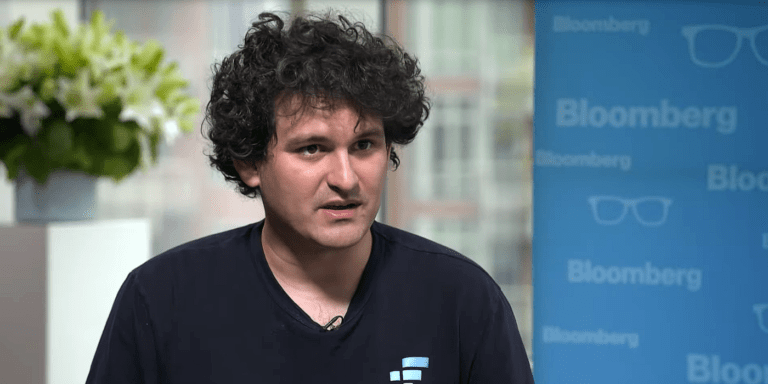
(Jacob Bruns, Headline USA) At an upcoming “summit” to be held by the corporate media hacks at the New York Times, the featured speakers will be a list of world-renowned clowns, including Sam Bankman-Fried, the failed and disgraced CEO of the now bankrupt FTX.

Joining Bankman-Fried at the gathering of world elites will be the Chairwoman of the Federal Reserve, Janet Yellen, alongside Ukraine president and elite actor Volodymyr Zelenskyy, Zero Hedge reported.

The trio is especially amusing given the likely connections between the three. Zelenskyy and Bankman-Fried, in particular, have been connected via Bankman-Fried’s FTX scandal, in which he duped thousands of people out of millions of dollars.

Bankman-Fried is only safe from criminal charges at the moment because it has not been confirmed that he used private client money to build his own hedge fund. If this is found to be the case, as seems likely, he could face decades in federal prison.

Of course, Bankman-Fried has the right connections, especially in the D.C. swamp.

FTX was launched in 2019 and had garnered millions of users by 2022. SBF apparently had plans to give over $1 billion dollars to his preferred leftist political causes in the coming years, before his entire fortune was lost.

But in the midst of massive scandal and ongoing investigations from the Securities and Exchanges Commission and the Department of Justice, culminating in allegations of money laundering and embezzlement, Bankman-Fried has resigned.

Despite his alleged criminal activity and his history of gross misbehavior, the Times is as interested in him as ever, and deemed he a stellar fit to keynote at its lauded summit.

Not only is SBF’s fortune gone, but also the savings of millions who had faith in his company to do the right thing.

He was recently estimated to be worth $23 billion. His net worth has all but evaporated, according to Forbes and Bloomberg, which closely track the net worth of the world’s richest people.

He has since been detained in the Bahamas, where he had attempted to go into hiding after money-laundering accusations were leveled against him.

Kari Lake Says She Has Evidence to Rock Maricopa County, Gov. Race

(Jacob Bruns, Headline USA) In a recent appearance on Steve Bannon’s War Room, Arizona Republicans gubernatorial candidate Kari Lake claimed to have evidence of widespread election fraud in Maricopa County.

According to Lake, she has several sources who will provide evidence that will seriously call into question the results of her alleged 2022 midterm loss to Democrat Katie Hobbs, the Gateway Pundit reported.

Lake told Bannon that she has contacted “whistleblowers coming forward and at least one smoking gun in it.”

The Republican candidate also noted that the sources knew the situation thoroughly because they were inside the Maricopa County Tabulation and Election Center, and they were familiar with the highly questionable Dominion voting machines, to which they were given “unfettered access.”

Aside from the typical Dominion machine shenanigans, numerous printers, especially in heavily Republican precincts, mysteriously ran out of ink on election day, slowing voting down to a crawl.

Following the disastrous election day, Maricopa County officials took days to count the ballots.

“I almost think there’s maladministration and maliciousness, the way they’re running this,” Lake said.

In recent days, Lake has noted that she plans to legally challenge the outcome of the extraordinarily close race.

Bolstering her case are a number of incidents, such as a Scottsdale poll-watcher explaining the irregularities he observed.

“We started experiencing issues with tabulators not accepting voters’s ballots,” he said. “These voters were told to reenter their ballots four different ways in the original tabulator, then if all failed, do the same thing in the second tabulator.”

Lake will be supported by Mark Brnovich, Arizona‘s attorney general, who has opened an official investigation into Maricopa County‘s election irregularities, despite his previous comments attacking people skeptical of the 2020 election.