Biden Regime Linked to Suspected Insider Trading w/ CPI Leak

(Mark Pellin, Headline USA) While November’s consumer price index release this week showed inflation slightly cooling, delivering a lower than projected 7.1% hike from the previous month, the report’s release also cast a cloud over the Biden administration regime for suspicion of insider trading.

The janky activity started about 60 seconds before the CPI report was officially released, when stock futures mysteriously jumped more than 1% and Treasury volumes soared, Bloomberg reported.

It was an explosive surge that would bank on decent CPI numbers, prompting widespread speculation that someone in the Biden administration had leaked the CPI report to give benefactors an inside track.

“This is unusual, especially given the reduction in inflation that was reported, which was well in excess of what markets anticipated,” Jerome Selvers, chair of the securities regulatory enforcement & litigation practice at Pashman Stein Walder Hayden law firm, told Bloomberg.

Veteran market analysts told Bloomberg that such volatile activity in such a short time span should draw scrutiny, “even if a leak is only one of several possible explanations for why traders suddenly started buying right before the report was published.”

Despite the extreme oddity of the trades, and what many financial insiders called an obvious link to a CPI leak, the White House comms team tried to run cover for the Biden regime, seemingly conceding there might have been leak while denying any suggestion of a leak.

“I can tell you this: There were no leaks from here,” press secretary Karine Jean-Pierre said. “I can tell you definitively, or at least I’m not aware of any leaks.”

“People may be reading a little bit too much into this,” the insurrectionist press secretary ventured, describing the mysterious spike stock futures as “minor market movements.”

Sexual Degeneracy, ‘Pup-Training’ Fetishes Investigated in U.S. Army

(Dmytro “Henry” Aleksandrov, Headline USA) The U.S. Army announced on Monday that it would investigate the photographs of men in military garb wearing dog masks and bondage gear.

Some of the photos that surfaced on social media over the past few days exposed the sexual degeneracy that is happening in the U.S. Army that would’ve been unacceptable years before that, according to the Post Millennial. The photos came under intense scrutiny, with many people calling to punish the individuals that appeared in the photos.

“[The Army was] aware of the content found on social media reflecting soldiers’ activities while wearing uniforms,” Army spokesman Maj. Jonathan Lewis said in a statement. “The incident is currently under investigation.”

Internal emails revealed that officials believed that some of the photos were taken at one of the Army bases in Hawaii. The man depicted in one of the photos, @PupRavage, lists Honolulu as his current location on Twitter, backing up those claims.

“He describes himself as a ‘rubber enthusiast,’ ‘bondage expert’ and ‘chastity aficionado,’ noting that he ‘proudly served’ in the Army,” the news outlet reported. “In a prior post, he stated that he had served for ‘nearly three decades.’”

Veteran Kris Cruz criticized @PupRavage and another sexual degenerate @GuyFoxer.

Other photos that were not revealed on social media show “poses of submission and sexual acts,” the Post Millennial said.

Officers are prohibited from engaging in conduct that “disgraces them personally or brings dishonor to the military profession” under military law.

“The men involved could be found guilty of violating Article 134, which covers ‘conduct of a nature to bring discredit upon the armed forces,’” the Post Millennial reported. “The photos could also be found to be in violation of Article 133, which covers ‘conduct unbecoming an officer.’”

While @PupRavage has retired he could still face a range of potential punishments, up to being “brought back to active duty to be court-martialed or re-retired at a lower rank.”

Woke Cambridge Dictionary Roasted for Orwellian Gender Bender

(Dmytro “Henry” Aleksandrov, Headline USA) People on social media criticized the Cambridge Dictionary, which is controlled by the leftist Cambridge University, after it changed the definitions of the words “man” and “woman” to appeal to woke radicals.

In a truly Orwellian fashion, Cambridge Dictionary redefined these words to destroy the reality of things that any language is supposed to mirror.

“A woman is now ‘an adult who lives and identifies as female though they may have been said to have a different sex at birth,’” the Daily Wire reported. “And of course, a man is ‘an adult who lives and identifies as a male though they may have been said to have a different sex at birth.’”

As soon as people found out about the recent action taken by a woke dictionary, they went to social media to criticize Cambridge.

“Shame on Cambridge Dictionary. Identifying as a woman does not make someone a woman,” one Twitter user wrote.

Another Twitter user mocked wokesters who redefine words for Cambridge.

“A book that lives and identifies as a dictionary though it may have been said to have a different genre when written.”

The new definitions were added in October, according to a Cambridge Dictionary spokesman.

“They carefully studied usage patterns of the word ‘woman’ and concluded that this definition is one that learners of English should be aware of to support their understanding of how the language is used,” a spokesman said.

“The first definition at the entry for ‘woman’ remains unchanged and continues to be ‘an adult female human being.’”

Free Speech Union founder Toby Young, however, said that the dictionary is going down a “slippery slope.”

“It’s disappointing to see identity politics creeping into the way a dictionary defines words. The claim that these supplementary definitions of ‘woman’ and ‘man’ are based on ‘carefully studied usage patterns’ doesn’t seem plausible,” Young said.

“Who, apart from a few woke activists, defines ‘woman’ and ‘man’ this way?”

The FBI Files Are Even More Dangerous

(J. Peder Zane – RealClear Wire) Elon Musk is performing a great public service by releasing the Twitter Files, which show how the social media company he recently purchased suppressed news about the Biden family’s foreign dealings. While the company’s actions, which occurred weeks before the 2020 election, raise knotty questions about free speech, they are a distraction.

The more urgent issue is the conduct of our own government, specifically the Federal Bureau of Investigation, which created the landscape where censorship and disinformation could thrive and possibly change the outcome of the presidential contest.

Here is a brief chronology which focuses on the bureau’s key role in this ongoing scandal.

In December 2019, the FBI used a subpoena to take possession of the laptop Hunter Biden had abandoned at a Delaware repair shop the previous April. The bureau has not said what it did with the computer but, as it acquired the laptop in connection with a Hunter Biden investigation involving money laundering, it is hard to believe it did not authenticate the data.

Earlier this year, several news organizations, including the New York Times, the Washington Post and CBS News verified much of the laptop’s contents, connecting Joe Biden to his son’s lucrative influence-peddling schemes.

During the late summer and early autumn of 2020, Trump lawyer Rudy Giuliani, who had obtained a copy of the laptop hard drive, began trying to place the story in media outlets. Giuliani’s efforts almost certainly would have come onto the bureau’s radar, as he was already under investigation by federal prosecutors for his lobbying work in Ukraine.

Around the same time, the FBI warned executives at Twitter and Facebook to be on high alert for Russian “hack and leak operations” involving Hunter Biden. Mark Zuckerberg recalled that the bureau warned that “basically there’s about to be some kind of dump” of Russian propaganda.

These claims by the FBI – which, it bears repeating, possessed the laptop – would become the foundation of Democratic Party and media efforts to discredit the explosive material.

On Oct. 14, 2020, the New York Post ran the first article about the laptop whose headline – “Smoking-gun email reveals how Hunter Biden introduced Ukrainian businessman to VP dad” – contradicted Joe Biden’s iron-clad claim that “I have never spoken to my son about his overseas business dealings.”

That first Post article also reported that the FBI had the laptop, telling social media platforms and rival journalists where they might go to check its authenticity. On the same day, Twitter and Facebook limited distribution of the Post article on the grounds that it could be hacked material.

The Twitter Files reveal that a prime force calling for the censorship of the news was James Baker, a lawyer who had previously worked at the FBI, where he was instrumental in furthering the Trump/Russia collusion hoax. It strains credulity to believe he never checked with his former colleagues at the bureau about the laptop before advising Twitter that “it’s reasonable for us to assume that they may have been [hacked] and that caution is warranted.”

The same goes for the rival news organizations that disparaged the laptop story. There can be little doubt that the bureau’s phone lines were burning that day, though we do not know who called, what they asked, or what they were told. But given the FBI’s long history of violating its own policy about not discussing ongoing investigations, and the national import of this story, it almost certainly had a duty to somehow set the record straight. Officially, there was only silence, which allowed disinformation to spread.

On Oct. 17, Rep. Adam Schiff, who had led the Democrats’ effort to paint Trump as Putin’s treasonous puppet during the Russiagate hoax, dismissed the laptop as a smear “from the Kremlin.”

Five days later, on Oct. 19, Politico reported that “more than 50 former senior intelligence officials have signed on to a letter outlining their belief that the recent disclosure of emails allegedly belonging to Joe Biden’s son ‘has all the classic earmarks of a Russian information operation.’”

Joe Biden used that letter during the first presidential debate on Oct. 22 to dismiss the laptop as a “Russian plan.”

Again, it strains credulity to believe that the Biden campaign never queried the FBI about the laptop or that Joe Biden never asked his son whether he had, in fact, left the laptop he had used for years at a Delaware repair shop. Even if Hunter, who has struggled with drug addiction, did not remember, as he later claimed, whether he had failed to retrieve it, he certainly would have known that his computer was missing and that the contents being leaked were familiar.

On Oct. 23, the FBI conducted a five-hour interview with one of Hunter Biden’s former business partners, Tony Bobulinski, who said he had evidence that Joe Biden was taking a cut from his son’s foreign deals. Bobulinksi said the agents promised to follow up with him quickly. Two years later, he is still waiting.

Thus, the FBI enabled Democrats to turn the tables on Trump, using damaging information about the Bidens to reenforce their narrative that Trump was in cahoots with the Russians. In the years since, it has worked to continue to suppress the truth about the Biden family business. Without dismissing the serious danger posed by Twitter and other media regarding their approach to the laptop, the real story here is the actions of our own government.

COVID Cash Used to Boost Guaranteed Income Projects across U.S.

(The Center Square) – About 180,000 people applied for the Los Angeles County guaranteed-income program in the spring of 2022. But there were just 1,000 spots available.

It was a sign of high demand for the $1,000-a-month no-strings-attached stipend from the government.

New guaranteed income programs are popping up across the country as governments are using the stockpile of federal COVID-19 emergency money to fund them.

Mayors For A Guaranteed Income is a collection of mayors from some of the largest cities in the country orchestrating the long-term development of guaranteed income plans.

The city of St. Louis approved spending $5 million of its federal COVID-19 recovery money on Dec. 13 to pay for its guaranteed income program that will give 440 households $500 a month for 18 months.

But what happens to these projects once the one-time federal emergency funds from the COVID-19 pandemic response dry up?

“It seems highly unlikely that these programs could be funded absent either a dramatic shift in funding from existing anti-poverty programs or a huge, permanent increase in federal spending,” said Kyle Wingfield, CEO of the Georgia Public Policy Foundation. “A shift is pretty improbable in the current political climate. Given that Congress is already borrowing at a large scale to pay for other programs, this increase would lead to more federal taxpayer debt.”

The national deficit was $336.4 billion for fiscal year 2023, according to the U.S. Treasury.

Veronique de Rugy, the George Gibbs Chair in Political Economy at the Mercatus Center, said states would likely have to help fund these programs moving forward, as federal money begins to run out.

“When the money is gone, state budgets will have to pick up the tab,” de Rugy said in an email. “I assume that when COVID money is gone, some states will give up the programs while others will keep them going.”

Other guaranteed income programs are already funded by cities, states, or private foundations. LA County’s program is funded by the government and philanthropic organizations.

The city of San Francisco announced on Dec. 6 that it received a $5 million grant from the state to expand its guaranteed income program for pregnant black women. That $5 million will pay an additional 425 mothers $1,000 a month for 12 months. The initial program had 150 recipients.

The city of Providence’s guaranteed income program serves 110 households and the participants, on average, had an income of about $13,100 a year. Those recipients will receive $500 a month for 18 months. The Providence program, and is funded entirely by private money and costs $990,000.

16 AGs, Other Groups File Petition Opposing EPA Rule for New Greenhouse Gas Standards

(The Center Square) – Sixteen state attorneys general, 15 state associations and multiple organizations are fighting against another Environmental Protection Agency rule they argue jeopardizes American energy and national security.

The AGs, led by Texas Attorney General Ken Paxton, filed a brief with the U.S. Court of Appeals for the D.C. Circuit to halt the EPA from implementing “radical climate regulations.”

Their efforts follow another led by Paxton and 12 attorneys general last month opposing a new EPA “environmental justice” rule they also argue will risk Americans’ safety. Texas, which leads the U.S. in energy production powered by oil and natural gas, argues the standards “would make America weaker and increasingly reliant on hostile nations like China.”

At issue is the EPA’s “Revised 2023 and Later Model Year Light Duty Vehicle Greenhouse Gas Emissions Standards,” 86 Fed. Reg. 74,434, which was slated to go into effect Feb. 28, 2022. After eight lawsuits were filed over the rule, both the rule and cases, which were consolidated, are pending.

The EPA is still trying to exceed its statutory authority, Paxton argues, after the U.S. Supreme Court curtailed it in June. In the historic ruling in West Virginia v. EPA, the high court “ended EPA’s plan to ‘substantially restructure the American energy market’ in pursuit of the agency’s unauthorized climate goals,” the AG’s brief says.

The EPA’s greenhouse gas rule “is a rerun of West Virginia, except here EPA seeks to substantially restructure the American automobile market in pursuit of unauthorized climate goals. EPA’s action should fail for the same reason as in West Virginia – under no plausible reading of the Clean Air Act was EPA given authority to perform this restructuring,” they argue.

Section 202 of the Clean Air Act charges the EPA with promulgating “standards” about how much air pollutants vehicles may lawfully emit. After a 2007 case, Massachusetts v. EPA, the EPA began including greenhouse gases in Clean Air Act standards. And in 2020, it promulgated carbon dioxide emissions standards on car manufacturers for cars made between 2022 and 2026.

However, once President Joe Biden took office, the EPA “radically shifted course,” Paxton argues. On his first day in office, Biden issued an executive order instituting a new climate agenda that included revising the EPA’s 2020 standards. He also directed a then-defunct “Interagency Working Group” to reform to provide monetized estimates of the “social cost” of a unit of greenhouse gases, which the AGs argue is “enormous.”

By doing so, the president “stacked the regulatory deck by directing EPA to rewrite its emission standards in a way that accounts for those extraordinary estimates,” the AGs argue, citing a Jan. 20, 2021, Federal Register entry. The standards aren’t based on individual vehicle compliance but on averaging the emissions from vehicles fleet-wide – which counts electric vehicle emissions as a zero.

The standards are so stringent that the EPA stated in a Dec. 30, 2021, Federal Register entry that they will “necessitate” manufacturers to “further deploy” electric vehicles to comply using fleet-averaging. The EPA also estimated its new rule would force 17% of new car sales in 2026 to be electric.

But the “EPA had no authority to promulgate the Standards and functionally force vehicle manufacturers to produce more electric vehicles,” the AGs argue. The standards “place enormous new strain on the electric grid,” they argue, “threatening the grid’s reliability altogether.” Federal agencies without “clear congressional authorization” don’t have the authority to take any action that would “threaten the reliability of the grid,” they also point out, arguing the EPA was granted no such authority in this case.

Paxton said the standards “unreasonably target car and light truck greenhouse gas emissions” with the goal of destroying “financial incentives to manufacture gas-powered vehicles. These actions will likely lead to substantial increases in the cost of transportation for working Americans.”

Another cause for concern, the AGs argue, is the standards jeopardize national security.

“An overwhelming share of the materials required to produce electric vehicles are in China and other hostile countries,” they maintain. “The State Petitioners have long partnered with the federal government to enhance energy security and diminish our reliance on hostile foreign actors. And Congress has expressly legislated on that topic. It is implausible that Congress would have empowered EPA . . . to jeopardize this goal by forcing vehicle manufacturers to increase reliance on foreign actors.”

Joining Paxton are the AGs from Alabama, Alaska, Arkansas, Arizona, Indiana, Kentucky, Louisiana, Mississippi, Missouri, Montana, Nebraska, Ohio, Oklahoma, South Carolina and Utah.

Trump Files Defamation Suit Against Pulitzer Board for Rewarding Russia-Hoax Reporters

(Ben Sellers, Headline USA) Former President Donald Trump made good on a longstanding pledge to sue the Pulitzer Prize committee over its refusal to retract the awards given to two of the country’s top leftist newspapers, the New York Times and Washington Post, for their reporting on the Russia-collusion hoax.

“A large swath of Americans had a tremendous misunderstanding of the truth at the time the Times’ and the Post’s propagation of the Russia Collusion Hoax dominated the media,” said the complaint, which was filed in Okeechobee County, Florida, according to Fox News. “Remarkably, they were rewarded for lying to the American public.”

The Pulitzers, considered by some to be the most prestigious prize in U.S. journalism, helped lend cachet to the false reporting by awarding their 2018 prize for national reporting to the two papers, who shared the award.

It referred to the articles as “deeply sourced, relentlessly reported coverage in the public interest that dramatically furthered the nation’s understanding of Russian interference in the 2016 presidential election and its connections to the Trump campaign,” according to the Pulizter website.

While both newspapers have since retracted elements of their reporting and acknowledged flaws in their coverage, they maintain that the articles submitted to the Pulitzer committee were accurate.

The Russia hoax, which cast a pall over the first half of Trump’s presidency, was initially conceived and orchestrated by operatives with the Hillary Clinton campaign.

It subsequently spread to the FBI and morphed into a special-counsel investigation that diverted much of Trump’s attention and cost him political capital, thereby derailing progress on key items in his early agenda.

Democrats later campaigned heavily on it in 2018 to secure the House majority and then pounced into action on their efforts to impeach the president using entirely unrelated—and equally baseless—pretenses related to a phone call with Ukrainian President Volodymyr Zelenskyy.

Trump’s newly filed complaint said that the Pulitzer board’s refusal to rescind the 2018 awards had perpetuated the harm done by the initial falsehoods.

“While elements at both the Times and the Post were almost certainly complicit in the Russia Collusion Hoax, [it] is ultimately immaterial whether the authors of the Awarded Articles understood at the time they were propagating political disinformation manufactured by paid sources in an attempt mislead the public and tarnish President Trump’s reputation and political prospects,” the complaint said.

“What matters instead is the Defendants’ conduct, particularly when many of the key assertions and premises of the Russia Collusion Hoax that permeated the Awarded Articles had been revealed by the Mueller Report and congressional investigations as false after the 2018 Pulitzer Prize in National Reporting had been awarded,” it added.

The case may be a hard sell by defamation’s legal standards, which are notoriously difficult to meet in order to avoid exerting a chilling effect on the media’s assertions of its First Amendment rights.

For the case to be successful, Trump must prove not only that the reporting was false but that the Pulitzer committee acted with malicious intent, and that he suffered material damages as a result.

Trump’s lawyers have been earing their keep amid a barrage of lawfare attacks on him at the state and federal level, including ongoing investigations in New York and Georgia, and another recently announced special-counsel investigation led by leftist prosecutor Jack Smith.

Smith’s probe further reinforces both the Justice Department’s raid on Mar-a-Lago in search of purloined government documents and the Jan. 6th committee’s efforts to link Trump to a supposed “insurrection” at the U.S. Capitol in the final month of his presidency.

The partisan House J6 committee, hand picked by out-going House Speaker Nancy Pelosi, D-Calif., is expected to sunset before the new congressional term but is due to release a report that will likely recommend federal prosecution of Trump and his political allies.

Trump recently announced his candidacy to run for re-election in the 2024 presidential race.

Ben Sellers is the editor of Headline USA. Follow him at truthsocial.com/@bensellers.

Oldest DNA Reveals Life, Climate Alarmism in Greenland 2 Million Years Ago

(Headline USA) Scientists discovered the oldest known DNA and used it to reveal what life was like 2 million years ago in the northern tip of Greenland. Today, it’s a barren Arctic desert, but back then it was a lush landscape of trees and vegetation with an array of animals, even the now extinct mastodon.

“The study opens the door into a past that has basically been lost,” said lead author Kurt Kjær, a geologist and glacier expert at the University of Copenhagen.

With animal fossils hard to come by, the researchers extracted environmental DNA, also known as eDNA, from soil samples. This is the genetic material that organisms shed into their surroundings — for example, through hair, waste, spit or decomposing carcasses.

Studying really old DNA can be a challenge because the genetic material breaks down over time, leaving scientists with only tiny fragments.

But with the latest technology, researchers were able to get genetic information out of the small, damaged bits of DNA, explained senior author Eske Willerslev, a geneticist at the University of Cambridge. In their study, published Wednesday in the journal Nature, they compared the DNA to that of different species, looking for matches.

The samples came from a sediment deposit called the Kap København formation in Peary Land. Today, the area is a polar desert, Kjær said.

But millions of years ago, this region was undergoing a period of intense climate change that sent temperatures up, Willerslev said. Sediment likely built up for tens of thousands of years at the site before the climate cooled and cemented the finds into permafrost.

The cold environment would help preserve the delicate bits of DNA — until scientists came along and drilled the samples out, beginning in 2006.

During the region’s warm period, when average temperatures were 20 to 34 degrees Fahrenheit higher than today, the area was filled with an unusual array of plant and animal life, the researchers reported. The DNA fragments suggest a mix of Arctic plants, like birch trees and willow shrubs, with ones that usually prefer warmer climates, like firs and cedars.

The DNA also showed traces of animals including geese, hares, reindeer and lemmings. Previously, a dung beetle and some hare remains had been the only signs of animal life at the site, Willerslev said.

One big surprise was finding DNA from the mastodon, an extinct species that looks like a mix between an elephant and a mammoth, Kjær said.

Many mastodon fossils have previously been found from temperate forests in North America. That’s an ocean away from Greenland, and much farther south, Willerslev said.

“I wouldn’t have, in a million years, expected to find mastodons in northern Greenland,” said Love Dalen, a researcher in evolutionary genomics at Stockholm University who was not involved in the study.

Because the sediment built up in the mouth of a fjord, researchers were also able to get clues about marine life from this time period. The DNA suggests horseshoe crabs and green algae lived in the area — meaning the nearby waters were likely much warmer back then, Kjær said.

By pulling dozens of species out of just a few sediment samples, the study highlights some of eDNA’s advantages, said Benjamin Vernot, an ancient DNA researcher at Germany’s Max Planck Institute for Evolutionary Anthropology who was not involved in the study.

“You really get a broader picture of the ecosystem at a particular time,” Vernot said. “You don’t have to go and find this piece of wood to study this plant, and this bone to study this mammoth.”

Based on the data available, it’s hard to say for sure whether these species truly lived side by side, or if the DNA was mixed together from different parts of the landscape, said Laura Epp, an eDNA expert at Germany’s University of Konstanz who was not involved in the study.

But Epp said this kind of DNA research is valuable to show “hidden diversity” in ancient landscapes.

Willerslev believes that because these plants and animals survived during a time of dramatic climate change, their DNA could offer a “genetic roadmap” to help us adapt to current warming.

Stockholm University’s Dalen expects ancient DNA research to keep pushing deeper into the past. He worked on the study that previously held the “oldest DNA” record, from a mammoth tooth around a million years old.

“I wouldn’t be surprised if you can go at least one or perhaps a few million years further back, assuming you can find the right samples,” Dalen said.

Adapted from reporting by the Associated Press

NYTimes Uses Pictures of Shotgun Shells when Discussing AR-15s

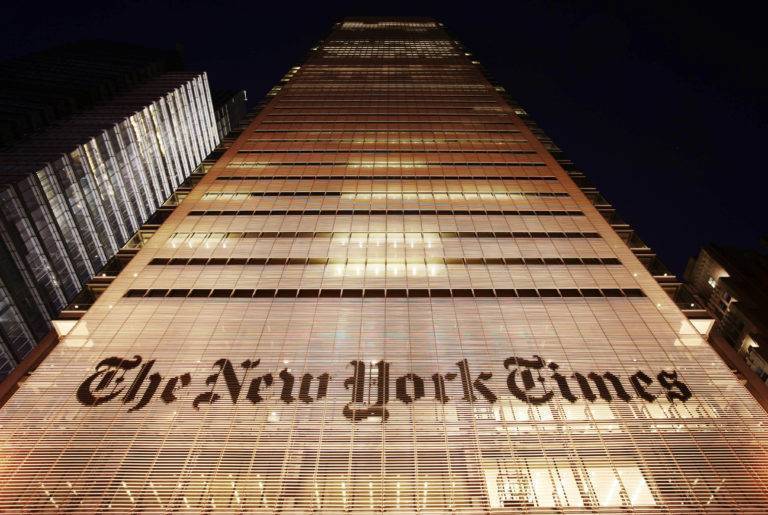
(Ezekiel Loseke, Headline USA) The New York Times editorial board ran a hit job bashing gun rights that put the leftist media organ’s ignorance on full display, using a cover photo for the op-ed that depicted shotgun shells instead of the piece’s target, AR-15s.

The article was entitled “America’s Toxic Gun Culture,” and it was the fifth in a series entitled “The Danger Within,” which NYT reports is an attempt to convince its dwindling readership “to understand the danger of extremist violence and possible solutions.”

The argument, though shocking in the degree it was willing to call for regulations and arrests, followed the standard gun-grabber logic. Republicans, gun-nuts, militias and political extremists are pushing deadly “assault style” weapons that are killing children and terrorizing leftists, and the government is urged to confiscate guns.

The argument is woefully misguided and has been refuted many times.

To quote Alexander Hamilton in Federalist 46 writing about gun rights, “Let us not insult the free and gallant citizens of America with the suspicion, that they would be less able to defend the rights of which they would be in actual possession, than the debased subjects of arbitrary power would be to rescue theirs from the hands of their oppressors.”

This story was old news before it was printed. However, the story ran an image of shotgun shells, showing, once again, that the media has no idea what it is talking about when it comes to guns.

The NYT photo may be seen in their tweet, while a picture of the appropriate round of ammunition, a .223 round, was posted by Breitbart News.

Andrew Follett, an analyst at The Club for Growth, mocked the Times’s photo.

“Complains about AR15s… with a picture of shotgun shells,” he tweeted. “This is hysterical.”

Follett was not alone in mocking “the paper of record.”

“I am once again begging the MSM journalists to take just a couple of basic firearms class to avoid dumba–ery like this,” Townhall’s Kurt Schlichter said, according to Fox News. He expressed amusement at their ignorance.

Others found the total lack of awareness surprising.

“Does the entire NYT really not have one editor that can review gun-related articles to notice something as basic as using a picture of shotgun shells for an article about AR-15s?” A.G. Hamilton, a conservative writer, wrote.

“Definitely inspires confidence about the contents of the article,” he sarcastically concluded.

Fed Hikes Interest Rates Another Half-Point to Highest Level Since 2007

(Headline USA) The Federal Reserve raised its key interest rate for the seventh time this year and signaled more hikes to come after a recent report showed that economy-wrecking inflation remained more than three times the normal 2% benchmark for healthy year-over-year growth.

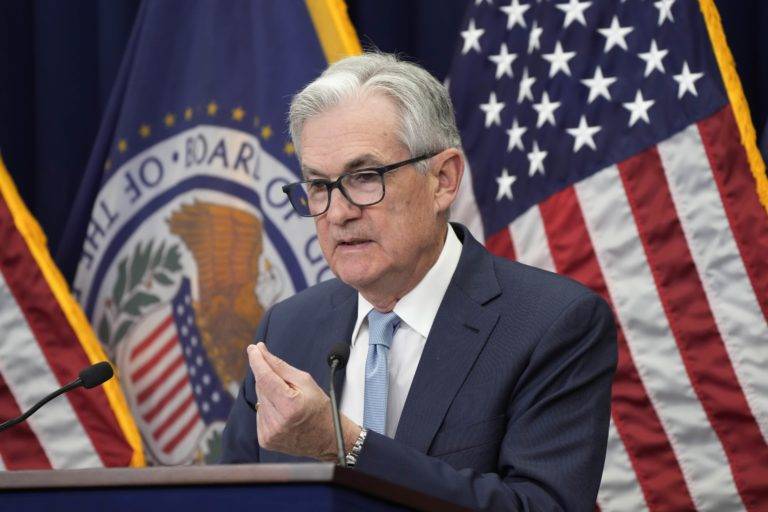
Despite signs of inflationary easing, the Fed made clear, in a statement and a news conference by Chair Jerome Powell, that it thinks sharply higher rates are still needed to fully tame the worst inflation bout to strike the economy in four decades.

The central bank boosted its benchmark rate a half-point to a range of 4.25% to 4.5%, its highest level in 15 years.

Though lower than its previous three-quarter-point hikes, the latest move will further increase the costs of many consumer and business loans and the risk of a recession.

More surprisingly, the policymakers forecast that their key short-term rate will reach a range of 5% to 5.25% by the end of 2023. That suggests that the Fed is poised to raise its rate by an additional three-quarters of a point and leave it there through next year.

Some economists had expected that the Fed would project only an additional half-point increase.

The latest rate hike was announced one day after a report showed a year-over-year increase of 7.1%. Though still high, it was sharply below a recent peak of 9.1% in June.

“The inflation data in October and November show a welcome reduction,” Powell said at his news conference. “But it will take substantially more evidence to give confidence that inflation is on a sustained downward path.”

In its updated forecasts, the Fed’s policymakers predicted slower growth and higher unemployment for next year and 2024. The unemployment rate is envisioned to jump to 4.6% by the end of 2023, from 3.7% today.

That would mark a significant increase in joblessness that typically would reflect a recession, which is defined as two or more quarters of economic contraction.

Consistent with a sharp slowdown, the officials also projected that the economy will barely grow next year, expanding just 0.5%, less than half the forecast it had made in September.

Many economists think the Fed will further downshift to a quarter-point rate hike when it next meets early next year.

Asked about that Wednesday, Powell said he has yet to decide how large he thinks the next hike should be. But having raised rates so fast, he said, “we think the appropriate thing to do now is to move at a slower pace. That will allow us to feel our way.”

Powell downplayed any notion that the Fed might decide to reverse course next year and start cutting rates to support growth, as Wall Street investors are expecting.

“I wouldn’t see the committee cutting rates until we’re confident that inflation is moving down in a sustained way,” he said.

Cumulatively, the Fed’s hikes have led to much costlier borrowing rates for consumers as well as companies, ranging from mortgages to auto and business loans. They have sent home sales plummeting and are starting to weigh down rents on new apartments, a leading source of high inflation.

Fed officials have said they want rates to reach “restrictive” levels that slow growth and hiring and bring inflation down to their target range. Worries have grown that the Fed is raising rates so much in its drive to curb inflation that it will trigger a recession next year.

The policymakers have stressed that more significant than how fast they raise rates is how long they keep them at or near their peak.

“It’s far more important to think what is the ultimate level,” Powell said Wednesday.

Powell’s biggest focus has been on services prices, which he has said are likely to stay persistently high. In part, that’s because sharp increases in wages are becoming a key contributor to inflation. Services companies, like hotels and restaurants, are particularly labor-intensive. And with average wages growing at

With many service-sector employers still desperate for workers, Powell said pay growth may remain above what’s consistent with the Fed’s 2% inflation target.

“We have a long way to go,” the Fed chair said, “to get to price stability.”

Adapted from reporting by the Associated Press