Wyoming Aims to Allocate Resources to Fund Border Wall

(Bethany Blankley, The Center Square) – Republican lawmakers in Wyoming are advancing legislation that would appropriate more than $5 million toward border security efforts in Texas, Arizona and Florida.

SF0166, “Border wall and sanctuary city transport,” was filed by Republican state Sen. Larry Hicks, with Sens. Dave Kinskey, John Kolb and Cheri Steinmetz cosponsoring. Republican state Reps. John Bear, Donald Burkhart, Mark Jennings, and Ember Oakley filed the House companion bill.

The bill would appropriate funds to construct “a border wall along the southwest land border as specified; … to aid other states in transporting non-citizens of the United States to sanctuary cities located in other states; and providing for an effective date.”

It would allocate $3 million to the office of the governor, allowing the governor to enter into a contract with the state of Texas to help fund construction of the border wall and transport non-citizens released by the Biden administration into the U.S. to so-called sanctuary cities in other states.

Texas Gov. Greg Abbott, the first governor to build a border wall on state land and the first to transport foreign nationals in the U.S. illegally to sanctuary cities, announced on Monday that Texas was moving forward with border wall construction after the first phase was completed last year and the second phase began in December.

The Wyoming bill would allocate the money to fund “partial construction of a permanent border wall along the southwest land border between Texas and Mexico and for the transportation of non-citizens of the United States from Texas to sanctuary cities in other states.”

Of the $3 million, only $250,000 can be used “to transport non-citizens of the United States from Texas to sanctuary cities in other states.” The bill would require in the contract between the two states that Texas “submit an accounting outlining legitimate and reasonable expenditures made for the construction of the permanent border wall along the southwest land border and the expenditures for transporting non-citizens of the United States from Texas to sanctuary cities in other states.”

The bill also would appropriate $2 million for the governor to enter into a similar contract with the state of Arizona to also contribute to Arizona’s “partial construction of a permanent border wall along the southwest land border between Arizona and Mexico and for the transportation of non-citizens of the United States from Arizona to sanctuary cities in other states.” It also stipulates that Arizona could not use more than $250,000 to transport foreign nationals in the country illegally to sanctuary cities and requires Arizona to submit accounting information.

The bill also would appropriate $250,000 for the governor to enter into a contract with the state of Florida to assist it with transporting non-citizens from Florida to sanctuary cities in other states, and require Florida to submit accounting documentation.

If passed and signed into law, it would become effective July 1, 2023. If the funds allocated for these states aren’t spent or obligated by July 1, 2024, the governor may expend them according to the bill language.

The bills state that the record apprehensions of illegal foreign nationals, including those on the terrorist watch list and with criminal convictions, and unprecedented amounts of drugs seized in fiscal 2022 are negatively impacting Wyoming’s residents.

It cites over 2.3 million encounters of foreign nationals apprehended at the southern border in fiscal 2022, nearly five times the population of Wyoming. It excludes the over 630,000 gotaways, those who entered illegally and evaded capture by law enforcement, also greater than the population of Wyoming.

In addition to the nearly 15,000 pounds of fentanyl seized by Border Patrol agents in fiscal 2022, the Wyoming Department of Criminal Investigation reported that law enforcement officers seized over 17,000 grams of fentanyl in 2021. It excludes the amount of fentanyl Texas law enforcement has seized in the last nearly two years alone, which is enough to kill everyone in the U.S.

“The illegal immigration of non-citizens of the United States at the southwest land border negatively impacts the state of Wyoming’s economy and places a burden on Wyoming law enforcement agencies,” the bill states. “Construction of a permanent border along the southwest land border between the United States and Mexico constitutes a public purpose and provides substantial benefits to the health and welfare of citizens of the state of Wyoming.”

The Senate Appropriations Committee advanced the bill on Thursday by a vote of 3-2.

Mississippi Moves on Bill to Allow Schools to Arm Workers

(Steve Wilson, The Center Square) Against a key deadline in the Mississippi legislature on Tuesday, the Senate Education Committee advanced several bills that are now headed for a full chamber vote.

The committee approved a measure that would allow armed educators and staff in schools. Another would provide extra funding for school districts going to a non-traditional, year-round calendar. A third bill would allow public schools to compete against teams from home schools and private schools in extracurricular activities such as sports.

Senate Bill 2079, the Mississippi School Protection Act, is authored by state Sen. Angela Hill, R-Picayune. It would allow trained school employees who possess concealed carry permits to carry concealed at school. Each school district, charter school, community college or public university (which would require approval of the Institutes of Higher Learning) would have an option for armed employees, who’d have to receive firearms, communications, de-escalation and first aid training. Participants in the program would have to be recertified each year.

They’d also have to pass a background check and they’d be given immunity while they’re involved in the program.

The Department of Public Safety would develop rules for the training of these public school safety workers and their identities would be kept secret from the public.

“There’s no requirement for them (school districts and other educational institutions) to set it (armed school employee program) up,” Hill told the committee. “They choose the participants, who’d be a part of the program.”

Commissioner of public safety and former state Sen. Sean Tindell, who worked with Hill on drafting the bill, spoke to the committee. He said that while his preference would be for every school in the state to have a school resource officer, he understands that some districts are financially limited from being able to have an SRO in every school, especially in elementary schools.

“With the training, they’ll also receive communications training with local enforcement,” Tindell said. “During an active shooter situation, they’ll have that line of communication with local law enforcement.”

SB2599 is authored by state Sen. Chris Johnson, R-Hattiesburg, and would allow public schools to compete in extracurricular activities such as athletics and mathematics competitions with private and even home-school teams.

SB2361 would create a grant program for school districts to switch to a year-round calendar. Each school district under the legislation authored by Education Committee Chairman Dennis DeBar, R-Leakesville, would be eligible for a maximum grant of $200,000 per year for three years after switching to a non-traditional calendar.

The amount awarded each year would be based on a budget for the switch submitted by the school district, the number of students in the district, and other factors which may increase the cost of delivery of services, including the rural nature of the school district.

Big Philanthropy Advances as a Big Player in the Private Funding of Public Elections

(Steve Miller, RealClearInvestigations) Echoing the private financing of public elections that critics saw as heavily favoring Democrats in 2020, some of America’s richest foundations are pouring money into a similar effort again, in the face of more organized conservative resistance. 

A nonprofit group called the Audacious Project—whose supporters include the Gates and MacArthur foundations and the Bridgespan Group, a consultant whose clients include Planned Parenthood—has committed $80 million to a progressive organization, the Center for Tech and Civic Life, to provide grant funding to run local elections.   

As part of its review process, the CTCL is sending operatives to local elections offices, examining practices and equipment, and acquiring the sorts of data coveted by political campaigns. Despite public claims of transparency, the center has refused to provide basic information about its operations. 

The CTCL became a focus of controversy in 2020 when it helped direct hundreds of millions of dollars donated by Facebook founder Mark Zuckerberg and his wife, Priscilla Chan, to help run elections during the pandemic. Their financial pressure prompted ad-hoc changes to rules minimizing in-person voting—an effort that many criticized as unlawful.

While the outside assistance was touted as nonpartisan, post-election analysis found that the so-called “Zuckerbucks” or “Zuck Bucks” were distributed on a partisan basis that favored Democrats.  

In response to concerns about the private money, 24 states and 12 counties have prohibited elections offices from accepting it. Democratic governors in three of the states selected to be part of the CTCL’s initial membership group—Wisconsin, North Carolina and Michigan—overrode legislation banning private funding of elections, stoking more concern that the grants are a ruse for partisan infiltration of elections offices.  

The CTCL in April created a consortium called the U.S. Alliance for Election Excellence, whose six partner groups include the CTCL, and are intertwined to specialize in different aspects of elections.

For an annual fee, the consortium offers assistance to elections offices, providing online tutorials, consulting, and other services on an as-needed basis. A basic alliance membership costs a municipality $1,600 a year; a premium membership runs $4,800 annually.   

Both subscriptions offer consulting, coaching and conferencing, and belonging obligates the member to “make non-monetary (but highly significant) contributions to the broader activities of the Alliance.” 

These include attending events put on by the CTCL-created alliance and the sharing of materials. Virtual conferences began in January, one described as a “debrief” of elections officials from the 2022 election designed to “inform preparation” for the 2024 elections.   

In May, the CTCL reached out to elections officials, inviting them to apply to join the alliance, which would bring together “election officials, designers, technologists, and other experts to help local election departments improve operations.” It received inquiries from over 90 jurisdictions in 31 states.   

The approved applicants were visited by CTCL representatives, a contingent that included Jennifer Morrell and Noah Praetz, leaders of The Elections Group, which works on election issues alongside progressive stalwarts such as Protect Democracy and the Brennan Center for Justice.  

Ultimately, 10 elections offices, including several in swing states, were selected after on-site visits by the CTCL. Of the elections offices selected by the center, voters in six of them supported Joe Biden for president in 2020.   

Officials in one of the chosen towns, Greenwich, Conn.—a former GOP stronghold that has become a Democratic enclave—had concerns about working with the CTCL. When residents heard that its elections office was tapped to receive $500,000 in grant money from the CTCL, a member of the town’s legislative council sent an email to the center seeking more information, including audits of the group’s books, a copy of the group’s annual report and its conflict-of-interest policy.   

The CTCL declined to provide the documents, insisting that its audited financials and conflict policies “are not publicly filed documents,” Sophie Lehman, the group’s associate director, said in an email—even though the CTCL on its 2021 tax return claims financial statements and its conflict of interest policy are “available to the public on request.”  

The refusal by Lehman, who also didn’t respond to a request for the materials from RealClearInvestigations, prompted some residents to unsuccessfully rally against accepting the money, which was approved in a town meeting this month with a 104-101 vote.   

“I would be against the money even if it were the Koch brothers giving it,” said Michael Spilo, a Republican member of the town’s council who voted against taking the grant, referring to the billionaire brothers long associated with support for libertarian and conservative causes. “I don’t think private money should be involved at all. It seems like a really bad idea.”  

But that failed resistance has shed light on the CTCL’s practices. Emails obtained by RCI through an open records request show that before its September visit, the CTCL emailed the town’s voting registrars asking them to prepare certain materials. 

“We are collecting data on your operations, setup, and equipment to help Alliance partners better understand who you are and how you operate,” the email read.    

Greenwich registrar Fred DeCaro sent an email to an assistant asking her to prepare materials for the CTCL team to review, including sample ballots, maps of polling places, voting books, trouble reports from poll moderators, and electronic poll books.  

While some of the material involved is in the public record, “I would be a little worried about turning over poll books and voting software to anybody that wasn’t actually hired by an elections office,” said Doug Lewis, former executive director of the Elections Center (not The Elections Group), also known as the National Association of Election Officials. “Even if this all starts with the right intentions, there’s too much opportunity for manipulation.”  

The approach of the CTCL-created alliance has raised other concerns from recipients.   

“By participating in this program and becoming a member of Alliance, we have to pay money to continue to be part of it,” said Tim Tsujii, director of elections at the Forsyth County, N.C., Board of Elections. “We will pay an annual membership fee to be accredited by this alliance. There is all this talk about the money going to elections offices and the counties, but what about the money going from the counties to the alliance?” 

Tsujii, a member of the CTCL advisory board, supports the alliance, but says his jurisdiction will not take any money from it, since it has enough financial resources to run effective elections. The office also didn’t take any money in 2020, Tsujii noted.   

He joined the alliance to share approaches and practices to conducting elections, rather than seeking a grant, and “we were upfront about not getting any grant money.”  

In a Dec. 1 contract obtained by RCI, Kane County, Ill., received $2 million in grants—$650,000 in December 2022 and $1.35 million in December 2023—and promised to spend the money on personnel, technology and voting locations; but it is also allowed to use it for sub-grants to local political subdivisions or local governments. The contract is the same as the one used to give grants in 2020.    

Also accepting $2 million in CTCL grant money is Contra Costa County, Calif., where Biden took 71% of the vote in 2020. Progressive stronghold Madison, Wisc., took a $1.5 million grant.   

Another alliance member, Republican-tilting Brunswick County, N.C., signed on to be part of the alliance but will not take any grant money. But as part of its alliance membership, Elections Director Sara LeVere said in an email, she is attending an in-person convening of members, the first of which is scheduled to be in Chicago this week.   

 “I plan to ask for reimbursement from the Alliance for travel costs (flight, hotel, etc.),” LeVere said, adding, “I currently do not have plans to take in any direct funding that would not be offsetting an expense we have for participation.”   

Collegial connections to other offices and the sharing of ideas appeals to Ottawa County, Michigan, County Clerk Justin Roebuck. But the money is not for him. 

“In 2020, after the money was released, and because of FOIA, and because the election community is a small world, I saw that some communities got significantly more money than others,” Roebuck, a Republican who has held office since 2014, told RCI.  After the election, he questioned the CTCL, asking what the criteria for the funding was.  

“The answer they gave is that it was population- and resource-driven,” Roebuck said. “Then we asked for the stats they were using. And there was no clear answer provided to us.”  

Roebuck said Ottawa County was offered grant money this time around—he didn’t give the amount—but said he will refuse it. Like the people in Greenwich, Roebuck is concerned about the lack of transparency on the part of the CTCL.   

“I believe the intentions of the alliance are sound, though, and remain excited about an effort to partner with non-profits that can offer services,” he said.   

CTCL co-founder Tiana Epps–Johnson did not respond to an email and text message requesting an interview for this story.   

Last year, Epps–Johnson told the website Afrotech.com that her push to privately fund elections works because “we know there are election departments in all types of communities that don’t have the basic technology they need to keep the process secure. … Our work at the center is focused on how we can make sure no matter what community you live in, your government is ready to provide access to democracy in a way that truly works for every voter.”  

Much of the work done with CTCL grant money in 2020, though, focused on rallying voters to cast ballots, designing absentee ballots, and allowing elections offices to work directly with progressive activist groups in several states. Emails show that CTCL relied on progressive consultants in advising elections administrators in Wisconsin, including the Brennan Center.  

Some municipalities used the money to produce videos and ads to drive voters to cast mail-in ballots, while others used the cash to pay attorneys to vet public-information requests.   

For voters to have faith that the grants are being awarded with nonpartisan intentions, “the process for awarding the money should be more transparent,” said Hayden Ludwig, a researcher at the conservative Capital Research Center, which has been critical of the CTCL’s funding of elections offices.   

The grant-making, political foes contend, is a politically biased process that favors Democrats.

If this new alliance and the CTCL were interested in helping elections offices, “they would be advocating through democratic channels to expand budgets, going into state legislatures to support infrastructure,” Ludwig said. “But they don’t and they have millions of dollars at their disposal.” 

AI Voice-Cloning Tool Used to Make Celebs Spout Racist Slurs

(Headline USA) A new artificial intelligence tool is already being used to create deepfakes, or fake videos, of celebrities using racial and inappropriate slurs, according to a report.

Eleven Labs, a British AI firm, said on Monday that it would be putting additional “safeguards” on its platform after finding “an increasing number of voice cloning misuse cases.”

The firm did not elaborate on what it meant by “misuse cases,” but other reports found posts on 4chan of clips featuring generated voices that sound like celebrities. In one clip, for example, a voice that sounds like actress Emma Watson’s is heard reading a part of Mein Kampf. In another, a voice very similar to Ben Sharpio makes racist remarks about Rep. Alexandria Ocasio-Cortez, D-N.Y. In a third, someone saying ‘trans rights are human rights’ sounds like he’s being strangled.

Eleven Labs said one of the new security features it is considering implementing is an added layer to account verification, such as requiring users to enter payment info or a legal ID. It is also considering having users verify copyright ownership of the voice they want to close, such as getting them to submit a sample with prompted text.

The company also said it’s considering dropping the AI voice tool completely.

Not too long ago, Eleven Labs was touting its voice cloning technology as having “the potential to revolutionize the way content is produced, delivered and interacted with across a range of industries.” It even shared a video it created of actor Leonardo DiCaprio being voiced over by other celebrities.

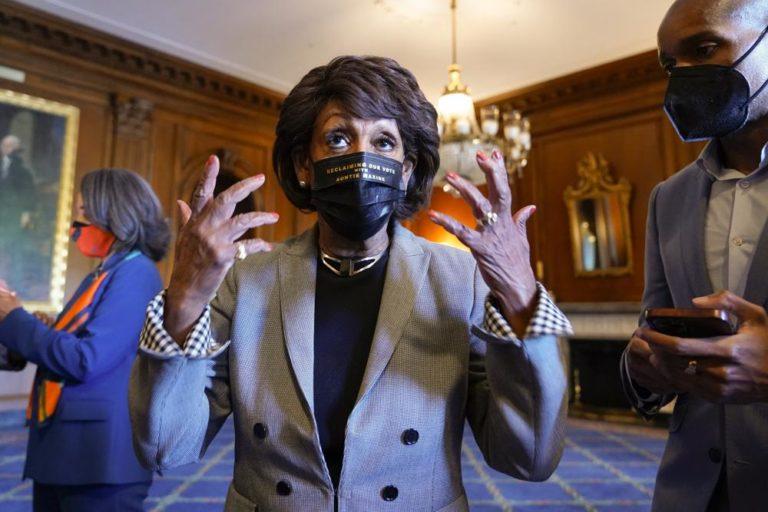
Maxine Waters Paid Daughter $192K in 2022 Campaign Funds

(Headline USA) Rep. Maxine Waters, D-Calif., paid her daughter nearly $200,000 in campaign cash during the 2022 election cycle, according to a new report.

Federal Election Commission filings reviewed by Fox News show Waters’s campaign paid Karen Waters $192,300 for a “slate mailer” operation between Jan. 2021 and Dec. 2022. Slate-mailing is where a consulting firm is hired to create a pamphlet or mailer that contains a list of candidates and policy measures, and advises voters how to cast their ballots.

Very few politicians use slate-mailing, but Waters has relied on the operation since 2004.

Her daughter has managed the operation for her campaign for years, raking in more than $1.2 million in payments from her mother’s campaign over the past several years.

Karen Waters is not the only family member to have received campaign cash from Waters’s campaign. Maxine Waters’s son, Edward Jr., also shared in the slate mail proceeds and occasionally worked as a consultant to other campaigns his mother backed.

Rep. Maxine Waters defended paying her family members for their services, arguing they run legitimate businesses.

“They do their business and I do mine,” she claimed. “We are not bad people.”

Several other Democrats have come under fire for paying family members from their campaigns as well. Rep. Ilhan Omar, D-Minn., for example, quietly funneled campaign funds to her husband’s consulting firm just weeks after they were married.

In total, Omar’s husband received a whopping $878,930.65 from Omar’s campaign since he began working for her in 2018.

President Joe Biden’s family also has exploited a number of ethical loopholes. During Biden’s Senate career his sister, Valerie, who functioned as his longtime campaign manager, was paid from campaign funds for public relations work she performed, while also drawing a salary from the PR firm, according to Peter Schweizer‘s Profiles in Corruption.

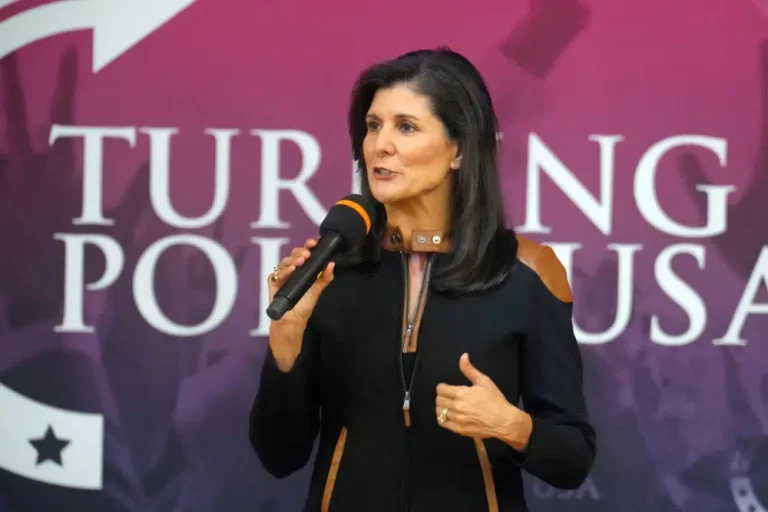
Nikki Haley Planning Feb. 15 Launch for 2024 White House Bid

(Headline USA) The on-again, off-again neocon, possibly red-pilled, possibly not, Nikki Haley is moving closer to making her presidential campaign official.

On Wednesday, supporters of the former South Carolina governor will get an email invitation to a Feb. 15 launch event in Charleston, at which she plans to announce her campaign, according to a person familiar with the plans but not authorized to speak publicly about them.

News of Haley’s plans was first reported by The Post and Courier of Charleston.

Haley, 51, served as South Carolina’s governor for six years before serving as President Donald Trump’s ambassador to the United Nations. When she enters the race, Haley will be the first contender to join the contest against her former boss, who is currently the sole Republican seeking his party’s 2024 nomination.

Trump was in South Carolina Saturday for the initial campaign swing of his 2024 campaign, standing alongside Gov. Henry McMaster — who served as Haley’s lieutenant governor — and several GOP members of the state’s delegation, part of his leadership team in the early-voting state.

During the Trump administration, Haley feuded at times with other White House officials while bolstering her own public persona. Her 2018 departure fueled speculation that she would challenge Trump in 2020, or replace Vice President Mike Pence on the ticket, but Haley did neither.

Instead, Haley returned to South Carolina, where she bought a home on Kiawah Island, joined the board of aircraft manufacturer Boeing Co. and launched herself on the speaking circuit, reportedly commanding fees as high as $200,000. She penned two books, a step commonly taken by many on the road toward the White House.

After the Jan. 6 Capitol siege, Haley initially cast doubts on Trump’s political future but said she wouldn’t challenge him in 2024.

In 2021, Haley told The Associated Press that she “would not run if President Trump ran,” but she has since shifted course, ramping up activity through her Stand for America nonprofit and political action committee, and endorsing dozens of candidates in the 2022 midterm elections.

Late last year, during a visit to her alma mater, Haley told an audience at Clemson University that she would be “taking the holidays” to consider a run.

Asked recently why she is now considering a run in spite of her 2021 comments, Haley told Fox News “a lot has changed,” referencing, among other things, U.S. economic troubles.

She went on to say she felt she could be part of “new generational change,” an indirect reference to Trump’s advanced age.

In South Carolina on Saturday, Trump told WIS-TV that Haley had called him several days earlier to seek his opinion. Trump pointed out her earlier pledge not to run against him but said he made no attempts to stop her.

“She said she would never run against me because I was the greatest president, but people change their opinions, and they change what’s in their hearts,” Trump said. “So I said, if your heart wants to do it, you have to go do it.”

Adapted from reporting by the Associated Press

CNN Hopes Bill Maher Can Rescue Late-Night Lineup

(Headline USA) CNN announced this week that it will begin airing comedian Bill Maher’s Overtime on Friday nights, likely in an attempt to boost the network’s abysmal ratings.

The first installment of Overtime, which is a post-show segment from HBO’s Real Time with Bill Maher, will air on Feb. 3 during CNN Tonight. The show will feature “Maher and his guests continuing the discussion and answering viewer questions following each week’s episode of Real Time with Bill Maher. Topics include news of the day, culture, business, politics, and more,” according to CNN.

“Maher’s OVERTIME joins several other recent partnerships between HBO and CNN,” the network said in a press release.

The news comes amidst another ratings slump for CNN. The network’s primetime viewership is now under 500,000, according to a recent report. In fact, CNN logged the worst week of ratings it’s had in nine years between Jan. 16-22. Only 93,000 viewers in the coveted 25-54 demographic tuned into CNN that week, and only 444,000 total viewers watched its primetime shows.

Its new early program, CNN This Morning, also suffered its worst ratings since its launch in the fall. The show features Don Lemon as a host, who was demoted from prime-time late last year.

CNN has considered introducing its own late-night comedy show to help bring back some viewers. Possible hosts for the late-night show include Maher, Jon Stewart, Trevor Noah and Arsenio Hall.

However, CNN CEO Chris Licht said such a show won’t be coming to the network any time in the near future.

“I worked on a comedy show. And it took over 200 people to produce an actual comedy show,” he said in an interview. “So no, I would not be so foolish as to, in one fell swoop, hurt the brand of comedy and news by trying to do a comedy show on CNN.”

Major Media Outlets Announce They’re Ditching Objectivity for ‘Diversity’

(Headline USA) Major media outlets are moving away from objectivity in their reporting, claiming an unbiased account of the facts is no longer tenable with many issues of the day.

In an op-ed for the Washington Post, Leonard Downie Jr., the former executive editor of the Post, and former CBS News President Andrew Heyward interviewed more than 75 newsroom leaders to ask whether journalists should stick to being objective or try instead to push a specific narrative. Almost all of the media leaders argued journalists should be able to include their own beliefs and opinions in their reporting.

“Objectivity has got to go,” said Emilio Garcia–Ruiz, editor-in-chief of the San Francisco Chronicle.

Kathleen Carroll, former executive editor of the Associated Press, agreed.

“It’s objective by whose standard? … That standard seems to be White, educated, and fairly wealthy,” she said.

New York Times editor Joseph Kahn said journalists should stop trying to use “neutral language,” especially if there is undisputed evidence of racism.

Downie argued that “journalistic objectivity” seems to much of the media to be a “distortion of reality.” 

“They point out that the standard was dictated over decades by male editors in predominantly White newsrooms and reinforced their own view of the world,” he wrote.

“They believe that pursuing objectivity can lead to false balance or misleading ‘bothsidesism’ in covering stories about race, the treatment of women, LGBTQ+ rights, income inequality, climate change and many other subjects,” he added. “And, in today’s diversifying newsrooms, they feel it negates many of their own identities, life experiences and cultural contexts, keeping them from pursuing truth in their work.”

Surprisingly, the only media leader who seemed to reject this new standard is the Post’s current executive editor, Sally Buzbee.

“There is some confusion about the value of good reporting versus point of view,” she said. “We stress the value of reporting” and “what you are able to dig up—so you (the reader) can make up your own mind.”

The bold effort to shake up journalism comes as many major outlets face serious declines in viewership and readership.

An October 2022 Gallup poll indicated that for the first time ever since the polling began, more Americans (38%) had no confidence at all in the media than those who said they had a “great deal” or “fair amount” of confidence (34%).

Some suggest the problem may be that the media already has a surfeit of bias and haphazard reporting, which has been notably amplified since the 2016 election of former President Donald Trump.

Auditors Find ‘Widespread Fraud’ in Federal Government’s Pandemic Spending

(Ken Silva, Headline USA) The U.S. federal government has spent more than $5 trillion on pandemic relief programs to date, with untold billions of dollars of that money being lost to widespread fraud, according to testimony given Wednesday to the House Committee on Oversight and Accountability.

Speaking at the committee’s first hearing of the year, Government Accountability Office Comptroller General Gene Dodaro said the true level of Covid-related fraud has yet to be determined.

“Nevertheless, in December 2022, GAO found that measures and estimates indicate substantial levels of fraud and potential fraud during the pandemic,” he said, adding, “There is already ample evidence of widespread fraud, improper payments, and accountability deficiencies during the pandemic.”

Dodaro outlined some of the fraud that has been spotted, including $61 billion in unemployment insurance payments and more than $1 billion in paycheck protection program payments.

Dodaro cautioned that the true amount of unemployment insurance fraud is likely much higher, because the $61 billion is an estimate based on pre-pandemic fraud rates.

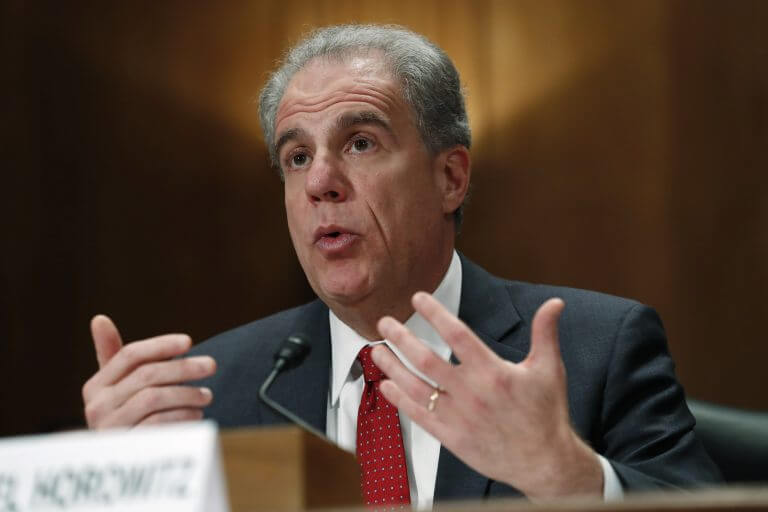
Likewise, DOJ Inspector General Michael Horowitz said PPP fraud extends at least into the tens of billions of dollars, and possibly into the hundreds of billions. Horowitz said at the committee hearing that the DOJ spotted $5.4 billion in fraud earlier this week.

“We determined that 69,000 questionable SSNs were used to obtain $5.4 billion in pandemic loans and that another 175,000 questionable SSNs were used in applications that were not paid or approved,” Horowitz told legislators.

Horowitz said the DOJ’s COVID-19 Fraud Enforcement Task Force has levied criminal charges against more than 1,800 defendants for losses estimated at $1.3 billion, and has launched civil investigations into more than 1,800 individuals and entities for alleged misconduct of pandemic relief loans totaling more than $6 billion.

The Small Business Administration’s inspector general has another 536 open investigations involving PPP or other pandemic relief spending, he said.

Dodaro said a major reason for the widespread fraud was that government wasn’t prepared to properly track the trillions of dollars in pandemic spending over the last two years.

For instance, Dodaro said the American Rescue Plan Act allocated $40 million to fund a Pandemic Response Accountability Committee, which was supposed to establish the “Pandemic Analytics Center of Excellence” to track spending.

“However, [the analytics center] was not established until more than a year after agencies began distributing relief funds,” Dodaro said. “The delayed establishment of the center resulted in the loss of valuable time for IGs to help program officials understand fraud risks and identify potential fraud.”

Dodaro and Horowitz discussed other technical reasons for the government not effectively tracking fraud—but Rep. Byron Donalds, R-Fla., attributed the problem to political apathy.

“There was no oversight of any of these dollars in the last Congress. I know that because I sat on this committee, and there were no oversight hearings associated with any of the pandemic spending,” Donalds said. “So I’m glad we’re tackling this now.”

Ken Silva is a staff writer at Headline USA. Follow him at twitter.com/jd_cashless.

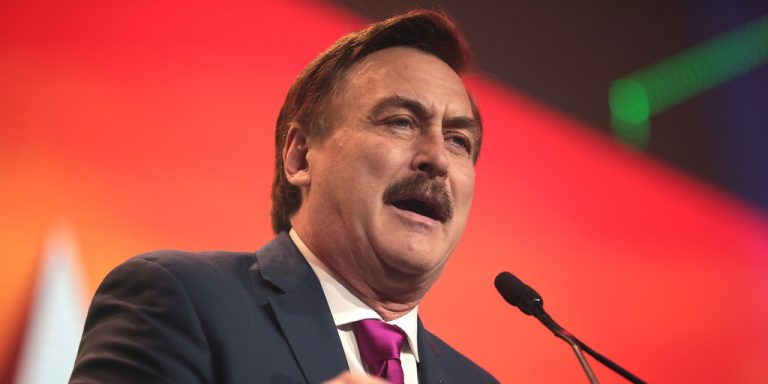
Mike Lindell Turns Tables on Jimmy Kimmel’s Sad Attempts at Mockery

0

(Jacob Bruns, Headline USA) Failing late night TV host Jimmy Kimmel tried to slam MyPillow CEO and staunch conservative Mike Lindell for failing to win the Republican National Committee chairmanship.

Unfortunately for America First Republicans, embattled swamp creature and RINO extraordinaire Ronna Romney McDaniel won reelection last week to retain her seat as chair of the RNC for the fourth time.

She “defeated” attorney Harmeet Dhillon and and the MAGA firebrand, Lindell. So, right on cue, Kimmel invited Lindell onto his show to rag on him. There was a caveat, however, that the unvaxxed Lindell had to do the interview from inside an arcade claw machine. Lindell used what could have been a humiliating set-up to school Kimmel.

“Now Mike,” Kimmel smugly began. “The poll actually did show you as the favorite [in the RNC chairman race], right?”

“That’s correct, yep,” Lindell replied.

“And then this happened,” Kimmel noted, panning to a video of the RNC speaker delivering the vote totals.

“Mike Lindell received four votes per meet. Dylan received 51 votes and Ron McDaniel received 111 votes,” the speaker noted.

Kimmel, going for a “gotcha” moment, suggested that it seems like “an indication that maybe your barometer when it comes to voting is off.”

But, Lindell, not willing to take the bait, fired back at Kimmel.

“No,” Lindell bluntly replied. “What it seems like Jimmy is that the RNC–their representatives–didn’t listen to the people of our country that wanted a change in the RNC leadership.”

He also noted that, at this point, the Republican Party is actively thwarting the will of the majority of its members.

“Because I was at the top of all the polls, I almost doubled both of them combined in the Rasmussen report, which came out last Thursday, the day before the vote… I would think that they would’ve went with what the people wanted because they represent the people.”