After School Satan Club Provokes Parent Outrage

(Jillian Schneider, RealClear Wire) A Virginia school board is considering revising its policies on after-school clubs following conflict over a new “After School Satan Club.”

The Chesapeake Public School Board previously allowed the Satan club to meet on school property, stipulating it pay over $600 for security for each meeting, something the district’s policy allows, local media reported.

The likelihood of demonstrations is part of what makes securing the event so expensive, as Satan clubs are frequently protested. Last January, an Ohio superintendent was even reprimanded by the attorney general for discouraging parents from protesting the Satan club.

However, Chesapeake’s school board put a temporary hold on any non-sanctioned school clubs as it considers revisions to its policy. Among the proposed changes:

  • Security costs must be paid by an organization in advance.
  • The school district determines the number of officers needed for security.
  • Promotional materials cannot include the school or facility name without permission from the Office of Student Activities and Facility Use.

At a recent board meeting, which included a discussion of the proposed revisions, community members didn’t shy away from expressing their views.

“If this club meets, I plan on removing my daughter from school and finding a private alternative,” declared Steve Scheerbaum, a local parent.

Another said limiting the club’s access to public property would be unconstitutional.

“I sincerely hope that the Satanic Temple takes this city to court for this blatant disregard of the constitution,” said another resident.

The Chesapeake school board is scheduled to vote on the proposed policy revisions at its Feb. 27 meeting.

In the meantime, Superintendent Jared Cotton assured the community the board wouldn’t discriminate against religious groups.

“It’s important for us to point out that the groups in particular that we’ve been discussing over the last couple of months are outside groups, not school-sponsored,” he explained. “We do have groups who ask to use our facility from time to time but we have to treat all groups fairly.”

After-School Satan Club, an initiative of The Satanic Temple, “exists to provide a safe and inclusive alternative to the religious clubs that use threats of eternal damnation to convert school children to their belief system.”

Satan clubs market themselves as an alternative to the Christian evangelical Good News Club, often targeting schools that already have a Christian club.

“They’re opposed to our views and they’re trying to counter and even undermine our presence there so I’m concerned in that regard,” said Chris Williams, a Christian pastor in Chesapeake. “I think the wrong kind of attention could force the school board to say we can’t do any of these clubs.”

Fred Pry, associate vice president of USA Ministries for Child Evangelism Fellowship, was more optimistic.

“The reality is, parents are the gatekeepers for all the clubs in schools,” he said. “All of them need permission slips signed by the parents so parents hold the power. Parents are the ones who control the Satan clubs because if no children sign up, Satan clubs are not going to exist.”

Did Eric Holder’s DOJ Frame Legal Gun-Owner in Retaliation for Fast and Furious Refusal?

Headline USA interviewed investigative reporter Arthur Bloom and a former Trump White House official about the failed attempt to achieve clemency for Donald Reynolds Jr., a prison inmate with possible connections to the Obama-era Fast and Furious scandal. This is their story.

(Ken Silva, Headline USA) “A black NRA member sitting in a prison for terrorists may be the missing link in Fast and Furious.”

This is the evocative subtitle introducing a Nov. 24, 2020, article in the American Conservative about Donald Reynolds Jr., a black businessman serving life plus 75 years on drug, weapon and money-laundering charges.

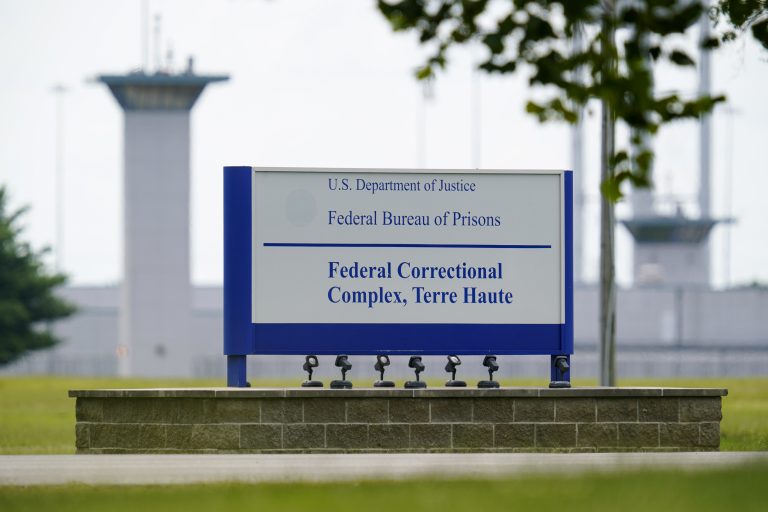
The result of an exhaustive investigation from reporter Arthur Bloom, the article raises questions about why Reynolds, a nonviolent offender with no prior convictions, is sitting in one of the country’s two maximum-security “Communication Management Units”— prison facilities designed to prevent terrorists and organized crime figures from communicating with their networks outside.

Reynolds claims that the U.S. government retaliated against him for refusing to be a government informant in a Fast and Furious-like operation. His connections to Fast and Furious are, as Bloom says, murky and complex, and are more fully detailed in articles by Bloom and Reynolds’s fellow inmate, Marty Gottesfeld.

But in a nutshell, Bloom has shown numerous dubious aspects to the Department of Justice’s case, which sought to portray Reynolds as a drug- and gun-running kingpin.

For starters, Reynolds was a legal gun owner. He possessed Class 3 stamps required to own machine guns, “meaning he would have been closely tracked by the ATF,” Bloom notes.

After raiding Reynolds’s home and his parents’ home in 2008, law enforcement found nothing illegal. The scant evidence presented by the U.S. government included a wrapper with cocaine residue supposedly plucked out of his trash by an IRS agent, and two cash-counting machines. Other “evidence” presented by prosecutors included the fact that law enforcement found drugs in a storage unit owned by the same company that had also rented a separate unit to Reynolds—a tenuous connection at best, says Bloom.

Then, there’s the criminal background of government’s star witness against Reynolds: Joshua Correa, a cartel boss who’s admitted to ordering a hit on U.S. soil and moving more than 1,000 kilograms of cocaine to cities all over the country. Prosecutors said Correa moved drugs from Mexico’s “Placido Benitez cartel”—a group that Bloom could find no record of outside this case—to Reynolds in Knoxville.

Couple these anomalies with the fact that Reynolds was doing business with an array of shady characters in Arizona around the same time as Operation Fast and Furious, and top it off with the fact that then-Attorney General Eric Holder, who oversaw Fast and Furious, attended some of his pretrial hearings—Bloom says there’s enough evidence to lend credence to Reynolds’s claim that government retaliated against him for refusing to be an informant.

Bloom laid all this out and more in his November 2020 article, hoping that it would rekindle interest in the Obama-era Fast and Furious scandal, as well as help the Reynolds family’s effort to obtain a pardon from President Donald Trump in the final days of his administration.

But amidst the COVID-19 pandemic, election controversy and the overall social unrest of 2020, Bloom’s article received little attention, and had no impact.

It was around that time that Bloom decided to get personally involved. Reynolds’s family had been having difficulties submitting his clemency petition—they received bizarre email bounce-backs when trying to send the application—and so Bloom decided to submit the application himself.

Bloom told Headline USA that he realizes his decision to become personally involved transgresses journalistic boundaries, but he did it because he believed Reynolds deserves clemency, and because the family needed his help.

“I didn’t really know what else to do. I gave them the means of getting in touch, and it didn’t work,” he said. “I don’t know why.”

What happened next isn’t clear.

Bloom frequently checked on the status of the application in the chaotic final days of the Trump administration, but received little information.  “I did speak to one of AG Bill Barr’s deputies about the case, though it was in a non-reportorial capacity so I’m not able to divulge who or what was said,” he said.

Trump left office on Jan. 20, 2021, and Bloom never heard what happened with the Reynolds petition.

A former Trump White House official with knowledge of the issue said he doesn’t think the application was seriously considered.

“I never recall any discussion among anyone talking about his petition, ever,” said the former official, who spoke to Headline USA under the condition of anonymity.

The official explained that clemency petitions often fall under one of two categories: They’re either submitted formally through the DOJ’s Office of the Pardon Attorney, or they’re made in an ad hoc fashion through supporters of the President.

“You can go to a campaign event and tell a staffer, ‘Hey will you hand this letter to the President: It’s a clemency application,’” the official said.

The official said the first category of petitions is more likely to garner serious attention—which was one factor working against Reynolds. Further complicating Reynolds’s case was the fact that clemency pardons are usually granted to someone who admits their guilt.

“Traditionally, factors for clemency include how long you’ve served your time, have you shown remorse, are you no longer a danger or a threat to others, have you improved yourself in prison. Those don’t factor in questions about innocence. Saying, ‘Hey, it was all a setup … [clemency] then becomes a quasi ‘innocence project,’” the former White House official said.

“That’s not really something the executive branch is suited for.”

Regardless of why Reynolds’s clemency petition was unsuccessful, Bloom was dejected from the process. After investigating this case and a slew of other controversial issues, he decided to largely drop out of conservative media and confine his writing to his Substack.

Little to no public attention was given to Reynolds after Bloom’s work, until CIA whistleblower John Kiriakou wrote about him in a Substack article last month. In that article, Kiriakou said he intends to write about the Reynolds case, and that he was told by multiple people that Bloom was warned by “DOJ” to “walk away” from the story.

Not so, says Bloom—though he has dropped off the map due to “strange things” happening to him in recent years.

“A lot of strange things have happened to me over the past few years, but after you’ve worked on five or six stories that have a chance of provoking retaliation—Hunter Biden, Google blacklisting, Don Reynolds, January 6—it’s hard to know who or what is putting pressure on you,” Bloom wrote on his Substack recently.

“Is it possible I was sort of frozen out because of all of this?”

Bloom declined to elaborate on some of those “strange things” that happened to him, but told Headline USA he’s happy Kiriakou has taken up the Reynolds cause.

Bloom admits the Reynolds case has an uphill battle to garner political support—the Left is turned off by the guns, and the Right is turned off by the alleged drugs—but he said he hopes conservatives give it more attention.

“You hear conservatives talk about pulling yourself up by your bootstraps. This is what the Reynolds family did. And what was done to his family is unacceptable,” Bloom said, refering to the fact that the government has seized much of the family’s assets via civil forfeiture.

“His dad was a contractor at Oak Ridge National Lab. He served in the Army. This is a good family. This is a guy who’s getting young black Knoxvillians out of the ghetto. You can’t sandbag people like that.

“This has to be answered for.”

Ken Silva is a staff writer at Headline USA. Follow him at twitter.com/jd_cashless.

Greta Thunberg’s New Book Bashed for Hypocritical Carbon Footprint

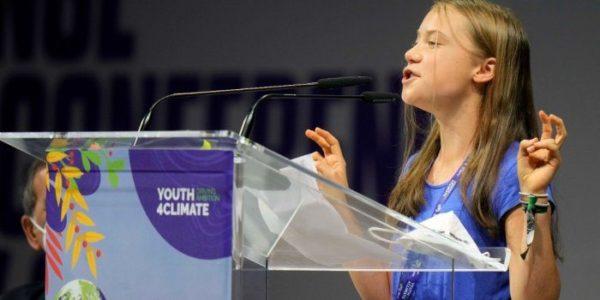
(Dmytro “Henry” Aleksandrov, Headline USA) Greta Thunberg, who is famous for her climate change alarmism, recently published her latest piece of propaganda, The Climate Book, and was immediately criticized for her hypocrisy.

The book is a collection of essays from fellow climate crazies in the fields of meteorology, engineering, oceanography and history who want to convince the reader that the planet is going to burn pretty soon if people are not going to do anything, according to Express.

“I have gathered the wisdom of over one hundred contributors to highlight the many different crises we face and equip us with the knowledge we need to avoid a climate disaster,” Thunberg wrote on Twitter.

However, Thunberg’s life motto is “rules for thee but not for me,” and people on Twitter didn’t wait for a second to point that out, including Jordan Peterson.

A musician @FiveTimesAugust also criticized Thunberg.

“How are these books shipped? Truck? Plane? Electric Car? What’s the carbon footprint to get from warehouse to bookstore? How many trees to make the boxes they’re packed in? “How much oil is used in the machinery to print the books? So many questions…” he wrote.

Thunberg’s book is comprised of five sections that cover various aspects related to “climate change,” including how it works, how it impacts the planet, its effects on people, what actions have been taken so far and what still needs to be done.

The book includes 105 guest essays that cover a wide range of topics, like ice shelves, economics, fast fashion, extinction of species, water shortages and the importance of respecting the sustainable practices of American Indians.

TikTok Became Hunting Ground for Pedophiles

(Dmytro “Henry” Aleksandrov, Headline USA) TikTok — the most downloaded social media app that is also the most popular among kids and teenagers — became the largest social media platform that pedophiles use to exploit children.

One of these people, a 42-year-old Alabama man, awaits trial in Texas for sexually assaulting a 14-year-old girl he found on the platform, according to the Wall Street Journal. TikTok deactivated the account of this man after the publication contacted the Chinese Communist-controlled app about the information on his case and how this sexual deviant was able to pursue the teen girl on the platform.

Erin Burke of the Department of Homeland Security, who also used to be a leader of the child exploitation unit, said that the platform is often used by pedophiles and other predators to find children to exploit.

On the US version of the platform, many of the videos show children and teenagers doing dance routines, reacting videos, singing or simply venting about their lives on their TikTok channels. The platform makes it very easy for sexual deviants to find vulnerable children by simply finding and watching the small clips of children on the platform, which would force the algorithm to “feed” them more content about children.

“You have young kids dancing and showing their lives all over TikTok. It makes it a one-stop shop for people looking to exploit them,” a Waco police detective said.

Even though the app allows its users to restrict their content to only family and friends, it doesn’t work because people who use the app prefer to keep their channels public so that they would get more followers and views.

The social media company said that they seek to protect young users by screening posts and comments via AI and machine learning tools, even though humans review the content too if it rises to a substantial enough level. TikTok also asks new users to submit their birthdays, but since there is no verification process, the whole thing simply doesn’t work.

After the Journal reached out to TikTok for the comments, the company’s global head of risk and response operations said that “child sexual abuse and exploitation abhorrent” and said that when the company becomes aware of such content, ‘we take immediate action to remove it, terminate accounts, and report cases’ to the appropriate authorities.'”

Fauci Ripped after Casting Doubt on Efficacy of COVID Vaccines

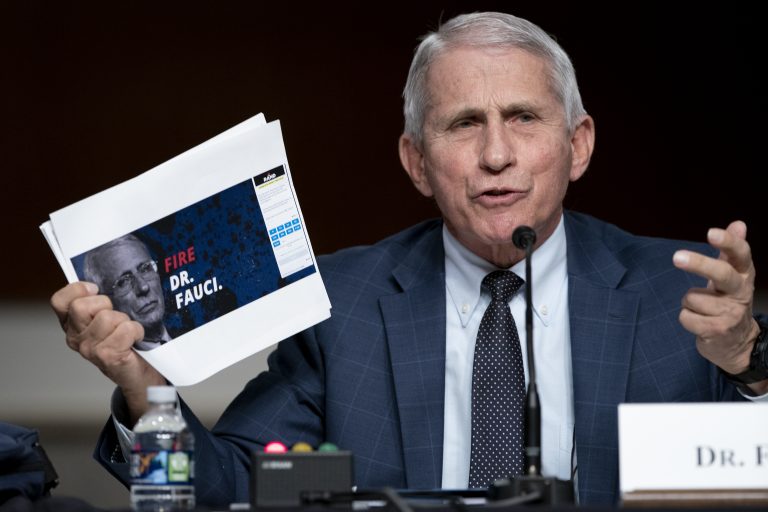
(Casey Harper, The Center Square) Dr. Anthony Fauci is taking criticism after his recently published paper cast doubt on the efficacy of COVID-19 vaccines.

Joel Zinberg, a Competitive Enterprise Institute senior fellow, blasted Fauci for pushing for strict mandates despite the concerns with the vaccine.

“Dr. Anthony Fauci recently acknowledged that there had always been good scientific reasons to believe that vaccines against the respiratory virus that causes COVID-19 – SARS-CoV-2 – would provide limited protection against infection and only for a short time,” Zinberg told The Center Square. “That is precisely what happened: it quickly became apparent that protection against transmission lasted just a few months and effectiveness declined as each new viral variant proved more contagious than its predecessor. Yet Dr. Fauci persisted in insisting that repeated vaccines were needed for everyone and until recently pushed for vaccine mandates.”

Fauci, who left his role as director of the National Institute of Allergy and Infectious Diseases last year, made the comments in a recent medical journal piece that he co-authored. The piece makes clear that developing long-term vaccines for respiratory conditions like COVID-19 is very difficult and a problem that still needs to be overcome, something researchers have known for years.

From the published article in Cell Host and Microbe:

Considering that vaccine development and licensure is a long and complex process requiring years of preclinical and clinical safety and efficacy data, the limitations of influenza and SARS-CoV-2 vaccines remind us that candidate vaccines for most other respiratory viruses have to date been insufficiently protective for consideration of licensure, including candidate vaccines against RSV, a major killer of infants and the elderly, parainfluenzaviruses, endemic coronaviruses, and many other ‘common cold’ viruses that cause significant morbidity and economic loss…

Taking all of these factors into account, it is not surprising that none of the predominantly mucosal respiratory viruses have ever been effectively controlled by vaccines. This observation raises a question of fundamental importance: if natural mucosal respiratory virus infections do not elicit complete and long-term protective immunity against reinfection, how can we expect vaccines, especially systemically administered non-replicating vaccines, to do so? This is a major challenge for future vaccine development, and overcoming it is critical as we work to develop ‘next-generation’ vaccines.

The paper and other research have shown that Fauci was mistaken or deceptive in his promises about the effectiveness of the vaccine while pushing for it on behalf of the federal government. For example, Fauci said in May 2021 that “when you get vaccinated, you not only protect your own health and that of the family … But also you contribute to the community health by preventing the spread of the virus throughout the community. And in other words, you become a dead end to the virus.”

The latest research shows vaccinated people can still spread the virus.

The economy nosedived because of pandemic-era shutdowns and countless Americans lost their jobs.

From nurses to Navy SEALS, those who refused vaccination were forced out of their jobs. Elected leaders also publicly attacked vaccine skeptics.

As time goes on, more research and papers like Fauci’s have emerged, either casting doubts on the effectiveness of the vaccine and in some case, highlighting the adverse side effects.

“Thousands of workers who were, perhaps ill-advisedly, willing to risk severe illness themselves, were fired even though vaccines would protect neither them nor their co-workers from infection. Essential personnel including firefighters, police and the military have been lost,” Zinberg said.

“Fauci’s prolonged reluctance to acknowledge the predictable shortcomings of COVID vaccines has undermined trust in public health authorities. Even with government efforts to censure ‘misinformation,’ the decreased effectiveness of vaccines in stopping transmission became public knowledge. When the next pandemic comes, people may have little faith in the advice they receive, with potentially disastrous consequences.”

Norfolk Southern’s ‘Timeline’ to Reopen Rail Line Scrutinized

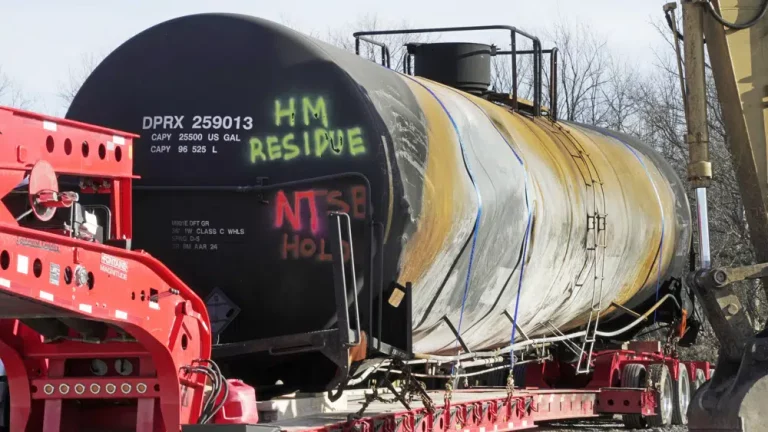
(Christen Smith, The Center Square) State and local leaders said this week that Norfolk Southern’s response to a train derailment near the Pennsylvania-Ohio border ignored best practices and prioritized speed over safety.

In a letter sent to the railroad’s chief executive offer, Pennsylvania Democrat Gov. Josh Shapiro said he will hold Norfolk Southern accountable “for any and all impacts” that come as a result of hazardous chemicals leeching into the air and ground after 50 cars jumped the track on Feb. 3 across the state line in East Palestine, Ohio.

The accident forced residents in an area stretching 1-mile by 2-miles, including parts of western Beaver County, to evacuate while the railroad conducted a controlled release of five train cars carrying vinyl chloride. The chemicals, Shapiro said during a Feb. 6 news conference, could have exploded and released toxic fumes and deadly shrapnel across the region.

Sen. Camera Bartolotta, R-Washington, told The Center Square the accident left her “deeply concerned with the health and safety of those residents as well as the first responders that selflessly endangered their own lives to protect others.”

“I share many of the concerns raised in that letter,” she added.

So far, no adverse health effects have been recorded since the incident, The Center Square previously reported. But Shapiro and other state lawmakers said, despite the complexity of the accident, Norfolk Southern rushed to reopen the rail line based on an “arbitrary timeline” that created more risk and confusion.

A spokeswoman for Norfolk Southern told The Center Square on Wednesday the railroad’s “top priority” remains the residents of East Palestine and the surrounding region.

The railroad also is “committed to ensuring health and safety through ongoing environmental monitoring and support for their needs.”

Rachel Bassler, spokeswoman for the Environmental Protection Agency, said Tuesday nearly 400 homes underwent voluntary screening after the controlled release ended on Feb. 8, with no vinyl chloride or hydrogen chloride detected. An additional 65 residences are pending review, she said.

Norfolk Southern said it arrived on scene in the immediate aftermath of the derailment and began coordinating with local officials, including those from Pennsylvania.

In his letter, however, Shapiro said railroad personnel sequestered themselves from the rest of the incident management team to create tactical and operational strategies without the input of key state and local officials.

More confusion followed when the company offered conflicting models about the impact of the controlled release plan and kept officials in the dark about the number of cars in need of venting and burning. Alternative plans went unexplored, Shapiro said, that would have kept the rail line closed longer, but posed less danger to first responders, residents and the environment.

“Norfolk Southern’s well known opposition to modernized regulations require further scrutiny and investigation to limit the devastating effects of future accidents on peoples’ lives, property, business and environment,” he said.

Shapiro asked the Public Utility Commission to investigate the railroad’s conduct and urged the federal Pipeline Hazardous Materials Safety Administration to reexamine what constitutes a high-hazard flammable train, as well as the need for regulations to carry more advanced safety and braking equipment.

Bartolotta likewise called on the Senate to schedule a hearing to better understand the causes of the derailment and the emergency response that followed.

“Most importantly, this will allow us to learn how Norfolk Southern, and entities like it, can work more closely with our state and local emergency responders should such a dangerous incident happen again in the future,” she said.

The railroad said its open to continuing the discussion and will stay at the command post, working alongside state agencies to “keep information flowing.”

A spokeswoman said the railroad called Shapiro to discuss his concerns and “look forward” to engaging with him more soon.

Dem. Gov. Shapiro Shelves Pennsylvania Death Penalty

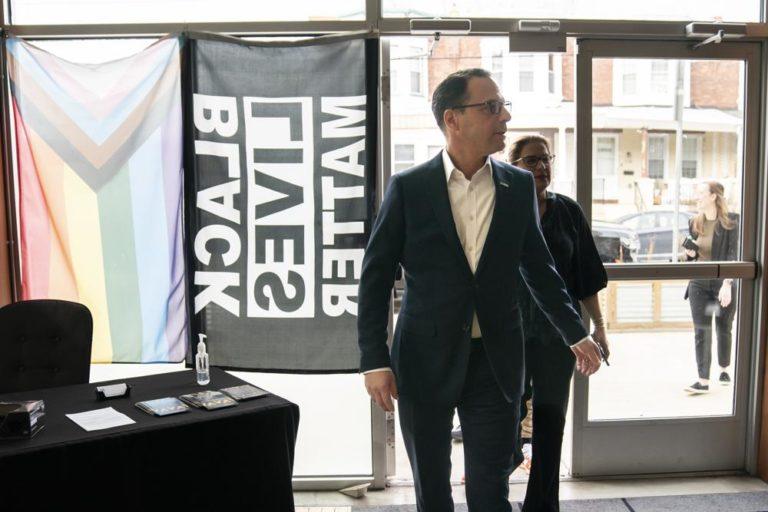
(Christen Smith, The Center Square) Pennsylvania Democrat Gov. Josh Shapiro said Thursday he won’t sign any execution warrants and called on legislators to join 25 other states to ban the death penalty “once and for all.”

“When my son asked me why it’s OK to kill someone as a punishment for killing someone, I couldn’t look him in the eye and explain why,” Shapiro said during a news conference at the Mosaic Community Church in west Philadelphia.

Shapiro, state attorney general from 2017 until last month, admitted his position on the subject has “evolved” over the years. Despite supporting the death penalty for heinous crimes throughout his career, he could never bring himself to seek capital punishment when serving as the state’s top prosecutor.

Then, he said, he met with the families of 11 victims slain during the Tree of Life Synagogue massacre near Pittsburgh in 2018. They encouraged him to reject his knee-jerk support for the death penalty.

“He should spend the rest of his life in prison they said, but the state should not take his life as punishment for him taking the lives of their loved ones,” Shapiro said. “That moved me and that’s stayed with me.”

Between 1978 and 2015, Pennsylvania spent an estimated $816 million to execute three inmates out of more than 400 sentenced to capital punishment, according to the Death Penalty Information Center. The center said the three men executed volunteered for the sentence, experienced mental health issue, and waived their rights to an appeals process.

As of 2023, an additional 11 men on death row have been exonerated and more than half have been resentenced.

“The Commonwealth shouldn’t be in the business of putting people to death. Period,” Shapiro said. “I believe that in my heart.”

Senate Majority Leader Joe Pittman, R-Indiana, said Thursday he agrees death penalty warrants deserve “careful examination,” but found fault with Shapiro’s approach.

“For us to learn of Governor Shapiro’s position on the death penalty only minutes before it was announced on his Twitter account is a rash approach to an issue of this magnitude,” he said. “Any changes to close access to an element of punishment must appropriately consider the families of murder victims and the critical perspective of law enforcement.”

Shapiro’s announcement follows former Democrat Gov. Tom Wolf’s moratorium on the death penalty, implemented in 2015.

University of Michigan Spends $18M on Equity Administrators

(Adam Andrzejewski, RealClear Wire) The growing number of college administrators has in part caused the cost of college to skyrocket. At the public University of Michigan, 142 diversity, equity and inclusion administrators cost students and taxpayers $18.1 million annually, according to the Daily Caller.

University of Michigan economics professor emeritus Mark Perry compiled this analysis in a series of tweets. Perry found that salaries and benefits for the 2022-2023 school year added up to over $18 million, with the top paid DEI administrator, the vice provost for equity and inclusion, earning a base salary of $380,000.

There are 17 administrators in the DEI department who earn over $200,000, and 95 who make over $100,000.

In-state tuition is around $17,000 per year. The cost of these administrators could pay for the tuition of 1,065 students, or about 3% of their undergraduate student body of 32,600 students.

The number of DEI administrators at the University of Michigan has exploded in recent years, with 82 administrators in the 2018-2019 school year costing $10.6 million, the Daily Caller reported. In the 2021-2022 school year, those numbers rose to $15.6 million for 126 people.

“Those misguided and expensive DEI resources could be better spent by reducing tuition, instead of feeding new layers of costly administrative bloat that end up getting passed along to students in the form of higher tuition and fees,” Perry told the Daily Caller.

While DEI departments have been fixtures in universities for years, their seemingly unending growth in both size and cost only compounds the problem of college affordability.

CBO Projects Higher Unemployment, Slow Exit from Inflation

(Headline USA) As Democrats push for more prolific government spending to finance their radical agendas and policies, the Congressional Budget Office said Wednesday that it expects the U.S. economy to stagnate this year with the unemployment rate jumping to 5.1%—a bleak outlook that was paired with a 10-year projection that publicly held U.S. debt would nearly double to $46.4 trillion in 2033.

The office’s updated 10-year Budget and Economic Outlook outlined stark expectations for the decade ahead, where Social Security would be unable to pay full benefits to recipients in 2032—with a roughly 20% reduction in benefits across the board—and the net interest costs on U.S. debt would eclipse what the nation spends on defense.

“The debt trajectory is unsustainable,” CBO director Phillip Swagel told journalists at a press conference after the report’s afternoon release. The CBO can’t tell Congress what to do, he said, ”but at some point, something has to give—whether it’s on spending or revenue.”

The latest figures seemed to affirm the worst fears of many U.S. consumers and businesses. But in a reminder that the U.S. economy has seldom behaved as anticipated through the pandemic and its aftermath, the employment forecast looks very different from the pace of hiring so far this year.

The CBO estimated that just 108,000 jobs will be added in 2023, but employers added 517,000 jobs in January alone. It also assumes that inflation will ease from 6.4% to 4.8% this year, far more pessimistic than Federal Reserve officials who in December said inflation would fall to 3.5%, after months of denying there was even a problem with inflation.

The CBO separately pointed to the risks of not increasing the government’s legal borrowing authority, noting that the Treasury Department could exhaust its current “extraordinary measures” to keep the government running while President Joe Biden and House Speaker Kevin McCarthy jostle over a deal.

Treasury Secretary Janet Yellen wrote to congressional leadership last month, stating that her agency will use creative accounting measures to buy time until Congress can pass legislation that will either raise the nation’s $31.4 trillion borrowing authority or suspend it again for a period of time.

If tax receipts from this year’s filing season fall short of estimated amounts, the U.S. could hit its statutory debt ceiling earlier than July, according to the nonpartisan organization, which provides independent analyses of budget and economic issues to Congress.

Following the CBO issuing its report, Senate Democrats reiterated their calls for Republicans to help pass legislation to increase the nation’s borrowing authority and allow them to continue a spending spree on partisan projects and agendas. Then, they said, lawmakers could turn their attention to funding the government and addressing the solvency of Medicare and Social Security.

“We don’t want to cut benefits. We don’t want to privatize. We don’t want to do the kinds of things that Republicans have talked about in that area,” Senate Majority Leader Chuck Schumer, D-N.Y., said of Social Security, misrepresenting the GOP’s position and proposals. “And we have some plans to make it solvent, which you’ll hear from down the road.”

Sen. Chuck Grassley, R-Iowa, ranking member of the Senate Budget Committee, said the report “paints a dire picture.”

“If we don’t get serious about reining in spending, reducing annual budget deficits and bringing down the debt, the country will end up spending more on interest payments than the programs that actually benefit Americans,” Grassley said.

The outlook warns about rising yearly budget deficits. In 2033, the CBO anticipates that the yearly shortfall in tax revenues relative to spending would exceed $2.85 trillion, more than double the deficit in 2022. Publicly held debt was roughly equal to U.S. gross domestic product in 2022, but it would climb to 118% of GDP by 2033.

The office says the biggest drivers of rising debt in relation to GDP are increasing interest costs and spending for Medicare and Social Security.

The two parties also engaged in blaming the other side for the rising deficit projections. Republicans blamed Democrats for spending too much during the Biden presidency and Democrats blamed Republican for the tax cuts undertaken during the Trump presidency that put more money back into the peoples’ pockets.

“Biden’s numerous bailouts and massive government expansion disguised as COVID relief has blown out spending and exacerbated our debt disaster,” said Rep. Jodey Arrington, the Republican chairman of the House Budget Committee. “House Republicans must rein-in the unbridled spending and restore fiscal sanity in Washington before it’s too late.”

Sen. Sheldon Whitehouse, the Democratic chairman of the Senate Budget Committee, said Republicans “deliberately” made the deficit worse during the Trump presidency with “massive revenue losses because they lowered tax rates for their corporate and billionaire friends and donors.”

One reason why the CBO expects a slowdown this year are the actions taken by the Fed. The U.S. central bank has been trying to reduce inflation by raising its benchmark interest rates. Earlier this month the Fed raised its key interest rate a quarter-point, its eighth hike since March of last year.

The CBO expects growth to pick up once the Fed has tamed inflation and pulls back on its benchmark rates.

Adapted from reporting by the Associated Press

Bill Clinton’s Boyhood Home Lists for $200K Below Nat’l Average

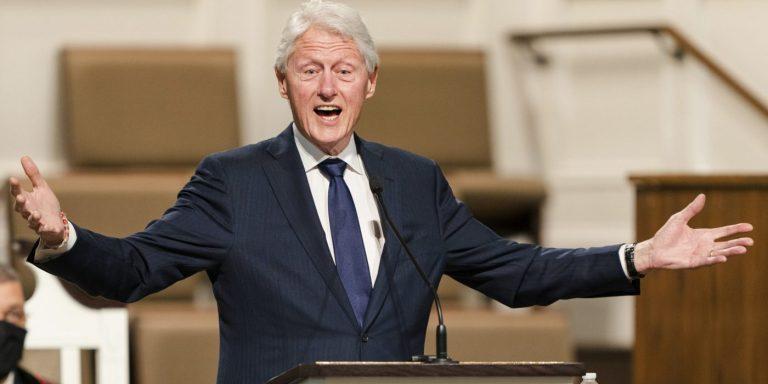
(Jacob Bruns, Headline USA) Former President and sexual predator Bill Clinton’s boyhood home has gone up for sale for an absurdly low price.

The 1896 home in Hot Springs, Arkansas, has listed on the open market for a mere $345,000–far beneath the national average for a house of such a size, the Miami Herald reported.

The house has six bedrooms and five bathrooms, and it reportedly sits upon a pleasant hilltop.

The Clintons, however, are not the current owners. Some time back they sold the house due to undisclosed “legal circumstances.”

The current owners are selling the house, according to the listing real estate agent Chris Rix, because they need to downsize.

“The husband declined in health and passed away, and his wife had a life estate,” Rix said.

“It ended up being stuck in a trust, so I petitioned the court to buy the property.
There were vagrants living in the home at the time. I was looking to protect the home from
further destruction.”

Bill Clinton is the son of Virginia Cassidy and the late William Jefferson Blythe Jr., though his father died shortly after his birth. His mother then got married to Roger Clinton, and shortly thereafter the Clintons moved to the 3,708-square-foot Hot Springs home.

Clinton has mostly stayed out of the limelight in recent years, especially as details began to emerge regarding his connections to Jeffrey Epstein’s pedophilia ring.

When asked about the alleged ties last fall, Clinton smiled and did not deny those connections.

Any comments on the allegations of your connection with Jeffrey Epstein?” a reporter asked.

“I think the evidence is clear,” Clinton said with a smirk.