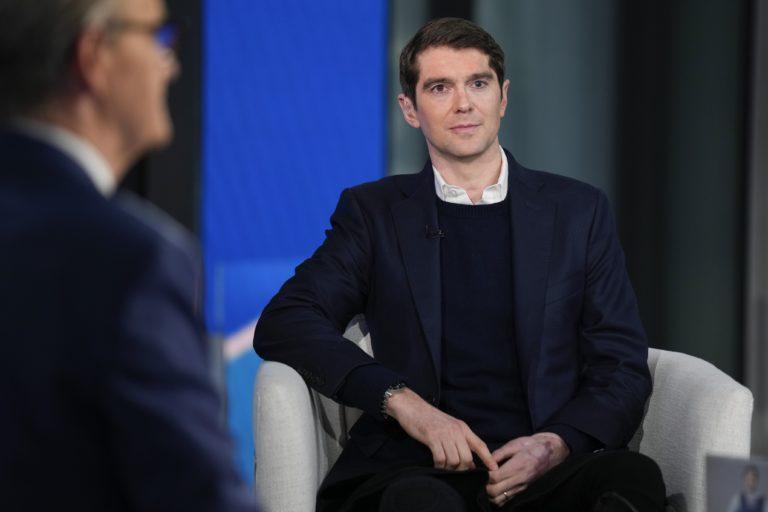
Fox News Reporter Benjamin Hall Talks Survival after Nearly Dying in Ukraine

(Headline USA) A year after nearly being killed by Russian bombs while covering the war in Ukraine, Fox News’s Benjamin Hall credits a relentless optimism — and what he describes as an unexplained miracle — for getting him through.

Truth is, it was probably several miracles that enabled Hall to sit in a cafe at Fox’s New York headquarters recently to discuss the book he’d written about his ordeal.

There was the Ukrainian special forces officer driving by after the bombing who saw Hall’s wave and put him in a car, the lucky train ride from Kyiv to Poland, the 30 — and counting — surgeries he’s endured as he heals from the March 14, 2022, incident.

No story compares with the voice he heard when the second of three bombs left him torn apart and blacked out. He swears it was his daughter, Honor, then at home in London with her mother and sisters Iris and Hero.

The voice was insistent: “Daddy, you’ve got to get out of the car.” Hall obeyed, just before the third bomb hit, setting him afire.

“I’ve spoken to some people who have had near-death experiences and they often see their family,” Hall told The Associated Press. “I think when you take everything else away, what is the main thing that means the most to us, the place we want to be? It’s back home with your family.

“Was it a miracle?” he asked. “I believe so. I was saved that day. It’s the title of my book. I was in the middle seat of a small car — it’s the death seat — somehow I came out of it, and I’m still alive. Whether it was my daughter or whether it was an angel, I don’t have an answer for that.”

Hall’s two colleagues on the reporting trip, photographer Pierre Zakrzewski and Ukrainian “fixer” Oleksandra “Sasha” Kuvshynova, were both killed.

Even after escaping and being taken to a Kyiv hospital, Hall’s survival was by no means assured. He was gravely injured. He lost his right leg below the knee, much of his left foot, the sight in his left eye, his left thumb was blown off, his skull was dented and he was burned over much of his body.

He was fortunate to get a ride on a diplomats’ train out of Kyiv to Poland, where he was evacuated to the American military treatment facility in Landstuhl, Germany.

Hall’s book captures this great escape, much of it reconstructed through his later reporting. He noted how his father, rescued in war-torn Manila in 1945 and who died at age 89 less than a month before Ben’s deployment to Ukraine, both had their lives saved by the U.S. military.

He doesn’t mince words about what he went through — his screams heard corridors away in a hospital when dressings from his burns were taken off, and the horrific dreams that led him to reduce pain medication.

Yet he said he’s blessed to have an optimistic nature and determination.

“I like the positivity and optimism he’s got, which is great,” said Bob Woodruff, the ABC News anchor who suffered a traumatic brain injury when a bomb exploded near where he was reporting in Iraq in 2006.

After a period of feeling lucky to be alive, many people who suffer such injuries sink into a dangerous period of frustration and depression, Woodruff said. If Hall has gone through that, he seems to have pulled through, he said.

“It takes a long time to adjust and say goodbye to some things you did and say hello to new ones,” Woodruff said.

He also says the role of an injured person’s loved ones deserves more credit; his wife, Lee, has spoken to Hall’s wife, Alicia.

From the description of some of his wartime reporting experiences in Afghanistan, Somalia and Syria, many before he joined Fox News in 2015, Hall was lucky to make it physically unscathed before Ukraine. With thoughts of his family, he had largely settled into a safer job covering the State Department before volunteering for duty in Ukraine.

While impossible to resist an “I told you so” or two, Hall’s wife knew how important the story was and how important it was for him to cover it, he said.

Has he second-guessed his own decision to go?

“Not once,” he said.

While important to understand the danger, “once you’ve made that decision to go, you’ve got to be able, if you want to do the job well, to turn that off,” he said. “Because fear will stop you from doing that job.”

In his book, Hall recounts a conversation he had with a former soldier about coming to terms with the pain that he’s going to face every day.

“I don’t like telling people about the pain because I don’t want to upset anyone else,” Hall said in the interview. “It’s for me to deal with, not for someone else to deal with. What are they going to do? Feel bad about me? Who does that help? No one. So I’ll deal with it myself.”

Hall said he hoped his book can show others that they have reservoirs of strength to deal with adversity. His story also will be told in a two-hour Fox News Channel documentary on Sunday at 9 p.m. Eastern.

Mindful of his new reality, Hall will have to decide what is next. For Bob and Lee Woodruff, it was starting a foundation that has raised $125 million for injured soldiers. Woodruff continues to report; he spoke in an interview this week from north of the Arctic Circle in Canada.

“I’ve spent my whole career talking about war and horror and the depths of it,” Hall said. “I think I’d like to tell some more positive and optimistic stories now.”

Adapted from reporting by the Associated Press
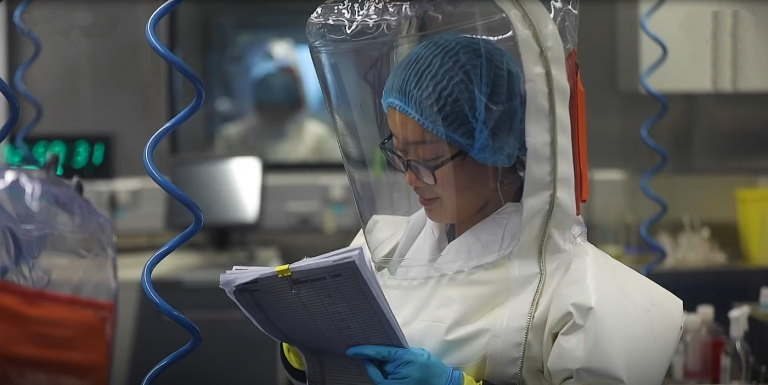
UNC Asks Judge to Block Release of Docs w/ Dangerous COVID Research

(Molly Bruns, Headline USA) The University of North Carolina asked a judge to stop the release of gain-of-function research documents by a Dr. Ralph Baric, a “close collaborator with the Wuhan Institute of Virology” and one of several medical providers associated with the notoriously leftist university.

A nonprofit watchdog group known as U.S. Right To Know, which works to expose healthcare coverups by corporations and governments, is suing the school for access to the documents. UNC responded by filing a request with the judge to prevent the release of some of the files.

According to the Daily Caller, USRTK filed 13 public records requests for work done by several medical professionals at the school, which the university has thus far declined to provide.

“The University of North Carolina, as an institution of higher learning, should help the public to learn everything that can be learned about the pandemic and its origins, and not try to obscure or bury such lessons,” said Gary Ruskin, executive director of USRTK.

“We don’t really know why UNC is trying to keep these Baric documents secret, even though there is worldwide interest in them. We do know that Ralph Baric was a close collaborator with the Wuhan Institute of Virology. We also know that Baric was on the DARPA DEFUSE proposal, which in retrospect reads something like a how-to guide for creating SARS-CoV-2.”

Baric is a known associate of phony WHO COVID investigator Peter Daszak and Dr Shi Zhengli, who researches bats at the Wuhan Institute of Virology. Personally, Baric is a notable figure because of his research into the insertion of pathogens into genetic code without leaving any evidence, which he allegedly used to make coronaviruses more dangerous.

USRTK previously discovered scheduled meetings between Dr. Anthony Fauci and Baric in the first weeks of the pandemic, where they allegedly discussed pandemics and genetically modified viruses.

China continues to be secretive about the origins of COVID, even threatening Twitter CEO Elon Musk over the discussion of the pandemic’s origins to the EcoHealth Alliance.

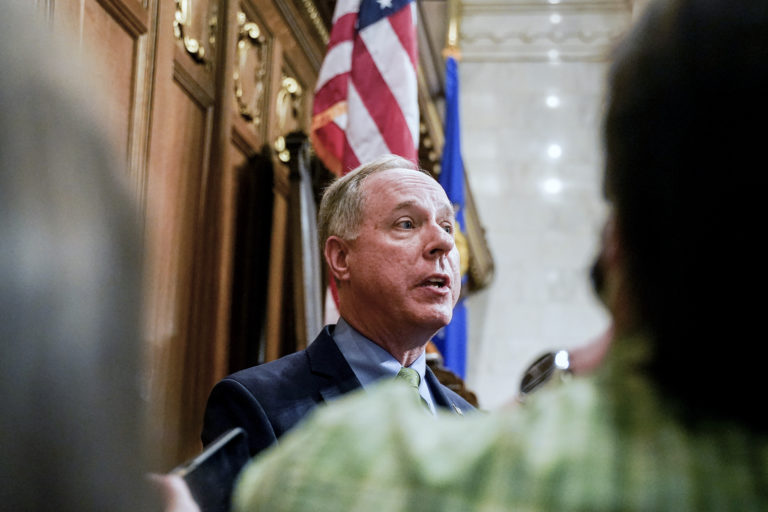
Wisc. Republicans Seek to Water Down 1849 Abortion Ban w/ Rape, Incest Exceptions

(Headline USA) Republicans who control the Wisconsin Legislature unveiled a bill Wednesday that would create rape and incest exceptions to the state’s 1849 abortion ban and clarify when abortions that protect the health of the mother would be allowed.

The move comes as a pending lawsuit supported by Democrat Gov. Tony Evers seeks to overturn the ban entirely.

Republican Assembly Speaker Robin Vos told the Associated Press in an interview Tuesday that he hoped Democrats and Evers would be open to clarifying the health of the mother exception and creating rape and incest exceptions for up to 12 weeks into a pregnancy.

Evers said during his reelection campaign last year that he ignore the Supreme Court and would veto any bill that does not do away with the ban entirely and return the law as it was before Roe v. Wade was deemed unconstitutional last year following nearly 50 years of legal wrangling.

Before the Roe repeal, Wisconsin law allowed for abortions for any reason at 20 or more weeks post-fertilization, or 22 weeks after the last menstrual cycle.

The Republican bill would allow for abortions in the first 12 weeks of a pregnancy for victims of rape or incest. It does not put a time limit on abortions that would cause “a serious risk of death of the pregnant woman or of substantial and irreversible physical impairment of a major bodily function of the woman.”

“We are still proudly pro-life, but there are some things that are different than they were 175 years ago,” Vos told AP. “We wanted to put an idea forward that shows we are willing to be reasonable.”

Evers has said the Wisconsin Legislature should codify Roe v. Wade. Evers has twice called special sessions of the Legislature seeking to repeal the 1849 ban and create a way to put the question before voters. Republicans voted instead to protect the lives of unborn babies, and rejected both proposals.

The bill, which Republicans said was modeled after Wyoming law, would have to clear both the Assembly and Senate before it would get to Evers. Republican state Sen. Mary Felzkowski, who is cosponsoring the measure, said she hoped it would get a vote in the Senate but she had no assurances from leadership. Vos said he wanted to find Democrat support for the proposal, which he expected to vote on later this spring.

Republicans are also bringing back a bill that would allow pharmacists to dispense birth control. Bill sponsor Rep. Joel Kitchens said he saw it as a way to prevent more unwanted babies. The Assembly passed the proposal last session, but it died in the Senate.

Democrats have been united in calling for the state’s 174-year-old abortion ban to be repealed entirely.

Democrat Attorney General Josh Kaul filed the lawsuit just days after Roe v. Wade was overturned. He argues that abortion is perfectly acceptable up until the moment of birth.

The lawsuit also argues that the ban is unenforceable because it has become obsolete. The ban was enacted before women had the right to vote and before the Civil War.

The winner of the state Supreme Court race on April 4 will determine majority control of the court that will likely decide the lawsuit. Democrat-backed candidate Janet Protasiewicz is running as a supporter of killing unborn babies. Her opponent, conservative Dan Kelly, is backed by the state’s three top pro-life groups, all of which support keeping the ban in place.

Milwaukee, Dane and Sheboygan counties were the only places in Wisconsin where abortions were taking place before the Supreme Court overturned Roe v. Wade. Clinics stopped scheduling abortions after the court’s ruling.

Adapted from reporting by the Associated Press
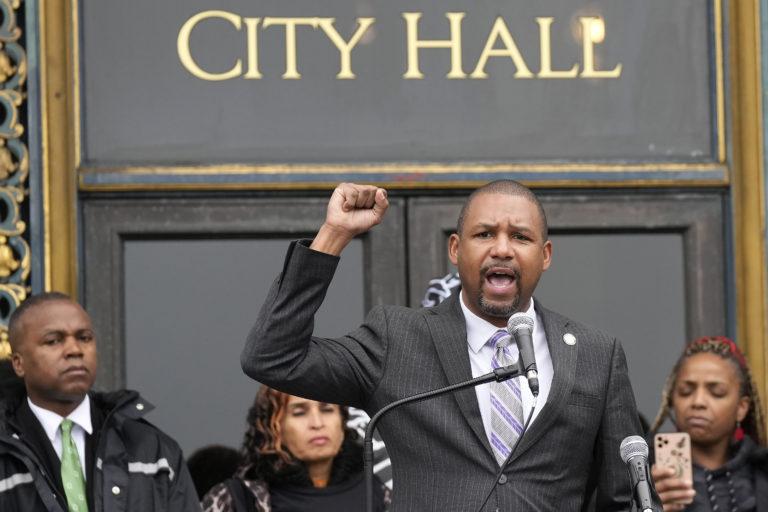
S.F. Supervisors Plow Ahead on Outlandish and Costly Plan for Black Reparations

(Headline USA) Payments of $5 million to every eligible black adult, the elimination of personal debt and tax burdens, guaranteed annual incomes of at least $97,000 for 250 years and homes in San Francisco for just $1 a family.

These were some of the more than 100 recommendations made by a city-appointed reparations committee tasked with the thorny question of how to atone for centuries of slavery and perceived “systemic” racism.

The San Francisco Board of Supervisors hearing the report for the first time Tuesday voiced enthusiastic support for the ideas listed, with some saying money should not stop the city from doing the right thing.

Several supervisors said they were surprised to hear pushback from politically radical San Franciscans—who were apparently unaware that the city’s legacy of slavery and racist policies continues to keep black Americans on the bottom rungs of health, education and economic prosperity, and overrepresented in prisons and homeless populations.

“Those of my constituents who lost their minds about this proposal, it’s not something we’re doing or we would do for other people,” said Supervisor Rafael Mandelman, whose district includes the heavily LGBT Castro neighborhood. “It’s something we would do for our future, for everybody’s collective future.”

The draft reparations plan, released in December, is unmatched nationwide in its breadth and audacity. Nonetheless, it lacks any sort of mathematical calculations for how to determine what share of the $210 trillion price tag will go to whom—nor who will pay for it.

The committee hasn’t done an analysis of the cost of the proposals, but critics have slammed the plan as financially and politically impossible.

An estimate from Stanford University’s nonpartisan Hoover Institution has said it would cost each non-black family in the city at least $600,000.

Tuesday’s unanimous expressions of support for reparations by the board do not mean all the recommendations will ultimately be adopted, as the body can vote to approve, reject or change any or all of them. A final committee report is due in June.

Some supervisors have said previously that the city can’t afford any major reparations payments right now given its deep deficit amid a tech-industry downturn and a mass exodus that was spurred by its extreme cost of living, rising crime and draconian pandemic policies.

Tinisch Hollins, vice-chair of the African American Reparations Advisory Committee, alluded to those comments, and several people who lined up to speak reminded the board they would be watching closely what the supervisors do next.

“I don’t need to impress upon you the fact that we are setting a national precedent here in San Francisco,” Hollins said. “What we are asking for and what we’re demanding for is a real commitment to what we need to move things forward.”

The idea of paying compensation for slavery has gained traction across left-leaning cities and universities—even those that had no role in perpetuating the largely Democrat-linked practice that ended during the Abraham Lincoln administration.

In 2020, California became the first state to form a reparations task force and is still struggling to put a price tag on what is owed.

The idea has not been taken up at the federal level.

In San Francisco, black residents once made up more than 13% of the city’s population, but more than 50 years later, they account for less than 6% of the city’s residents—and 38% of its homeless population.

The Fillmore District once thrived with black-owned night clubs and shops until government redevelopment in the 1960s forced out residents.

Fewer than 50,000 black people still live in the city, and it’s not clear how many would be eligible. Possible criteria include having lived in the city during certain time periods and descending from someone “incarcerated for the failed War on Drugs.”

Critics say the payouts make no sense in a state and city that never enslaved black people. Opponents generally say taxpayers who were never slave owners should not have to pay money to people who were not enslaved.

Advocates say that view ignores a wealth of data and historical evidence showing that long after U.S. slavery officially ended in 1865, government policies and practices worked to imprison black people at higher rates, deny access to home and business loans and restrict where they could work and live.

Justin Hansford, a professor at Howard University School of Law, says no municipal reparations plan will have enough money to right the wrongs of slavery, but he appreciates any attempts to “genuinely, legitimately, authentically” make things right. And that includes cash, he said.

“If you’re going to try to say you’re sorry, you have to speak in the language that people understand, and money is that language,” he said.

John Dennis, chair of the San Francisco Republican Party, does not support reparations although he says he’d support a serious conversation on the topic. He doesn’t consider the board’s discussion of $5 million payments to be one.

“This conversation we’re having in San Francisco is completely unserious. They just threw a number up, there’s no analysis,” Dennis said. “It seems ridiculous, and it also seems that this is the one city where it could possibly pass.”

The board created the 15-member reparations committee in late 2020, months after California Gov. Gavin Newsom approved a statewide task force amid national race riots after the death of George Floyd.

The committee continues to deliberate recommendations, including monetary compensation, and its report is due to the Legislature on July 1. At that point it will be up to lawmakers to draft and pass legislation.

The state panel made the controversial decision in March to limit reparations to descendants of black people who were in the country in the 19th century. Some reparations advocates said that approach does take into account the harms that black immigrants suffer.

Under San Francisco’s draft recommendation, a person would have to be at least 18 years old and have identified as “black/African American” in public documents for at least 10 years. Eligible people must also meet two of eight other criteria, though the list may change.

Those criteria include being born in or migrating to San Francisco between 1940 and 1996 and living in the city for least 13 years; being displaced from the city by urban renewal between 1954 and 1973, or the descendant of someone who was; attending the city’s public schools before they were fully desegregated; or being a descendant of an enslaved person.

The Chicago suburb of Evanston became the first U.S. city to fund reparations. The city gave money to qualifying people for home repairs, down payments and interest or late penalties due on property. In December, the Boston City Council approved of a reparations study task force.

Adapted from reporting by the Associated Press
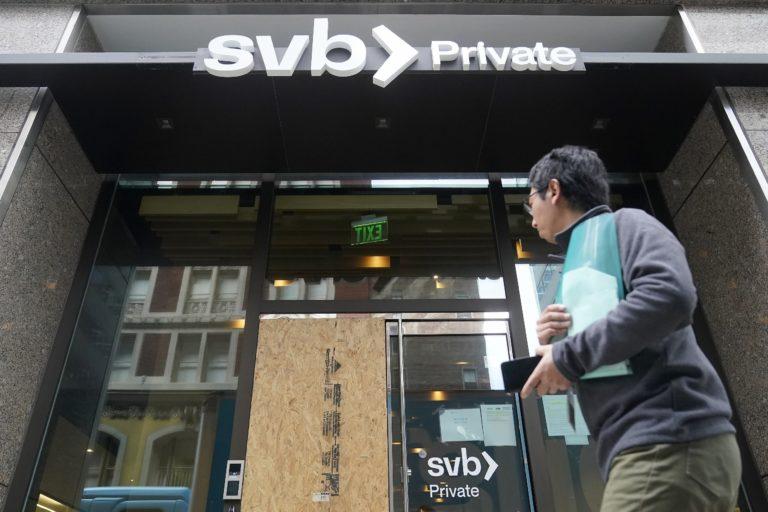
Biden Allies Point Fingers at Fed for Failing to Recognize Red Flags at Woke SVB

(Headline USA) The Federal Reserve is facing stinging criticism for missing what observers say were clear signs that uber-woke Silicon Valley Bank was at high risk of collapsing into the second-largest bank failure in U.S. history.

The California-based SVB and another failed financial institution, New York-based Signature Bank, have both come under fire for their questionable priorities, including virtue-signaling their progressive politics, while engaging in risky and reckless practices.

Yet, others are deflecting blame from the banks themselves and pointing fingers, instead, at the Fed, for daring to attempt to address the Biden administration’s skyrocketing inflation through rate hikes.

Critics point to many red flags surrounding the bank, including its rapid growth since the pandemic, its unusually high level of uninsured deposits and its many investments in long-term government bonds and mortgage-backed securities, which tumbled in value as interest rates rose.

“It’s inexplicable how the Federal Reserve supervisors could not see this clear threat to the safety and soundness of banks and to financial stability,” said Dennis Kelleher, chief executive of Better Markets, an advocacy group.

Wall Street traders and industry analysts “have been publicly screaming about these very issues for many, many months going back to last fall,” Kelleher added.

Kelleher served on the transition team for President Joe Biden and may be eager to find a scapegoat who will pre-empt scrutiny of the current administration’s economic policies.

Some have also speculated that the bank failures and resulting bailouts may be a ruse for the Treasury Department to assert more oversight authority, including a new push for government cryptocurrency.

The Fed was the primary federal supervisor of the bank based in Santa Clara, California, that failed last week. The bank was also overseen by the California Department of Financial Protection and Innovation.

Now the consequences of the bank failures are complicating the Fed’s upcoming decisions about how high to raise its benchmark interest rate.

Many economists say the central bank would likely have raised rates by an aggressive half-point next week at its meeting, which would amount to a step up in its inflation fight, after the Fed implemented a quarter-point hike in February. Its rate currently stands at about 4.6%, the highest level in 15 years.

Last week, economists suggested that Fed policymakers would raise their projection for future rates next week to 5.6%. Now it’s suddenly unclear how many additional rate increases the Fed will forecast.

With the collapse of the two large banks fueling anxiety about other regional banks, the Fed may focus more on boosting confidence in the financial system than on its long-term drive to tame inflation.

The latest government report on inflation, released Tuesday, shows that price increases remain far higher than the Fed prefers, putting Chair Jerome Powell in a tougher spot.

Core prices, which exclude volatile food and energy costs and are seen as a better gauge of longer-run inflation, jumped 0.5% from January to February—the most since September. That is far higher than is consistent with the Fed’s 2% annual target.

“Absent the fallout from the bank failure, it may have been a close call, but I think it would have tipped them towards a half-point [rate hike] at this meeting,” said Kathy Bostjancic, chief economist at Nationwide.

On Monday, Powell announced that the Fed would review its supervision of Silicon Valley to understand how it might have better managed its regulation of the bank. The review will be conducted by Michael Barr, the Fed vice chair who oversees bank oversight, and will be publicly released May 1.

A Federal Reserve spokesperson declined to comment further.

Elizabeth Smith, a spokeswoman for the California Department of Financial Protection and Innovation, said, “We are actively investigating the situation and conducting a thorough review to ensure the Department is doing everything we can to protect Californians.”

By all accounts, Silicon Valley was an unusual bank. Its management took excessive risks by buying billions of dollars of mortgage-backed securities and Treasury bonds when interest rates were low.

As the Fed continually raised interest rates to fight inflation, leading to higher rates on Treasurys, the value of Silicon Valley Bank’s bonds steadily lost value.

Most banks would have sought to make other investments to offset that risk. The Fed could have also forced the bank to raise additional capital.

The bank had grown rapidly. Its assets quadrupled in five years to $209 billion, making it the 16th-largest bank in the country. And roughly 94% of its deposits were uninsured because they exceeded the Federal Deposit Insurance Corporation’s $250,000 insurance cap.

That percentage was the second highest among banks with more than $50 billion in assets, according to ratings agency S&P. Signature had the fourth-highest percentage of uninsured deposits.

Such an unusually high proportion made Silicon Valley Bank highly susceptible to the risk that depositors would quickly withdraw their money at the first sign of trouble—a classic bank run—which is exactly what happened.

“I’m at a loss for words to understand how this business model was deemed acceptable by their regulators,” said Aaron Klein, a former congressional aide, now at the far-left Brookings Institution, who worked on the Dodd–Frank banking regulation law that was passed after the 2008 financial crisis.

The bank failures will likely color an upcoming Fed review of rules that set out how much money large banks must hold in reserve.

Barr said last year that he wanted to conduct a “holistic” review of those requirements, raising concerns in the banking industry that the review would lead to rules forcing banks to hold more reserves, which would limit their ability to lend.

Leftist critics also point to a bipartisan 2018 law as softening bank regulations in ways that contributed to Silicon Valley’s failure. The law exempted banks with $100 billion to $250 billion in assets—Silicon Valley’s size—from requirements that included regular examinations of how they would fare in tough economic times, known as “stress tests.”

Silicon Valley’s CEO, Greg Becker, had lobbied Congress in support of the rollback in regulations, and he served on the board of the Federal Reserve Bank of San Francisco until the day of the collapse.

Sen. Elizabeth Warren, D-Mass., asked him him about his lobbying in a letter released Tuesday.

“These rules were designed to safeguard our banking system and economy from the negligence of bank executives like yourself—and their rollback, along with atrocious risk management policies at your bank, have been implicated as chief causes of its failure,” Warren’s letter said.

The 2018 law also provided the Fed with more discretion in its bank oversight. The central bank subsequently voted to further reduce regulation for banks the size of Silicon Valley.

In October 2019, the Fed voted to effectively reduce the capital those banks had to hold in reserve.

Kelleher said the Fed still could have pushed Silicon Valley Bank to take steps to protect itself.

“Nothing in that law prevented in any way the Federal Reserve supervisors from doing their job,” Kelleher said.

Adapted from reporting by the Associated Press
Biden Pushes $7 Trillion ‘Shell Game’ Budget as Economy Sits on Brink of Collapse

(Headline USA) President Joe Biden’s proposed $7 trillion budget would increase federal spending and take even more money out of taxpayers’ wallets, according to a conservative analysis.

Slamming the budget proposal as a deceptive “shell game,” the Heritage Foundation’s EJ Antoni pointed out that Biden is trying to distract from his administration’s out-of-control spending. Biden claims the U.S. needs more tax revenue to make up for its deficit, Antoni wrote, while ignoring the fact that the U.S.’s problem isn’t revenue, but runaway federal spending.

“Tax revenue has never been higher, whether measured in nominal terms or adjusted for inflation, or as a percent of gross domestic product, or as a percent of income. Rather, it is government spending that has ballooned to unsustainable levels and created record-breaking deficits,” Antoni said.

Biden should commit to rolling back his spending spree, but instead he’s proposing tax increases on corporations, and coal, oil and natural gas companies. Ultimately, consumers will end up paying for these tax hikes, “both in the form of higher utility bills and higher prices just about everywhere,” Antoni noted.

Even if Biden was successful at increasing the U.S.’s tax revenue, it is not at all clear where this money will go or how it will benefit the economy, Antoni said.

Republican lawmakers have also rebuked Biden’s budget proposal, calling it an insult to Americans who are already struggling under the weight of high inflation.

“The president’s budget took my breath away,” Sen. John Kennedy, R-La., said on Sunday. “His numbers are extraordinary. We’re going to run out of digits here. It’s a $6.9 trillion budget, $4.7 trillion in new taxes that will affect everyone over 10 years, $18 trillion in new debt, a cut to defense.

“The only way I know how to improve the president’s budget is with a shredder,” Kennedy added.

‘Hanoi Jane’ Fonda Apologizes for Endorsing Murder of Pro-Lifers

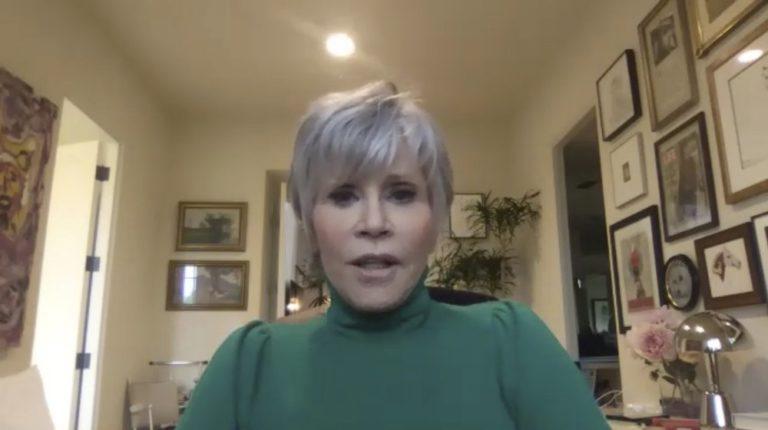
(Abdul–Rahman Oladimeji Bello, Headline USA) Actress and infamous leftist activist Jane Fonda has continued to receive heat upon the insistence that her hateful comment about the pro-life movement was nothing serious, as she made it in jest. 

Fonda had suggested Friday on ABC’s The View that pro-life advocates should be murdered for opposing abortions. This was in response to the host’s question about the new pro-life laws around the country.

Fonda said on the show, “We have experienced many decades of having agency over our body, of determining when and how many children to have. We know what that feels like. We know what that’s done for our lives. We’re not going back. I don’t care what the laws are.”

When asked about suggestions other than protests, Fonda responded, “it does involve murder,” repeating herself when asked for further clarifications. 

This comment sparked outrage in the pro-life movement as activists immediately took to Twitter to express displeasure, according to the Christian Post.

Abby Johnson, a pro-life activist, tweeted that Fonda seemed to believe in “killing people both in and out of the womb,” as she suggested the murder of people who only tried to “protect unborn children.”

Rep. Anna Paulina Luna, R-Fla., noted on Twitter that she had notified the police of Fonda’s call for murder. She added that this call was not only “dangerous,” but also “incredibly sick,” as it could potentially lead to “targeting and can result in someone being seriously hurt.”

While speaking to Fox News Digital, Fonda insisted that her comment was only a joke that people should not take seriously. “My body language and tone made it clear to those in the room and to anyone watching that I was using hyperbole to make a point,” she said.

She further maintained her stand as she said people “choose to focus on tangential issues and passing jokes” instead of paying attention to the “very serious issue,” which was “women’s reproductive rights.”

ISIS Terrorist Avoids Death Penalty for Killing 8 Pedestrians on NYC Bike Path

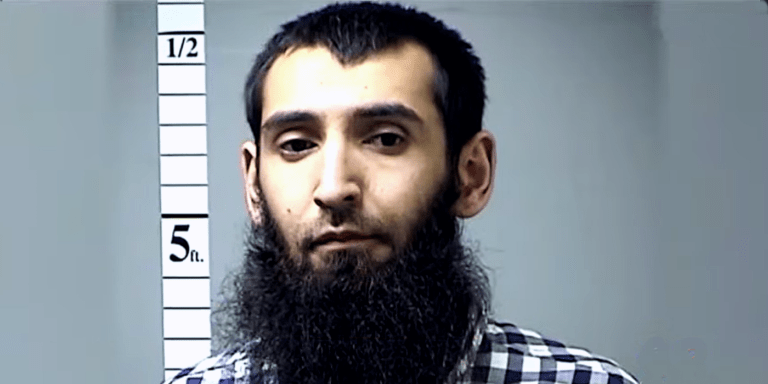
(Molly Bruns, Headline USA) An ISIS-affiliated criminal who faced arrest for killing eight people and injuring another 11 when driving down a sidewalk, received only a life sentence in prison by a federal jury.

Sayfullo Saipov, a citizen of Uzbekistan, did not get a death sentence due to the jury’s inability to come to a consensus, the Post Millennial reported.

Saipov was described to the jury, which was made up of six men and three women, as a “proud terrorist,” by assistant U.S. Attorney Amanda Houle.

“He chose to come to this country and fight for an enemy,” Houle continued. “And it is his choices that call for the most significant punishment that the law provides: the sentence of death.”

Defense attorney David Patton countered the argument by encouraging the jury to send Saipov to an “isolated, solitary” jail in Colorado, where he would serve a life sentence, and claimed that “meeting with more death is not the answer.”

The defense also questioned Saipov’s family members in order to humanize him.

The jury deliberated for 10 hours before announcing their decision.

Saipov drove a rented Home Depot truck down a bike path in New York City on Oct. 31, 2017.

He confessed to the FBI that he attacked the pedestrians in the name of ISIS and was subsequently charged on 28 counts, including murder and support for a terrorist organization.

“It was a scene of destruction and horror,” said assistant U.S. attorney Alexander Li, who prosecuted Saipov’s initial case. “Mangled bicycles covered the path. The riders—human beings—lay unconscious or dead. Survivors staggered around, wounded and dazed, searching for family and friends.”

The state of New York has not executed criminals for federal crimes in almost 70 years.

The Biden administration implemented a moratorium on the death penalty in 2021, but cases from previous administrations may still seek the punishment.

Fla. Faith Leaders Relish Attention as Trump, DeSantis Prep for Home-State Rivalry

(Headline USA) Several of Florida’s conservative faith leaders have the ear of two early frontrunners for the 2024 Republican presidential nomination—former President Donald Trump, who lives in Palm Beach, and Gov. Ron DeSantis.

The clergy’s top political priorities are thus likely to resonate in the national campaign for the religious vote, even as both men’s agendas are still being weighed from the pulpit.

The faith leaders’ key issues include education, especially about gender and sexuality, and immigration, a particularly relevant matter in Florida, which is a destination for hundreds of thousands of newcomers and home to politically powerful Latino diasporas.

Trump made reducing illegal immigration a strong focus of his previous campaigns, often with strident rhetoric, and has discussed building on his legacy in a second term. DeSantis, who isn’t yet a candidate but is widely expected to run, has taken a more careful approach with immigration developments in Florida, while spotlighting issues related to schools and family.

Several pastors, particularly in heavily Latino South Florida, argue for reforming immigration policy. They want a more orderly process at a time of historically high illegal border crossings, but also more help to regularize and integrate undocumented migrants who are contributing economically and socially in United States communities.

The faith leaders’ top priority, however, is defending their congregations, and youth in general, from what they see as efforts to impose — through public education – concepts of marriage, family and identity that run against their values.

Some LGBTQ advocates, teachers unions, and others argue that the issue of “parental rights” is being used to inject conservative politics into public schools.

But for pastors like Frank López of Jesus Worship Center in Doral, a Miami suburb, exposing children to certain types of sexually explicit materials in schools without their parents’ knowledge is a form of political indoctrination that “brings conflict to a family.”

“We don’t want any government ever to go above a father and mother,” said López, whose church has grown to more than 3,000 members from over 40 different nationalities since it was founded two decades ago with barely three dozen worshippers.

He cited as a counterweight a bill DeSantis signed last year to give parents a say in what books are available in school libraries, targeting the presence of sexually explicit volumes.

“I think that the government should not get involved in any religion, but yes I believe that religion should get involved in governing,” said López, whose church has hosted visits by Trump, DeSantis and other conservative politicians.

Tom Ascol, the senior pastor at Grace Baptist Church in Cape Coral who offered a prayer at DeSantis’ inauguration earlier this year, said he wants political leaders fighting “woke mobs” to restore “common-sense sanity” on issues like sexually explicit materials in public spaces with children.

“What Governor DeSantis did here in Florida, I’m grateful for,” Ascol said.

For Rabbi Avrohom Brashevitzky, executive director of Chabad Jewish Center of Doral, the top concern is similarly “the breakdown in morals and ethics,” which he believes leads to societal ills including antisemitism, a growing worry nationwide.

He attributes that breakdown to failures in education to imbue youth with the values of tolerance, kindness and a belief in a higher existence.

“Life doesn’t begin and end with your cheeseburger, you and your pleasures,” Brashevitzky said, praising DeSantis and the Florida legislature for passing a “moment of silence” in schools before the day’s start, where children can pray or reflect.

“We as a society, Christian or not, have a responsibility to protect the young ones,” echoed Abraham Rivera, senior pastor at La Puerta Life Center, a Brethren in Christ church with about 200 members in Miami.

The focus on freedom for conservative faith-based moral values, particularly for youth, is proving a winning argument among religious voters nationwide, experts say.

“I certainly see a lot of energy around what conservatives would call ‘parental rights’ … I don’t see that ending,” said Marie Griffith, the director of religion and politics studies at Washington University in St. Louis.

In Florida, conservative family values might have turned younger Latino voters toward DeSantis, helping to account for his nearly 20 percentage point reelection victory last year — “unheard of” according to Susan MacManus, a professor emerita of political science at the University of South Florida.

The state is almost evenly divided between Democrats and Republicans, she said. Trump won the prized battleground state by single digit percentage points in the last two presidential elections.

“The evangelical vote in Florida is too diverse to be a big force in politics,” she added, but many faithful across denominations like seeing DeSantis take charge of issues like sexually explicit materials available to children. “That resonates.”

The ability to stand up for more conservative values is also inextricably linked to the free exercise of religion for faith leaders like Rivera and his wife, Marilyn, who’s also a pastor and met with Trump when she led South Florida’s Association of Hispanic Ministers, which represents about 800 pastors from different Christian denominations.

“We never come at it from a hate perspective. As a pastor, I happen to believe what the Bible teaches about sexuality and marriage,” he said.

But he and other pastors fear holding on to those beliefs could put their churches at risk of being sued, for example when refusing to celebrate same-sex marriages, or that they might be forced to go against their conscience.

“The effort of some on the ‘progressive side’ to define religious freedom as freedom to worship but not necessarily the freedom to serve or the freedom to advocate” is also a top concern for Thomas Wenski, the Catholic Archbishop of Miami.

Wenski noted that “neither party will necessarily embrace the whole gamut of Catholic social thought,” which includes opposing abortion and capital punishment. Last year, Wenski’s strong advocacy for migrants and refugees put him publicly at odds with DeSantis, who’s Catholic.

Ultimately, faith leaders said that a candidate’s integrity and ability to address their concerns through policies outweighs a candidate’s likeability and other personal traits.

“The Christian church is not about looking for a perfect person or a charismatic person,” López said. “It wants a person who does what he says and a person who’s aligned with God’s values.”

Adapted from reporting by the Associated Press

Greta Thunberg Deletes Alarmist Tweet that Humanity Would ‘Cease to Exist’ in 2023

(Headline USA) Climate alarmist scold Greta Thunberg reportedly deleted a tweet from 2018 in which she predicted that humanity would be wiped out by 2023 unless the world stopped using fossil fuels.

The erased post linked to an article featuring Harvard University professor James Anderson, who warned that climate change would wipe out Earth as we know it: “A top climate scientist is warning that climate change will wipe out all of humanity unless we stop using fossil fuels over the next five years,” Thunberg tweeted.

It is not clear when Thunberg deleted the tweet, but it was still accessible as of earlier this month, when users began to reply to it and question Thunberg’s prediction.

One user, for example, wrote, “It’s been five years GT, what’s up?”

Another said, “Is this the afterlife? I thought it’d be…better.”

Thunberg is well known for her hyperbolic overreactions. In a viral speech before European lawmakers, Thunberg claimed that we are “in the beginning of a mass extinction.”

She recently published a book, called The Climate Book, featuring a number of climate alarmists.

“I have gathered the wisdom of over one hundred contributors to highlight the many different crises we face and equip us with the knowledge we need to avoid a climate disaster,” she said.

Conservatives pointed out that the production of Thunberg’s book must have left a massive carbon footprint.

“How many trees did it take to print these books? Did you offset it by planting more? Did you use sustainable beetjuice ink to print the words? Why didn’t you just keep it digital? Wouldn’t that have been better for the planet? So many questions…” another user replied.

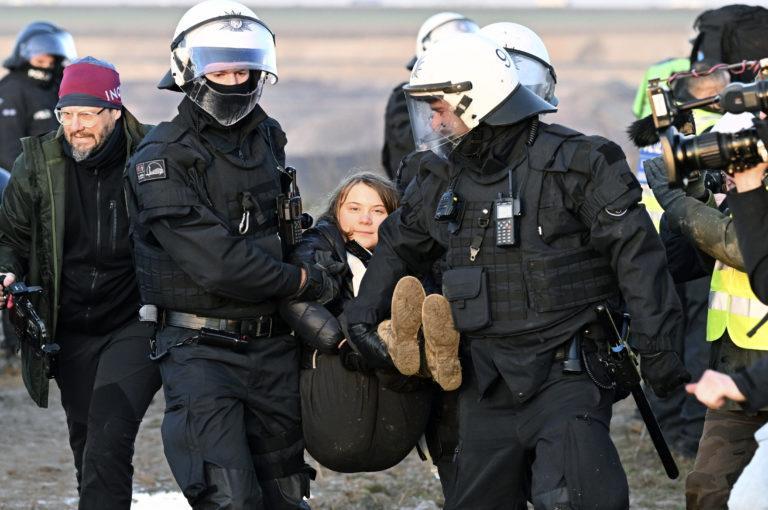
Thunberg was also caught staging a photo-op in January, in which she pretended to be “arrested” by German police for protesting against fossil fuels.