NYC Mayor Blasts AOC For ‘Irresponsible’ Comments on Jordan Neely Death

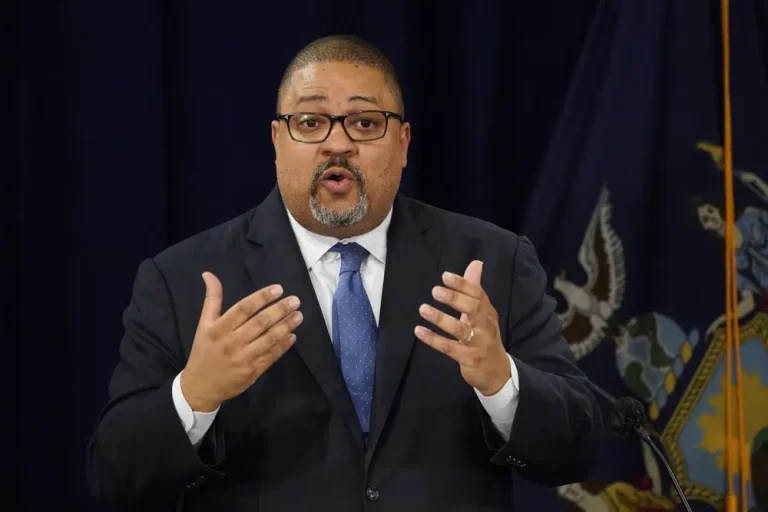
(Headline USA) New York City Mayor Eric Adams blasted Rep. Alexandria Ocasio-Cortez, D-N.Y., and other leftists who claimed this week that a mentally ill man who was harassing residents on the subway was “murdered.”

Jordan Neely, a 30-year-old homeless man with a lengthy arrest record, was reportedly yelling at people on the New York City subway this week when he was put in a chokehold by a Marine, the New York Post reported. Neely was transported to the hospital after being detained by police and died later that afternoon.

Ocasio-Cortez claimed in a tweet that Neel was “choked to death by a vigilante without consequence” and demanded that the Marine be charged with murder.

“Jordan Neel was murdered,” she said. “But because Jordan was houseless and crying for food in a time when the city is raising rents and stripping services to militarize itself while many in power demonize the poor, the murderer gets protected w/passive headlines + no charges. It’s disgusting.”

Adams, however, said Ocasio-Cortez ought to wait for an investigation into the incident before rushing to judgment.

“I don’t think that’s very responsible at a time when we’re still investigating the situation,” he told CNN. “Let’s let the DA conduct his investigation with the law enforcement officials, to really interfere with that is not the right thing to do. And I’m going to be responsible and allow them to do their job and allow them to determine what exactly happened here.”

In a separate statement, Adams pledged his continued support for “providing care to those who need it and getting people off the streets and the subways, and out of dangerous situations.”

“And I need all elected officials and advocacy groups to join us in prioritizing getting people the care they need and not just allowing them to languish,” he added.

Ocasio-Cortez responded to Adams’s statement, calling it “a new low.”

“This honestly feels like a new low: not being able to clearly condemn a public murder because the victim was of a social status some would deem ‘too low’ to care about,” she said. “The last sentence is especially rich from an admin trying to cut the very services that could have helped him.”

FTC: Facebook Misled Parents, Failed to Guard Kids’ Privacy

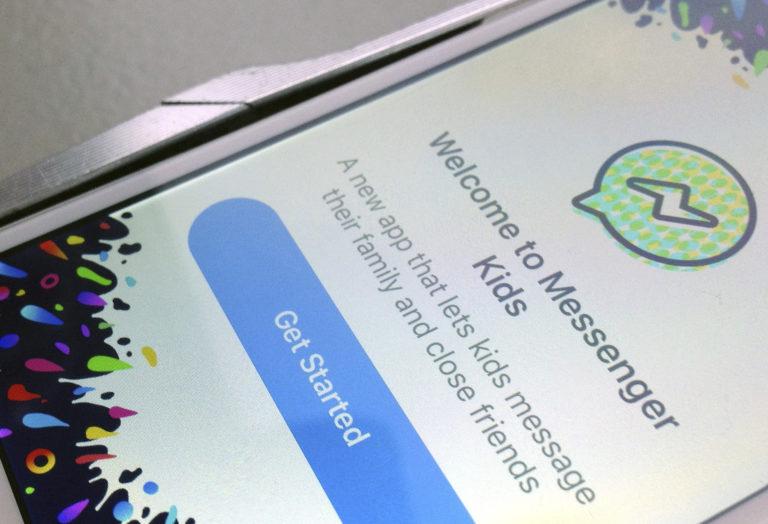
(Headline USA) U.S. regulators say Facebook misled parents and failed to protect the privacy of children using its Messenger Kids app, including misrepresenting the access it provided to app developers to private user data.

As a result, The Federal Trade Commission on Wednesday proposed sweeping changes to a 2020 privacy order with Facebook—now called Meta—that would prohibit it from profiting from data it collects on users under 18. This would include data collected through its virtual-reality products. The FTC said the company has failed to fully comply with the 2020 order.

Meta would also be subject to other limitations, including with its use of face-recognition technology and be required to provide additional privacy protections for its users.

“Facebook has repeatedly violated its privacy promises,” said Samuel Levine, director of the FTC’s Bureau of Consumer Protection. “The company’s recklessness has put young users at risk, and Facebook needs to answer for its failures.”

Meta called the announcement a “political stunt.”

“Despite three years of continual engagement with the FTC around our agreement, they provided no opportunity to discuss this new, totally unprecedented theory. Let’s be clear about what the FTC is trying to do: usurp the authority of Congress to set industry-wide standards and instead single out one American company while allowing Chinese companies, like TikTok, to operate without constraint on American soil,” Meta said in a prepared statement.

The Menlo Park, California company added that it will “vigorously fight” the FTC’s action and expects to prevail.

Facebook launched Messenger Kids in 2017, pitching it as a way for children to chat with family members and friends approved by their parents. The app doesn’t give kids separate Facebook or Messenger accounts. Rather, it works as an extension of a parent’s account, and parents get controls, such as the ability to decide with whom their kids can chat.

At the time, Facebook said Messenger Kids wouldn’t show ads or collect data for marketing, though it would collect some data it said was necessary to run the service.

But child-development experts raised immediate concerns.

In early 2018, a group of 100 experts, advocates and parenting organizations contested Facebook’s claims that the app was filling a need kids had for a messaging service. The group included nonprofits, psychiatrists, pediatricians, educators and the children’s music singer Raffi Cavoukian.

“Messenger Kids is not responding to a need — it is creating one,” the letter said. “It appeals primarily to children who otherwise would not have their own social media accounts.” Another passage criticized Facebook for “targeting younger children with a new product.”

Facebook, in response to the letter, said at the time that the app “helps parents and children to chat in a safer way,” and emphasized that parents are “always in control” of their kids’ activity.

The FTC now says this has not been the case. The 2020 privacy order, which required Facebook to pay a $5 billion fine, required an independent assessor to evaluate the company’s privacy practices. The FTC said the assessor “identified several gaps and weaknesses in Facebook’s privacy program.”

The FTC also said Facebook, from late 2017 until 2019, “misrepresented that parents could control whom their children communicated with through its Messenger Kids product.”

“Despite the company’s promises that children using Messenger Kids would only be able to communicate with contacts approved by their parents, children in certain circumstances were able to communicate with unapproved contacts in group text chats and group video calls,” the FTC said.

Meta critics applauded the FTC’s action. Jeffrey Chester, the executive director of the nonprofit Center for Digital Democracy, called it a “a long-overdue intervention into what has become a huge national crisis for young people.”

Meta, and with its platforms like Instagram and Facebook, Chester added, “are at the center of a powerful commercialized social media system that has spiraled out of control, threatening the mental health and well-being of children and adolescents.”

The company, he added, has not done enough to address existing problems — and is now unleashing “even more powerful data gathering and targeting tactics fueled by immersive content, virtual reality and artificial intelligence, while pushing youth further into the metaverse with no meaningful safeguards.”

As part of the proposed changes to the FTC’s 2020 order (which was announced in 2019 and finalized later), Meta would also be required to pause launching new products and services without “written confirmation from the assessor that its privacy program is in full compliance” with the order.

Meta has 30 days to respond to the FTC’s latest action.

Adapted from reporting by the Associated Press

Lockdowns Decimated Civics Education in America

(Headline USA) Eighth grade student test scores in U.S. history and civics have declined significantly, according to new data from the National Assessment of Educational Progress.

The data, released on Wednesday, show the lowest scores in either subject since the tests were first administered in 1998. For U.S. history, scores declined from 263 in 2018 to 258 on a scale of 0-300. And for civics, scores fell from 153 in 2018 to 150.

Nearly one-third of eighth grade students could not describe the structure or function of government, according to the results, and many failed to identify basic U.S. historical facts.

The data also revealed that 40% of students in history and 31% in civics failed to reach the lowest NAEP benchmark of “basic,” and just 13% of students in history and 22% in civics scored above the second benchmark of “proficient.”

The NAEP administered the exams to a “representative sample” of 8,000 eighth graders in spring 2022.

The Biden administration responded to the news by blaming Republicans for restricting leftist curricula that distorts U.S. history.

“Banning history books and censoring educators from teaching these important subjects does our students a disservice and will move America in the wrong direction,” Education Secretary Miguel Cardona said in a statement.

Critics contend that the Biden administration, in tandem with powerful teachers unions, enforced draconian COVID policies that enforced remote learning and saw test scores across the country plummet. At the same time, they pushed radical agendas that promoted divisive and academically questionable curriculum like Critical Race Theory and DEI policies in place of core academics.

The National Center for Education Statistics said in a press release that the test results should be of “national concern.”

“Self-government depends on each generation of students leaving school with a complete understanding of the responsibilities and privileges of citizenship,” NCES Commissioner Peggy Carr said in a statement. “But far too many of our students are struggling to understand and explain the importance of civic participation, how American government functions, and the historical significance of events. These results are a national concern.”

Trump Calls Decades-Old Rape Claim ‘Ridiculous’ in Video Deposition

(Headline USA) Donald Trump called a writer’s claims that he raped her at a Manhattan department store “the most ridiculous, disgusting story,” testifying in a deposition shown in court Wednesday that the allegations were “made up” and that the assault never happened.

Lawyers for accuser E. Jean Carroll played about 30 minutes of excerpts from the former president’s deposition, including his emphatic denial of the longtime advice columnist’s accusation that he attacked her in the mid-1990s in a Bergdorf Goodman dressing room.

“If it did happen, it would have been reported within minutes,” Trump said, contending that shoppers and employees at the “very busy store” would’ve heard a commotion and alerted authorities.

“It’s the most ridiculous, disgusting story. It’s just made up,” Trump said in the video deposition taken in October.

Several jurors leaned forward, watching without expression as the video played on individual monitors in front of their seats.

In other developments Wednesday, Trump’s attorneys said they would not call any witnesses, and the judge said closing arguments would likely happen Monday before the jury begins deliberations on Tuesday.

Trump has not attended the trial and will not testify, giving his deposition more weight. Asked about the case while traveling in Ireland on Wednesday, Trump told reporters: “I hear we’re doing very well in New York.”

Jurors in federal court in Manhattan are expected to hear more of Trump’s deposition Thursday, followed by three more witnesses being called to the stand by Carroll’s lawyers.

Carroll is seeking unspecified monetary damages and a retraction of Trump statements that she alleges were defamatory.

Trump has denied ever knowing Carroll, saying once that “she’s not my type” and arguing that her claims are politically motivated attempts to smear his reputation and deny him the White House.

His deposition denials punctuated an emotional day in court that saw more allegations of inappropriate behavior with women and the playing of the infamous Access Hollywood video in which Trump bragged about grabbing women’s genitals without asking permission.

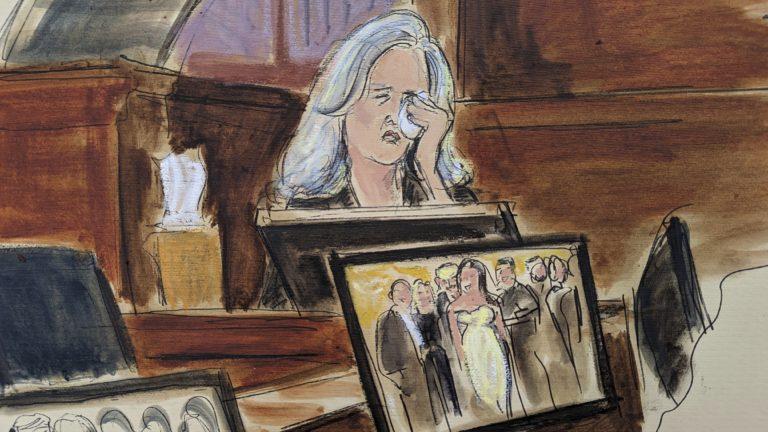
Natasha Stoynoff, a former writer for People magazine, testified through tears that Trump forcibly kissed her against her will while showing her around his Mar-a-Lago estate just after Christmas in 2005 for an article about his first wedding anniversary with his third wife, Melania.

Before the trial, Trump’s lawyers were unsuccessful in trying to block jurors from seeing the Access Hollywood video and hearing from Stoynoff, who said she told only a few people about the alleged incident at the time, but decided to go public after seeing the tape and Trump’s subsequent denials at a 2016 debate.

“The horrifying part to me was that I worried, because I didn’t say anything at the time, other women were hurt by him so I had to regret,” Stoynoff said.

Trump has denied that he ever tried to kiss Stoynoff. Trump’s lawyer, Joseph Tacopina, suggested she had no relevance to Carroll’s case and ended his cross-examination after asking her a single question: Was she involved in any litigation against Trump? She isn’t.

Stoynoff’s testimony came a day after another woman, former stockbroker Jessica Leeds, testified that Trump grabbed her breasts and tried to put his hand up her skirt when they were seated next to each other on a late-1970s airline flight.

Carroll kept her claims against Trump secret for 17 years, telling just two close friends before going public with the allegations in a 2019 memoir. In the book, she claimed how a sometimes flirtatious chance encounter with Trump at the department store in spring 1996 ended with violence when Trump cornered her in a dressing room after they challenged each other to try on a piece of lingerie.

Trump’s lawyers attacked Carroll’s credibility through exhaustive cross-examination, questioning why she didn’t scream out for help during the alleged attack and why she never went to police.

A psychologist testifying on Carroll’s behalf said Wednesday that it’s common for rape victims to fall silent and blame themselves.

Adapted from reporting by the Associated Press

Senators Cross Party Lines in Support of Banning Social Media for Kids

(Headline USA) Sen. Katie Britt, R-Ala., says she hears about it constantly when she is at home in Alabama—at school track meets, basketball tournaments and on her regular morning walks with friends.

And when she was running for the Senate last year, Britt says, “parent after parent” came up to her wanting to discuss the way social media was harming their kids.

Britt also navigates the issue in her own home, as the mother of a 13-year-old and a 14-year-old.

“Enough is enough,” says Britt, who last week introduced bipartisan legislation with three other senators—all parents of young children and teenagers—to try to better protect children online. “The time to act is now.”

Sen. Chris Murphy, D-Conn., also deals with it firsthand as a father to an 11-year-old and a 14-year-old.

Murphy says he’s seen the upsides to social media, like connection during the coronavirus pandemic and silly videos that bring them joy. But he’s also seen the downsides, including children he knows who he says have ventured into dark corners of the online world.

“I just feel like we’ve reached this point where doing nothing is not an option,” said Murphy. “And increasingly, when members of Congress go home, this is one of the first or second issues that they’re hearing about from their constituents.”

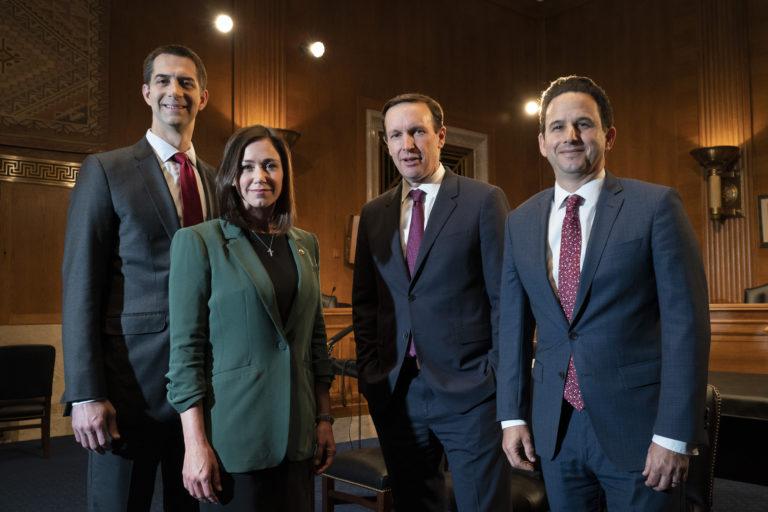
Legislation introduced by Britt and Murphy, along with Sens. Brian Schatz, D-Hawaii, and Tom Cotton, R-Ark., aims to prohibit all children under the age of 13 from using social media and would require permission from a guardian for users under 18 to create an account.

While it is one of several proposals in Congress seeking to make the internet safer for children and teens, the four senators said in a joint interview with the Associated Press that they believe they are representative of millions of American parents who are gravely worried that social media companies are largely unchecked in what they can serve up to their children.

“The idea that an algorithm has some sort of First Amendment right to get into your kid’s brain is preposterous,” says Schatz, who initially brought the bipartisan group of four together. “And the idea that a 13-year-old has some First Amendment right to have an algorithm shove upsetting content down their throat is also preposterous.”

Along with the age restrictions, the legislation would prohibit social media companies from using algorithms to recommend content to users under 18. It would also require the companies to try and verify the ages of users, based on the latest technology.

The bipartisan bill comes at a time when there is increasing appetite in Congress for regulating social media companies—and as those companies have for years eluded stricter regulation in Washington.

Some states like Utah and Arkansas have enacted their own laws, creating an even bigger challenge on the federal level.

This time, the four senators said they believe there is an unusual bipartisan momentum around the issue as parents grapple with a burgeoning post-pandemic mental health crisis among young people.

Recent data from the Centers for Disease Control and Prevention, for example, showed that 60% of teen girls reported feelings of persistent sadness or hopelessness, and 30% said they seriously considered attempting suicide.

“This is an issue that unites parents all across the country, no matter what their political views on other matters might be,” Cotton said.

Still, any legislation proposing to regulate technology and social media companies faces major challenges, and not only because of the companies’ deep pockets.

While the European Union has enacted much stricter privacy and safety protections online, Congress has so far been unable to agree on a way to regulate the behemoth industry. Past legislation has failed amid disagreements about overregulation and civil liberties.

And despite the widespread bipartisan interest in taking action, it remains to be seen if any legislation could successfully move through the Democratic-majority Senate and the Republican-controlled House. The two parties have various and sometimes conflicting priorities over what should be done about tech companies.

Senate Majority Leader Chuck Schumer, D-N.Y., said Tuesday that “I believe we need some kind of child protections” online, but did not specify legislation.

A separate bill on child safety by Sens. Richard Blumenthal, D-Conn., and Marsha Blackburn, R-Tenn., was approved by the Senate Commerce Committee last year. It takes a different approach, requiring social media companies to abide by a “duty of care” to make their platforms safer and more transparent by design.

That bill, which the two reintroduced this week, would force the companies to give minors the option to disable addictive product features and algorithms and enable child safety settings by default.

Another bill introduced Wednesday by Sens. Ed Markey, D-Mass., and Sen. Bill Cassidy, R-La., would expand child privacy protections online, prohibiting companies from collecting personal data from younger teenagers and banning targeted advertising to children and teens.

Republicans and Democrats on the House Energy and Commerce Committee, too, have been working on a more expansive online privacy bill that would give adults as well as children more control over their data.

Other bills would aim to ban TikTok or give the government more leeway to review foreign-owned platforms deemed a possible security threat.

Industry groups have criticized the child safety bills, warning of overreach. They say the rules could backfire and prevent some teenagers from finding helpful resources on suicide or LBGT issues, in particular.

“Being a parent in the twenty-first century is hard, but inserting the government between parents and their teens is the wrong approach,” said Carl Szabo of NetChoice, an advocacy group that counts Meta, TikTok, Google and Amazon among its members.

Another industry-aligned group, Chamber of Progress, said the prohibition on algorithmically targeted content would actually make it harder for teenagers to find age-appropriate material. “We should listen to teens, who are saying that social media is mostly playing a positive role in their lives,” said CEO Adam Kovacevich.

Blumenthal also criticized the four senators’ bill, saying this week that he has “strong concerns” that the legislation would put more of a burden on parents than the technology companies and potentially give industry the opportunity to collect more data as parents attempt to verify their children’s ages.

“Our bill in effect puts the burden on big tech” rather than parents, Blumenthal said about his legislation with Blackburn.

Schatz defended their legislation as “elegant in its simplicity.”

“We simply say kids 12 and under shouldn’t be on a social media platform at all,” Schatz says. “That’s a policy call. That’s within the purview of the Congress. And I think most people agree with us.”

Cotton says that most social media companies are already collecting data on children, and that their bill does not pose any additional risk. The fact that there are several bills out there, he says, highlights “a lot of energy and enthusiasm about putting some reasonable guardrails around social media.”

Many teenagers want some regulation as well, Murphy says.

“When I talk to the kids that hang around my house, they know that they’re not being protected and looked after,” he says. “They know that sometimes these sites are sending them into places where they shouldn’t be.”

Britt says some of her friends and fellow parents in her walking group texted her news reports about her bill after they introduced it.

“This is what we need,” they told her.

Adapted from reporting by the Associated Press

Brazil’s Socialist Gov’t Uses Vax Cards as Pretense to Raid Political Rival Bolsonaro

(Headline USA)  Brazil’s Federal Police searched former President Jair Bolsonaro’s home and seized his phone Wednesday in what they said was an investigation into alleged falsification of COVID-19 vaccine cards.

Several other locations also were searched and a half dozen people faced arrest, police said.

The former president confirmed the search of his residence while speaking with reporters, as did his wife, Michelle, on her Instagram account.

A police official, who spoke on condition of anonymity because the person wasn’t authorized to speak publicly, said Bolsonaro would be questioned at Federal Police headquarters and confirmed that one of his closest allies, Mauro Cid, was arrested.

Asked about the search of Bolsonaro’s home, the Federal Police’s press office provided a statement saying officers were carrying out 16 searches and six arrests in Rio de Janeiro related to the introduction of fraudulent data related to the COVID-19 vaccine into the nation’s health system. The statement didn’t name Bolsonaro or Cid.

Local media reported that the vaccine cards of Bolsonaro, his advisers and his family members were altered. The police statement said the investigation focused on cards altered in order to comply with U.S. vaccine requirements to enter the country.

“There was no adulteration on my part, it didn’t happen,” Bolsonaro told reporters after the search. “I didn’t take the vaccine, period. I never denied that.”

In an interview for Jovem Pan television, Bolsonaro said his vaccination records were not required for any of his trips to the U.S..

That notably included an extended stay in Florida—where Gov. Ron DeSantis famously rejected vaccine mandates—after the conservative Brazilian leader conceded a highly suspicious election loss last year that triggered mass protests.

“The way heads of state are treated is different than for the common citizen,” Bolsonaro said. “Everything is arranged ahead of time, and in my travels to the United States, I was not at any time required to have a vaccination card.”.

Bolsonaro visited the U.S. at least three times after it began generally requiring in November 2021 that non-citizens be fully vaccinated to enter. He went in June 2022 for the Summit of the Americas; September 2022 for the U.N. General Assembly; and last December, after he left office, for the stay in Florida.

The investigation raises questions about whether falsified vaccine information might have been included in documentation for any members of the former president’s entourage during those trips.

During the pandemic, Bolsonaro spent months sowing doubt about the efficacy of the vaccine and defiantly refusing to get a shot. In September 2021, that had fueled questions about whether he would be able to attend the U.N.’s General Assembly in New York, though he did attend.

The search adds to Bolsonaro’s mounting legal headaches following the installation of far-left opponent Luiz Inácio Lula da Silva.

Federal Police have questioned Bolsonaro at their Brasilia headquarters twice in the past month related to separate investigations—first, about three sets of diamond jewelry he received from Saudi Arabia and, second, regarding his potential role in sparking the Jan. 8 uprising by his supporters in the capital.

Bolsonaro is also the subject of several investigations by Brazil’s electoral court into his actions during the presidential election campaign, particularly for voicing concerns that the nation’s electronic voting system was susceptible to fraud.

Similar to the leftist lawfare attacks on his U.S. counterpart, former President Donald Trump, the government probes waged by his campaign rival now threaten to strip him of his political rights and render him unable to run for office in upcoming elections.

A similar raid was conducted on Trump’s Florida home, Mar-a-Lago, last year, prior to the 2022 midterm election, under the pretense that classified documents in his possession had been removed or withheld illegally from the National Archives. A Justice Department special counsel investigation into it remains ongoing.

Trump also is dealing with a series of Democrat led probes and lawsuits in Georgia and New York, although the legal basis for all seems to be heavily contrived.

Meanwhile, Bolsonaro and his allies are facing a sprawling Supreme Court-led investigation regarding the spread of alleged falsehoods and disinformation in Brazil, and a federal police investigation for the alleged genocide of the Indigenous Yanomami people in the Amazon rainforest by encouraging illegal miners to invade their territory and thereby endangering their lives.

Bolsonaro has denied any wrongdoing in all of the various cases under investigation.

The police statement said that the insertion of false COVID-19 data occurred between November 2021 and December 2022, and enabled the people whose vaccine cards were altered to comply with the U.S. vaccine requirement to enter the country.

Bolsonaro’s former press adviser and lawyer, Fabio Wajngarten, confirmed to reporters at the Federal Police headquarters in Brasilia that military police officer and Bolsonaro’s adviser Max Guilherme was arrested and had already given his statement to investigators.

Cid, an army lieutenant colonel who has been Bolsonaro’s right-hand man, reportedly had not yet talked with investigators.

Cid reportedly is a key figure in the scandal over jewels given to Bolsonaro. The former president is accused of either failing to declare the jewels as official gifts to the Brazilian presidency or trying to bring them into the country as private gifts without paying required taxes.

One of the sets was seized at Sao Paulo airport, and reports have said Cid tried to intervene with authorities there in efforts to retrieve them on Bolsonaro’s behalf.

The investigation into the coronavirus documents involves alterations related to “ideological agendas” and meant to “sustain the discourse aimed at attacking the vaccine against COVID-19,” the police statement said.

For months, Bolsonaro insisted that the anti-malarial hydroxychloroquine was a treatment for COVID-19, despite a lack of robust medical evidence to confirm or debunk the claim.

At one point, he warned Brazilians that there would be no legal recourse against Pfizer for anyone suffering irreversible side effects. He also linked the vaccine to AIDS—an assertion rejected by doctors and scientists—prompting a justice of Brazil’s top court to order his comments be investigated.

Brazil’s pandemic death toll was the second-highest in the world, though it ranks about 20th in per capita deaths. A congressional investigation determined Bolsonaro should be indicted for bungling the nation’s COVID-19 response, including his support for unproven treatments.

Bolsonaro recently returned to Brazil after several months outside Orlando, where he mostly kept a low profile aside from a few speaking engagements. Over the weekend, as he seeks to reclaim his position of influence in Brazil, he traveled to the interior of Sao Paulo state and appeared at a huge agriculture show.

Adapted from reporting by the Associated Press

WHO Fires Scientist Who Led COVID Origin ‘Search’ over Sex Misconduct

(Headline USA) The World Health Organization says it has fired the scientist who led a high-profile delegation from the U.N. health agency to China two years ago to jointly look into the origins of the coronavirus pandemic, citing sexual misconduct.

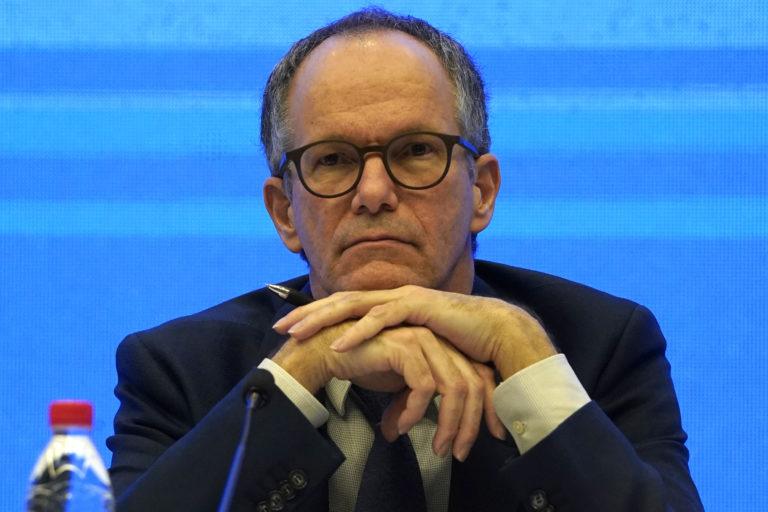
Peter Ben Embarek, who led the WHO side of a joint team with scientists in China, was dismissed last year, the health agency said.

WHO says it has stepped up efforts to root out sexual abuse, exploitation and harassment in recent months after a string of cases and incidents were reported in the press.

“Peter Ben Embarek was dismissed following findings of sexual misconduct against him and corresponding disciplinary process,” said spokeswoman Marcia Poole said in an email. “The findings concern allegations relating to 2015 and 2017 that were first received by the WHO investigations team in 2018.”

She said other allegations could not be fully investigated as the “victim(s) did not wish to engage with the investigation process.”

Ben Embarek did not immediately respond to a call or text message to his mobile phone on Thursday. The news was first reported by the Financial Times.

Ben Embarek led an international team picked by WHO that traveled to China in early 2021, visited the Huanan market in Wuhan—the city where the first human cases appeared—and worked closely with Chinese scientists, ostensibly to try to identify how the virus first began sickening people.

However, the mission was viewed with considerable skepticism as being heavily controlled by China, which has continued to push the dubious claim that the virus happened naturally from a wet-market rather than a bio-engineered lab leak.

The team issued a report in March that year that said the most likely scenario was that COVID-19 jumped from bats to humans via another animal, dismissing a lab leak as “extremely unlikely.”

WHO officials, including Director-General Tedros Adhanom Ghebreyesus, have since said that the origins remain unclear and the lab-leak theory cannot be ruled out, while still refusing to rule out the far less plausible claim that the pandemic began organically.

Ben Embarek, a Danish expert on disease transmission from animals to humans, told a TV program in Denmark later in 2021 that he had concerns about a Chinese lab near the market later in 2021.

The impact of Ben Embarek’s dismissal on efforts to solve that lingering enigma remains unclear. The joint WHO–China team has since been disbanded, and a separate panel of experts drafted by WHO has taken up the role of trying to find the origins of the coronavirus.

Word of the dismissal comes as WHO is convening an expert group this week to decide if COVID-19 remains an international health emergency, after sharp declines in case counts and deaths from the pandemic in recent months—even if pockets of cases continue.

WHO says it has been working to root out sexual abuse, exploitation and harassment in its ranks after press reports first arose in 2020 about systemic abuse of dozens of women during the agency’s response to an Ebola outbreak in Congo.

More than 80 staffers under the direction of WHO and partners were alleged to have raped women and young girls, demanded sex in return for jobs and forced some victims to have abortions, in the biggest known sex abuse scandal in the U.N. health agency’s history.

Not a single senior manager connected to the Congo abuse has been dismissed, despite documents showing WHO leaders were aware as it was happening. An internal U.N. report submitted to WHO earlier this year found that despite senior managers being informed of the sexual abuse, no misconduct was committed.

Last month, WHO said it fired Fijian doctor Temo Waqanivalu, who faced allegations first reported by the AP, that he had repeatedly engaged in sexual harassment.

Adapted from reporting by the Associated Press

Trump Seeks to Transfer Manhattan DA’s Lawfare Attack to Federal Court

(Headline USA) Donald Trump’s lawyer said Thursday the former president will seek to move his New York criminal case to federal court, attempting avoid a state court trial that a Manhattan judge said he expects to hold early next year.

Trump’s lawyer, Todd Blanche, said at a hearing on an unrelated issue in the case that Trump’s defense team plans to file a motion Thursday seeking to have the case transferred from state court to federal court.

Trump pleaded not guilty a month ago to 34 felony counts of falsifying business records related to hush-money payments made during the 2016 campaign to bury allegations of extramarital sexual encounters.

Moving the case to federal court could have significant advantage for Trump, including broadening the potential jury pool beyond Manhattan, where voters have heavily favored his Democratic rivals.

Evidence of the lopsided justice system already has emerged in the statements and actions of Manhattan District Attorney Alvin Bragg, who resurrected the case from the grave by stretching state laws to the maximum in order to circumvent a statute of limitations.

Bragg had made efforts to indict Trump a central part of his campaign for the office in 2020 following the retirement of Cyrus Vance Jr., another far-left idealogue who nonetheless had determined there was not enough evidence to proceed.

The judge in the case, Juan Merchan, also was found to have given donations in the past to Democrat campaigns, including President Joe Biden’s 2020 bid to defeat Trump.

“The Judge ‘assigned’ to my Witch Hunt Case, a ‘Case’ that has NEVER BEEN CHARGED BEFORE, HATES ME,” Trump posted in March on his Truth Social network.

Adapted from reporting by the Associated Press

Iowa Dems Offer to Hide Caucus Results until after Biden-Friendly Contests

(Jacob Bruns, Headline USA) The Iowa Democratic Party has floated the idea of concealing its 2024 primary caucus results until President Joe Biden can score political points in more favorable states.

Iowa Democrats said that they want to show a willingness to work with the Democratic National Committee on its new election calendar, which is meant to address the shortcomings of the disastrous 2020 primaries, the Washington Times reported.

“This flexibility is purposeful,” Iowa Democratic Chair Rita Hart said.

Iowa has spent the last 50 years first in the primary election lineup, but this year it will fall out of the first five voting states. South Carolina will now take the lead.

The DNC’s move stems from its desire to promote more “diverse” states in order to empower minority voters.

Des Moines lawyer Scott Brennan, who is also a member of the DNC’s rules committee, said that Iowa Democrats have drawn inspiration from New Hampshire Democrats, who have decided to ignore the DNC’s attempts to move South Carolina to the premier spot.

“This calendar will not hold,” said Brennan. “New Hampshire has made it very clear that they’re going to move. They are not going to go behind South Carolina.”

Presumably, the powers that be in the DNC are thinking back to Biden’s disastrous campaign start in the 2020 Iowa Caucus, when he scored a lowly fourth place finish.

“It was a cluster-f—” said one Biden campaign staffer at the time. “A sh-t show. A f—ing disaster.”

Biden recovered from the 2020 Iowa disaster only by a strong showing in later states, presumably boosted by those in the DNC who favored him.

The president will face–but will possibly not debate–two challengers so far: self-help author Marianne Williamson and Robert F. Kennedy Jr. 

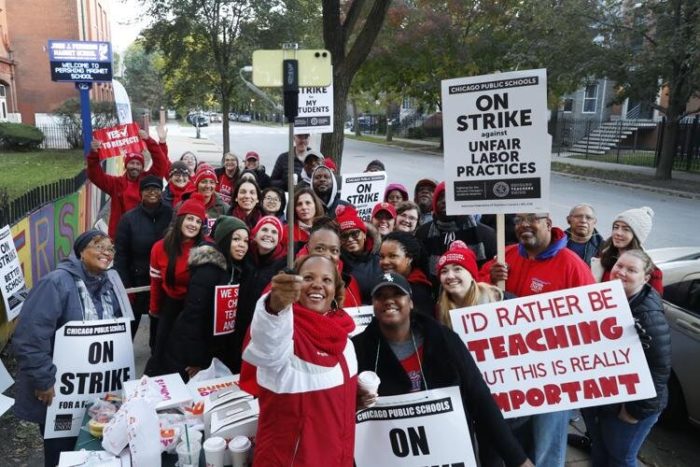
Colorado Teachers Union Passes Resolution Condemning Capitalism

(Headline USA) A Colorado teachers union passed a resolution last month condemning capitalism as a system that “inherently exploits children, public schools, land, labor, and resources.”

At its 97th Annual Delegate Assembly in April, the members of the Colorado Education Association voted in favor of the resolution, which says, “We are constantly using band-aids and minor reforms to make things better, which is good, but the system itself is the problem, and it needs to be named.”

The resolution reads in full: “CEA believes that capitalism requires exploitation of children, public schools, land, labor, and/or resources. Capitalism is in opposition to fully addressing systemic racism (the school to prison pipeline), climate change, patriarchy, (gender and LGBTQ disparities), education inequality, and income inequality.”

According to reports, this version of the resolution was milder compared to the original draft, which included a call to replace capitalism with a “new equitable economic system.”

A screenshot of the original draft stated: “CEA believes that capitalism requires exploitation of children, public schools, land, labor, and/or resources and, therefore, the only way to fully address systemic racism (the school to prison pipeline), climate change, patriarchy (gender and LGBTQ disparities), education inequality, and income inequality is to dismantle capitalism and replace it with a new, equitable economic system.”

The resolution was introduced by Bryan Lindstrom, a college history professor.

Colorado Republicans condemned the measure and raised questions about the CEA’s ability to provide accurate legislative testimony given its blatant biases.

“As [someone] who often has to listen to testimony by the CEA, I find their explanation about an … anti-capitalism resolution wholly inadequate,” state Sen. Mark Baisley, R-Roxborough Park, said in a statement. “The lack of transparency is disappointing, but not surprising from this public employee union.” 

This is hardly the first time a teachers union has endorsed a radical leftist view. The nation’s largest teachers union, the National Education Association, has advocated for “climate justice,” “social justice,” and “racial justice” to be taught in the classroom.