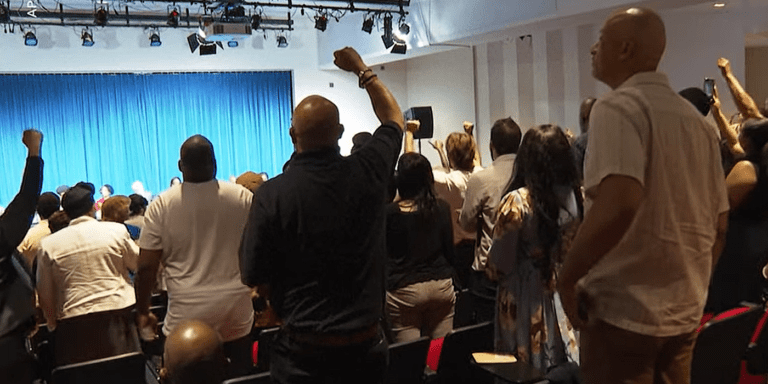
Calif. Reparations Task Force Wants Black Fathers Exempt from Child Support

(Jacob Bruns, Headline USA) In its recent 1,100 page final report, California’s Reparations Task Force recommended that the state legislature excuse black residents from paying child support on account of America’s unjust treatment of blacks in the past, according to the Daily Mail.

The Task Force, which called its document a “book of truth,” blamed “discriminatory” laws for having “torn African American families apart.”

One of these alleged harms was “the disproportionate amount of African Americans who are burdened with child support debt,” it said, while seeming to overlook the fact that the lack of child support would likely do greater harm to single black parents with children who would lose the benefit of additional income.

The Task Force specifically complained about the interest on unpaid child support with which many absentee fathers are hit—a 10% rate—citing it as a reason that black men are unable to maintain steady employment or maintain a home.

“As a result of the debt owed for back child support and interest, a disproportionate number of African American parents are saddled with crushing debt that hinders their ability to attend school or job training, maintain housing, and find employment if their professional licenses and/or driver’s licenses have been suspended,” the report claimed, overlooking several crucial steps that may have led to those circumstances.

It said 27% of all child-support back-payments were the result of accrued interest, leading to the conclusion that all interest on child support should be suspended for black residents in the state.

“At a minimum, the proposal recommends that the Legislature eliminate the prospective accrual of interest on child support debt for low-income parents,” the report said.

But, not willing to stop there, the Task Force also suggested that the legislature make room for “compromise and forgiveness of child support debt” based solely on “a parent’s financial circumstances and ability to pay.”

Although the final report did not put a specific number on the reparations it recommended giving to black California residents, it has floated a sum of upward around $800 billion, the Daily Mail reported.

That would come out to somewhere around $285,000 apiece for California’s 2.8 million black residents, assuming all were eligible—a much lower number than the $5 million figure floated by San Francisco’s municipal reparations task force but still enough to have a sizable impact on California’s economy.

The state also has released a reparations calculator that reveals certain factors could multiply the amount owed to a seven-figure sum.

Kamilah Moore, an intellectual property and entertainment lawyer and leader of the Task Force, celebrated the completion of the report, noting that she felt better after demanding hundreds of billions of dollars in reparations.

“It’s been very work intensive, but also very cathartic and very emotional,” she said. “We’re standing in the shoes of our ancestors to finish, essentially, this sacred project.”

Pro-Free Speech Judge Slaps Down Biden’s ‘Orwellian Ministry of Truth’

(Jacob Bruns, Headline USA) A federal judge on Tuesday ordered President Joe Biden and top-level officials in his administration to stop pressuring social media companies to censor First Amendment-protected speech.

The ruling was issued by Terry A. Doughty, chief judge of the U.S. District Court for the Western District of Louisiana, in response to a lawsuit brought forward by Republican attorneys general from Missouri and Louisiana.

Doughty ruled that the plaintiffs “produced evidence of a massive effort by Defendants, from the White House to federal agencies, to suppress speech based on its content.”

In other words, the U.S. government has undertaken an effort to systematically censor Americans, the judge said.

The Biden administration’s malfeasance in this instance had to do with COVID-related social-media content, according to the judge.

“During the COVID-19 pandemic, a period perhaps best characterized by widespread doubt and uncertainty, the United States Government seems to have assumed a role similar to an Orwellian ‘Ministry of Truth,'” he said.

In his injunction, Doughty did leave room for some exceptions wherein the administration is permitted to contact social media companies.

He said they may contact each other in instances related to the security of the people or the nation, including instances of “criminal activity or criminal conspiracies,” “national security threats, extortion, or other threats,” and crimes related to domestic elections.

The Washington Post lamented the news, noting that the ruling could “undo years of efforts to enhance coordination between the government and social media companies” and wrongly implying that the government will no longer be able to contact social media companies for concerns surrounding “criminal activity, including child sexual abuse images and terrorism.”

CNN panelists also decried the decision Wednesday morning.

Despite the whining from the establishment media, conservatives celebrated the Fourth of July victory.

Sen. Eric Schmitt, former Missouri AG who filed the lawsuit, called Doughty’s ruling a “big win for the First Amendment on this Independence Day.”

Schmitt also noted that Americans will now be able to converse freely once more, without their comments being curated by petty health officials directed by the White House.

“White House officials, CDC & others are stopped cold,” he said.

However, Schmitt added that the battle against government censorship was far from over.

“We need to continue the fight to take down the Vast Censorship Enterprise,” he said.

“Their view of ‘misinformation’ isn’t an excuse to censor,” he continued. “This is the most important free speech case in a generation.”

A White House official, who was not authorized to discuss the case publicly and spoke on condition of anonymity, told the Associated Press that the Justice Department was reviewing the injunction “and will evaluate its options in this case.”

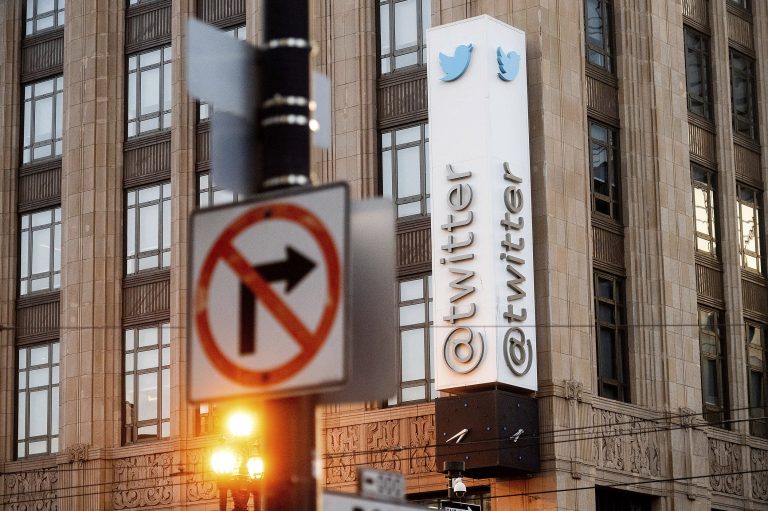
The scope of the government’s unconstitutional collusion with Big Tech—which included instances of direct meddling in the 2020 election to actively spread disinformation and suppress damning stories related to Hunter Biden’s criminal activities—was subseqently exposed by admissions from Facebook CEO Mark Zuckerberg and in the release of the Twitter Files following billionaire Elon Musk’s purchase of the eponymous company.

Yet, despite having been caught red-handed in the effort, Democrats have brazenly continued in their efforts, with the Department of Homeland Security egregiously advancing several iterations of its controversial Disinformation Governance Board and attempting to flag the online speech of American citizens with whom it disagrees.

Facebook recently announced that it had appointed a former CIA operative to oversee its “election policies” heading into the upcoming 2024 presidential campaign season.

Headline USA’s Ken Silva and Ben Sellers, and the Associated Press, contributed to this report.

Children’s Private Data Dumped Online as Schools Targeted by Cyberhackers

(Headline USA) The confidential documents stolen from schools and dumped online by ransomware gangs are raw, intimate and graphic. They describe student sexual assaults, psychiatric hospitalizations, abusive parents, truancy — even suicide attempts.

“Please do something,” begged a student in one leaked file, recalling the trauma of continually bumping into an ex-abuser at a school in Minneapolis. Other victims talked about wetting the bed or crying themselves to sleep.

Complete sexual assault case folios containing these details were among more than 300,000 files dumped online in March after the 36,000-student Minneapolis Public Schools refused to pay a $1 million ransom. Other exposed data included medical records, discrimination complaints, Social Security numbers and contact information of district employees.

Rich in digitized data, the nation’s schools are prime targets for far-flung criminal hackers, who are assiduously locating and scooping up sensitive files that not long ago were committed to paper in locked cabinets. “In this case, everybody has a key,” said cybersecurity expert Ian Coldwater, whose son attends a Minneapolis high school.

Often strapped for cash, districts are grossly ill-equipped not just to defend themselves but to respond diligently and transparently when attacked, especially as they struggle to help kids catch up from the pandemic and grapple with shrinking budgets.

Months after the Minneapolis attack, administrators have not delivered on their promise to inform individual victims. Unlike for hospitals, no federal law exists to require this notification from schools.

The Associated Press reached families of six students whose sexual assault case files were exposed. The message from a reporter was the first time anyone had alerted them.

“Truth is, they didn’t notify us about anything,” said a mother whose son’s case file has 80 documents.

Even when schools catch a ransomware attack in progress, the data are typically already gone. That was what Los Angeles Unified School District did last Labor Day weekend, only to see the private paperwork of more than 1,900 former students — including psychological evaluations and medical records — leaked online. Not until February did district officials disclose the breach’s full dimensions, noting the complexity of notifying victims with exposed files up to three decades old.

The lasting legacy of school ransomware attacks, it turns out, is not in school closures, recovery costs or even soaring cyberinsurance premiums. It is the trauma for staff, students and parents from the online exposure of private records — which the AP found on the open internet and dark web.

“A massive amount of information is being posted online, and nobody is looking to see just how bad it all is. Or, if somebody is looking, they’re not making the results public,” said analyst Brett Callow of the cybersecurity firm Emsisoft.

Other big districts recently stung by data theft include San Diego, Des Moines and Tucson, Arizona. While the severity of those hacks remains unclear, all have been criticized either for being slow to admit to being hit by ransomware, dragging their feet on notifying victims — or both.

ON CYBER SECURITY, SCHOOLS HAVE LAGGED

While other ransomware targets have fortified and segmented networks, encrypting data and mandating multi-factor authentication, school systems have been slower to react.

Ransomware likely has affected well over 5 million U.S. students by now, with district attacks on track to rise this year, said analyst Allan Liska of the cybersecurity firm Recorded Future. Nearly one in three U.S. districts had been breached by the end of 2021, according to a survey by the Center for Internet Security, a federally funded nonprofit.

“Everyone wants schools to be more secure, but very few want to see their taxes raised to do it,” Liska said.

Parents have instead pushed to use limited funds on things like bilingual teachers and new football helmets, said Albuquerque schools superintendent Scott Elder, whose district suffered a January 2022 ransomware attack.

Just three years ago, criminals did not routinely grab data in ransomware attacks, said TJ Sayers, cyberthreat intelligence manager at the Center for Internet Security. Now, it’s common, he said, with much of it sold on the dark web.

The criminals in the Minneapolis theft were especially aggressive. They shared links to the stolen data on Facebook, Twitter, Telegram and the dark web, which standard browsers can’t access. A handwritten note naming three students involved in one of the sexual abuse complaints was featured for a time on YouTube competitor Vimeo, which promptly took down the video.

The cybercrime syndicate behind the Los Angeles United attack was less brazen. But the 500 gigabytes it dumped on its dark web “leak site” remained freely available for download in June. They include financial records and personnel files with scanned Social Security cards and passports.

The public disclosure of psychological records or sexual assault case files, complete with students’ names, can fray psyches and thwart careers, psychologists say. One file stolen from Los Angeles United described how a middle-schooler had attempted suicide and been in and out of the psychiatric hospital a dozen times in a year.

The mother of a 16-year-old with autism recently got a letter from the San Diego Unified School District saying her daughter’s medical records may have been leaked online in an Oct. 25 breach.

“What,” Barbara Voit asked, “if she doesn’t want the world to know that she has autism?″

IN A TRICKLE, THE EXTENT OF A BREACH EMERGES

The Minneapolis parents informed by the AP of the leaked sexual assault complaints feel doubly victimized. Their children have battled PTSD, and some even left their schools. Now this.

“The family is beyond horrified to learn that this highly sensitive information is now available in perpetuity on the internet for the child’s future friends, romantic interests, employers, and others to discover,” said Jeff Storms, an attorney for one of the families. It is AP policy not to identify sexual abuse victims.

Teachers, meanwhile, want to know why they have to call the district and report problems in order to receive the promised free credit monitoring and identity theft protection after their Social Security numbers were leaked.

“Everything they’ve learned about this is from the news,” said Greta Callahan, of the Minneapolis Federation of Teachers.

Minneapolis Schools spokeswoman Crystina Lugo-Beach would not say how many people have been contacted so far or answer any other AP questions about the attack.

School nurse Angie McCracken had by early April already received 10 alerts through her credit card that her Social Security number and birth date were circulating on the dark web. She wondered about her graduating 18-year-old. “If their identity is stolen, just how hard is that going to make my kid’s life?”

Despite parents’ and teachers’ frustration, schools are routinely advised by incident response teams concerned about legal liability issues and ransom negotiations against being more transparent, said Callow of Emsisoft.

Minneapolis school officials apparently followed that playbook, initially describing the Feb. 17 attack cryptically as a “system incident,” then as “technical difficulties” and later an “encryption event.”

The extent of the breach became clear though when a ransomware group posted video of stolen data more than two weeks later, giving the district 10 days to pay the ransom before leaking files.

The district declined to pay, following the standing advice of the FBI, which says ransoms encourage criminals to target more victims.

SCHOOLS SPEND TECH BUDGETS ON LEARNING TOOLS, NOT SECURITY

During the COVID-19 pandemic, districts prioritized spending on internet connectivity and remote learning. Security got short shrift as IT departments invested in software to track student engagement and performance, often at the expense of privacy and safety, University of Chicago and New York University researchers found.

In a 2023 survey, the Consortium for School Networking, a tech-oriented nonprofit, found just 16% of districts had full-time network security staff, with nearly nearly half devoting 2% or less of their IT budgets to security.

With a deficit in private sector cybersecurity talent, districts struggle to hang onto it. Districts who do hire someone often see them snatched away by businesses that can double their salaries, said Keith Krueger, CEO of the consortium.

Cybersecurity money for public schools is limited. As it stands, districts can only expect slivers of the $1 billion in cybersecurity grants that the federal government is distributing over four years.

Minnesota’s chief information security officer, John Israel, said his state got $18 million of it this year to divvy among 3,600 different entities, including cities and tribal governments. State lawmakers provided an additional $22.5 million in grants for cyber and physical security in schools.

Schools also want to tap a federal program called E-Rate that is designed to improve broadband connections to schools and libraries. More than 1,100 wrote the Federal Communications Commission after the Los Angeles Unified breach asking that E-Rate be modified to free up funds for cybersecurity. The FCC is still considering the request.

It’s already too late for the mother of one of the Minneapolis students whose confidential sexual assault complaint was released online. She almost feels “violated again.”

“All the stuff we kept private,” she said, “it’s out there. And it’s been out there for a very long time.”

Adapted from reporting by the Associated Press

‘Barbie’ Movie Banned for Showing Chinese Propaganda

(Headline USA) Vietnam’s state media have reported that the government banned distribution of the controversial Barbie movie because it includes a view of a map showing disputed Chinese territorial claims in the South China Sea.

The newspaper Vietnam Express and other media said posters advertising “Barbie” were removed from movie distributors’ websites after Monday’s decision. With Margot Robbie playing Barbie opposite Ryan Gosling’s Ken in Greta Gerwig’s comedic look at their “perfect” world, Barbie was supposed to open July 21 in Vietnamese theaters.

The reports cited Vi Kien Thanh, director general of the Vietnam Cinema Department, as saying the National Film Evaluation Council made the decision. It said a map in the film shows China’s “nine-dash line,” which extends Beijing’s territorial claims far into waters that fall within areas claimed by Vietnam and other countries.

The “nine-dash line” is an arcane but sensitive issue for China and its neighbors that shows Beijing’s maritime border extending into areas claimed by other governments and encompasses most of the South China Sea. That has brought it into tense standoffs with the ASEAN nations of Indonesia, Vietnam, Malaysia, Brunei and the Philippines, with Chinese fishing boats and military vessels becoming more aggressive in the disputed waters.

Asked about the issue at a daily briefing on Tuesday, Chinese Foreign Ministry spokesperson Mao Ning said, “China’s position on the South China Sea issue is clear and consistent.”

“We believe that the countries concerned should not link the South China Sea issue with normal cultural and people-to-people exchanges,” Mao said.

However, China is exceedingly sensitive when it comes to how its national image and border claims are portrayed in entertainment and by businesses. For example, it has routinely retaliated against companies from hotels to airlines that it believes have suggested that self-governing Taiwan – with its own political system, country code and currency — is anything other than a part of China.

Companies almost always acquiesce to Chinese complaints, fearing they risk being locked out of the huge, lucrative Chinese market. That includes Hollywood films deleting or adding scenes based on the expected response on the ruling Communist Party and the highly nationalistic public.

When an international court ruled in 2016 that the “nine-dash line” has no basis in law and the Philippines was entitled to an exclusive economic zone in part of the area claimed by Beijing, China rejected the ruling.

Warner Bros. offices were closed Tuesday for the July 4 holiday.

In 2019, Vietnam ordered showings of “Abominable” canceled after moviegoers complained about a scene showing the “nine-dash line.” Politicians in the Philippines called for a boycott of all DreamWorks releases to protest the scene, and Malaysia ordered the scene to be cut from the movie.

The movie has drawn controversy among American audiences also for its woke treatment of certain issues, including the casting of a transgender and other multiracial Barbies that some see as flouting the doll’s traditional look.

It also has been criticized for its mature subject matter, which is unlikely to go over well with Barbie’s primary age demographic of young, pre-teen girls.

Adapted from reporting by the Associated Press

Poll: Americans Sour on Democratic, Republican Parties

(Voters across the country have largely soured on the two major political parties, with just 20% of respondents in a new State Policy Network (SPN) survey considering the parties civil and fewer than half of partisans finding their own party “ethical.”

In the poll of 2,043 voters conducted from June 14-18, fewer than one in five of respondents also indicated they see either of the parties as “civil” and just half of interviewees view their own party that way.

SPN messaging strategist Erin Norman told The Center Square the message being sent by voters couldn’t be clearer.

“There is strong and increasing desire among most Americans to return to greater civility in politics, which includes bipartisan work in Congress,” Norman said. “Neither party is putting effort in those places and it’s showing in what the people think of the parties.”

Norman said all the back-and-forth has frustrated voters who ponder what other options they may have.

“We have had a few cycles where voters have openly said they disliked both major candidates but still went to the polls and voted for one or the other, so there are clearly barriers to a third-party run,” she added. “But there is a massive opportunity for a major party candidate to take a new approach and win over more than enough moderate and party-leaners to win and go into office with good momentum.”

On average, just 26% of voters (28% of Republicans and 24% of Democrats) said they consider the ideals and policies of the two parties to be balanced and an average of 21% of respondents said they view them as compassionate, with Republicans at just 16%.

Norman said it’s not hard to see why so many voters see things in such a dwindling light.

“It’s not what we traditionally think of as ‘issues’ – like health care, education, or taxes,” she added. “It’s a lack of compromise from both sides, and a feeling that there are very few politicians that are focused on solutions to the problems that matter to the American people.”

In addition, just 28% of Democrats say “fair” describes their party’s ideals and policies vs. 30% of Republicans. An average of 31% of interviewees view their party’s ideals and policies as irresponsible, topped by 35% of Democrats.

The poll, conducted in partnership with Morning Consult, had a margin of error of 2%.

Outrage Unleashed: NYPD under Siege by New Proposed Law

(Luis Cornelio, Headline USA) New York City is preparing to implement an unprecedented proposal that has sparked concerns among law enforcement officials.

As reported by the New York Post on Sunday, the City Council is pushing for requirements that would heavily burden the New York Police Department, mandating officers to file numerous reports for every encounter with the public and swiftly submit body-worn camera footage to the state.

Police Benevolent Association President Patrick Hendry strongly criticized the potential consequences of the legislation in an interview with the Post.

“The City Council needs to stop. Stop burying cops under paperwork and the NYPD under useless reporting requirements. Stop empowering the overlapping oversight regimes to crush cops’ careers just to fuel their anti-police narrative,” Hendry said.

“If that doesn’t happen, NYPD leaders need to stop pushing police officers to engage in the kind of effective, proactive policing that the City Council clearly does not want,” Hendry added.

The proposals emerged as Council Speaker Adrienne Adams, a Democrat, decried what she claimed to be a lack of “public transparency” within the NYPD.

“New York City’s current policies on access to body worn camera footage have unfortunately fallen short of prioritizing public transparency,” Adams claimed earlier this year, according to the Post. 

One of the bills, known as Intro 586-A, would mandate police officers to file reports for all “police-civilian investigative encounters,” which includes situations where officers merely seek information from non-suspects, according to the Post. This requirement starkly contrasts with the current mandate, which only obliges officers to document “Level III” or “reasonable suspicion stops.”

NYPD Director of Legislative Affairs Michael Clarke criticized the bills as counterproductive. Clarke argued that these low-level encounters, such as assisting sick individuals or gathering information about incidents in public parks, would not contribute to police accountability.

Clarke expressed concerns about the negative impact on community-police relations, as the proposed legislation disincentivizes officers from engaging with individuals who may require assistance.

The proposal emerges at a time when the New York state government expanded the age eligibility for state police recruitment, from 29 to 34, due to significant recruitment challenges.

Gov. Kathy Hochul, a Democrat, stated that by increasing the maximum age for new recruits, the state can broaden its pool of potential candidates to bolster the important work of the police force and enhance public safety.

‘White Powder’ Found at White House Tests Positive for Cocaine, Fuels Hunter Speculation

(Mark Pellin, Headline USA) Traces of cocaine discovered at the White House sent social media into overdrive with suspicions that the residue might have been left by embattled first son Hunter Biden.

The powdery discovery forced the evacuation of the White House on Sunday night, after Secret Service found the substance in a common area of the West Wing. A preliminary test of the substance showed it was cocaine, law enforcement told the Associated Press on Tuesday.

“On this July 4th, it has been confirmed that the white powder found on Sunday in the White House has tested positive to be cocaine,” tweeted Rep. Marjorie Taylor Greene, R-Ga. “Is this rock bottom yet or how much worse is it going to get?”

President Joe Biden and his family had left for Camp David on Friday and returned to the White House on Tuesday, and the AP was quick to note that the traces of cocaine were found in an area of the White House easily accessible to tourists.

White House correspondent Simon Ateba reported that the substance was found in the White House Library, which “is primarily accessible to White House staff, including the President and their immediate staff, as well as members of the Executive Office of the President. It is a working library that serves as a resource for research and information related to the President’s duties and responsibilities.”

The president and First Lady, along with Hunter, his wife Melissa and son Beau, “stepped off Marine One on Tuesday after the discovery of white powder sparked a hazmat situation and forced an evacuation of the White House,” according to the Daily Mail.

That didn’t stop a tidal wave of speculative memes from flooding Twitter, pointing a long-nailed, snorting finger at Hunter Biden.

In a warped reaction to the Hunter memes, leftists responded by claiming the cocaine was left by Don Jr., although there was no more evidence pointing in that direction than there was pointing to Hunter, except for the coke-addict first son’s history.

“The item was sent for further evaluation and an investigation into the cause and manner of how it entered the White House is pending,” the Secret Service said.

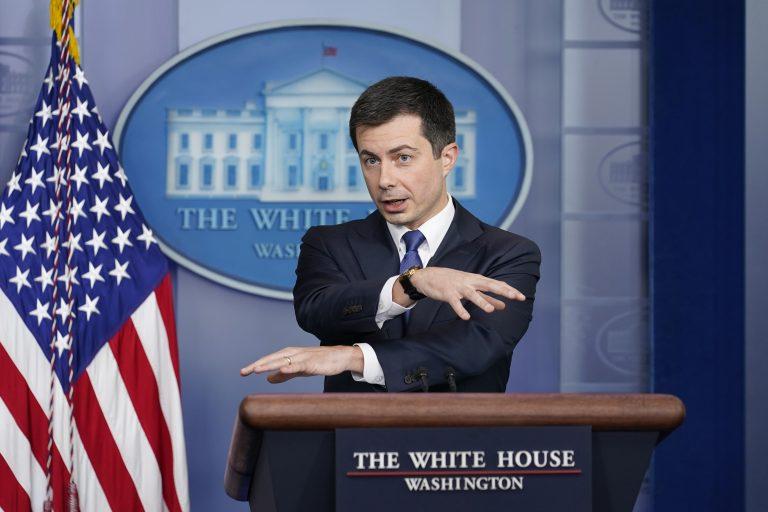
July 4 Chaos Hits Travelers as Buttigieg Infrastructure Cracks

(Jacob Bruns, Headline USA) Chaos has struck across American airports this Fourth of July as Transportation Secretary Pete Buttigieg’s infrastructure continues to crack at the foundations, Breitbart reported.

More than 900 flights were canceled last weekend on Saturday and Sunday alone leading up to the holiday. More than 15,000 additional flights were delayed during that same stretch. “Thousands of passengers are stranded, some reportedly sleeping in the airport and waiting hours in line to rebook flights,” the Daily Mail reported.

Though many of the cancellations have been due to extreme weather across the country, particularly tornadoes in the central states, some airlines have specifically blamed the Biden administration for slowing things down.

After United Airlines canceled 19% of its flights last month, the company blamed its struggles to keep planes in the air on Buttigieg and his failing U.S. Federal Aviation Administration’s equipment failures.

Ironically, Americans ran into the same exact situation last year, with thousands of airline passengers were left high and dry in the hectic run-up to July Fourth travel.

Buttigieg in response blamed United, suggesting that the airline has its own problems that other airlines do not share.

“I want to be very clear, air traffic control issues are not the number one issue causing cancellations and delays,” Buttigieg said.  “They’re not even the number two issue. All the data, including industry’s own data, is very clear on that.”

In a letter attempting to make amends with angry customers, Chief Customer Officer Linda Jojo offered United Airline customers 30,000 flight miles.

“I know this week was hard,” Jojo wrote. “Really bad weather, air traffic control issues and some of our own operational challenges led to a rough experience for you and many of our customers.”

United CEO did his company no favors, however, when he chartered a private plane on Wednesday for his own high-flying ways. “That day, United Airlines canceled 751 flights. He has since apologized, claiming it was the ‘wrong decision’ and ‘insensitive’ to his customers,” Breitbart reported.

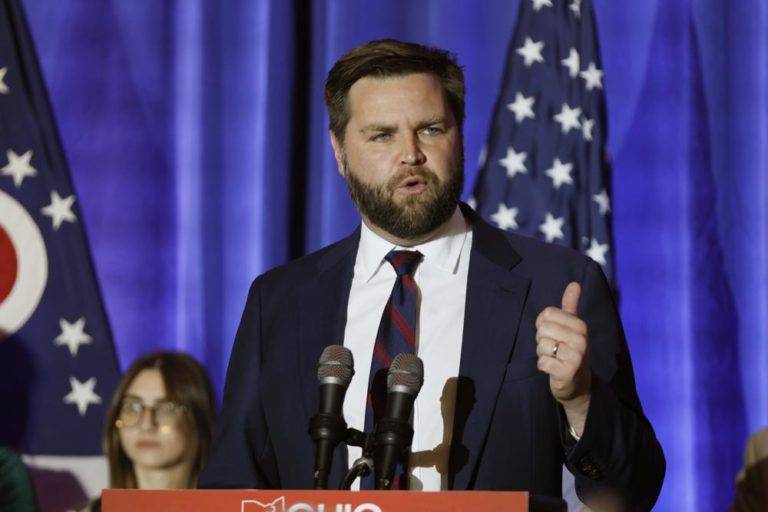
J.D. Vance Wants POTUS to Use Military to Target Drug Cartels

(Dmytro “Henry” Aleksandrov, Headline USA) Sen. J.D. Vance, R-Ohio, said on Sunday that he would “empower” the president to use the military to fight Mexican drug cartels that increasingly gain power day by day.

Vance told Meet The Press host Chuck Todd that the fentanyl crisis that’s originating outside American borders should be combatted with “real American leadership.”

“I want to empower the president of the United States, whether that’s a Democrat or Republican, to use the power of the U.S. military to go after these drug cartels,” Vance said.

He also added that the U.S. must take action because drug cartels have become very influential.

“Here’s the real problem with Mexico, and it’s sort of two-fold: on the one hand, you have the cartels which are arguably the best-funded criminal terrorist organization in the entire world,” Vance said.

“The second thing, Chuck, is we have to recognize the Mexican government is being in a lot of ways destabilized by the constant flow of fentanyl.”

Vance warned that drug cartels could become even more powerful than the country of Mexico three years from now, using Colombia for comparison. Drug Enforcement Administration agents informed Vance that drug cartels’ revenue has increased “fourteen-fold” in the last couple of years. Vance said it is a result of “bad border policies.”

He also said that Americans shouldn’t assume “good faith” from China and Mexico since these two countries are the primary sources of fentanyl and fentanyl-related substances entering the U.S., according to the DEA. The United States must begin to exert economic pressure on China, Vance said.

“The Chinese export a ton to the American markets. They absolutely need the American consumer to be able to run their businesses,” he said.

“We should be willing to say that if you don’t stop sending fentanyl precursors to Mexico and to our own ports of entry, we’re going to really penalize you guys economically.”

The Biden administration should pressure the communist country economically through increasing tariffs to “extract a massive economic cost,” Vance said.

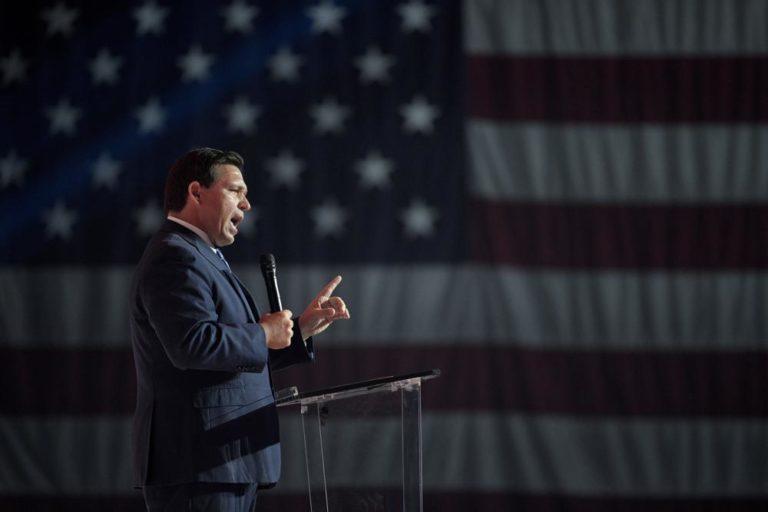
Mexico Triggered by DeSantis Crackdown on Illegal Immigration

(Luis Cornelio, Headline USA) The Mexican government has expressed its objections to Florida Gov. Ron DeSantis’s recent measures aimed at curbing rampant illegal immigration in the Sunshine State. These measures include enhanced penalties for human smuggling, restrictions on employment eligibility and a ban on identification for illegal aliens.

Mexican officials have raised concerns about these new laws, which were signed by DeSantis on May 10, claiming, without evidence, that the laws would “lead to acts of discrimination and racial profiling.”

The objections from the Mexican government come at a time when border states, Florida included, are increasingly frustrated with the Biden administration’s inaction on the self-inflicted border crisis. As a result, Republican governors have taken unilateral action to address the dangers posed by the administration’s lax stance on border security.

The enhanced penalties for human smuggling, according to the Florida government, aim to deter individuals involved in these criminal activities. Additionally, businesses in the state will now be required to use the federal “E-Verify” system to check employment eligibility, with non-compliant businesses facing a fine of $1,000.

Furthermore, the state will allocate $12 million to continue the transportation of illegal immigrants to sanctuary cities.

DeSantis has described these bills as the “strongest anti-illegal immigration” laws in the country.

“The Biden Border Crisis has wreaked havoc across the United States and has put Americans in danger,” said DeSantis.

He also slammed the Biden administration for being soft on illegal immigration. “In Florida, we will not stand idly by while the federal government abandons its lawful duties to protect our country,”

DeSantis added, “The legislation I signed today gives Florida the most ambitious anti-illegal immigration laws in the country, fighting back against reckless federal government policies and ensuring the Florida taxpayers are not footing the bill for illegal immigration.”

According to Just the News, Florida has experienced a significant increase in illegal immigration through makeshift vessels in the Florida Keys.