Aldean’s ‘Small Town’ Crushes Left’s Cancel Cult, Tops Hot 100

(Jacob Bruns, Headline USA) Country singer Jason Aldean’s smash hit song Try That In A Small Town, which has been wrongly accused by leftists of being a tribute to right-wing violence, has now topped the charts of America’s most popular songs, Fox News reported.

After debuting last month at No. 2, the song hit the top of the charts in July, putting country songs in the top three spots, followed by Morgan Wallen’s Last Night placing No. 2 and Luke Combs’ Fast Car at 3.

According to a Billboard report, Try That In A Small Town had drawn 30.7 million streams, up 165% over the week of July 21-27.

The song also garnered 8.8 million radio plays, a 21% increase.

The spike in popularity came after leftists across the country decried the song, wildly suggesting that it was an expression of white supremacy, claiming that it condoned lynching and doing everything to censure the song while making Aldean’s life a living nightmare.

In response, the country star noted that he had received threats.

“In the past 24 hours I have been accused of releasing a pro-lynching song (a song that has been out since May) and was subject to the comparison that I (direct quote) was not too pleased with the nationwide BLM protests,” Aldean wrote.

“These references are not only meritless, but dangerous,” he added.

Things got so heated that Country Music Television pulled Aldean’s music video from its channel because the song is too conservative.

Aldean also caught flack from within the country music industry—particularly from Sheryl Crow, who accused Aldean of “promoting violence” and claimed that he, who was at the 2017 Las Vegas shooting, should understand better than anyone.

Crow neglected to comment on the hundreds of rap songs that explicitly promote gun violence, along with denigrating women and glorifying drug use.

Aldean responded to the accusations—particularly those that claimed his song was racist pro-lynching.

“There is not a single lyric in the song that references race or points to it, and there isn’t a single video clip that isn’t real news footage. And while I can try and respect others to have their own interpretation of a song with music, this one goes too far,” he said in a post on Instagram Stories.

DeSantis Dismantles Biden on Credit Default

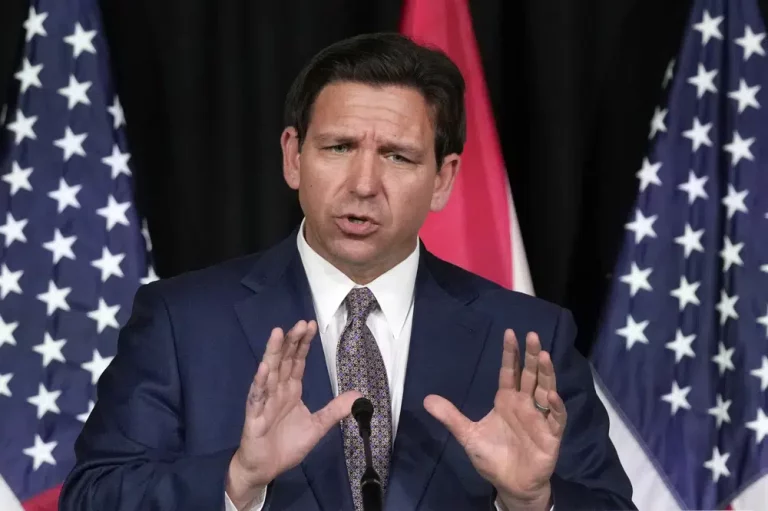
(Headline USA) Florida Republican Gov. Ron DeSantis blasted President Joe Biden for his “failed” economic policies this week after Fitch Ratings downgraded the U.S.’s credit rating for the first time in decades.

Fitch Ratings, one of the top three global crediting agencies, downgraded the country’s Long-Term Foreign-Currency Issuer Default Rating from top-rated “AAA” to “AA+”, citing the U.S.’s unsustainable national debt accumulation and spending.

DeSantis argued that Biden’s massive spending spree is largely to blame.

“@FitchRatings’ downgrade of the nation’s credit rating from AAA to AA+ is a result of frivolous spending and ballooning national debt for programs like the CARES and ‘Inflation Reduction’ Acts,” DeSantis wrote on Twitter. 

Florida’s economy should serve as an example for the rest of the nation, he continued.

“Florida’s AAA rating remains the standard-bearer, serving as the nation’s blueprint for fiscal responsibility. In FL, we have run large budget surpluses and have paid off nearly 25% of the state debt,” he added. “National economic decline is a choice.”

Former President Donald Trump also released a statement on Fitch’s score, saying, “Fitch just downgraded U.S. Debt. First time in many years. WOW!”

Republicans aren’t the only ones pointing the finger at Biden over the economic news. Sen. Joe Manchin, D-W.Va., said the ratings score is the result of a “historic failure of leadership by both political parties and the executive branch.”

“The credit agency specifically cited the decline in governance, erosion of cooperation in the federal government and ballooning national debt when making the determination to lower our credit rating,” he said.

“This is a stark warning that cannot be ignored. We must act now to fully fund the government and address our national debt before we wake up to a future where America’s superpower status is in jeopardy and we have lost the confidence of our allies around the world.” 

BlackRock and Its ESG ‘Voting Choice’ Ruse

(By Andy Puzder, RealClear Wire) Amid growing criticism of its environmental, social and governance investment  practices, BlackRock has announced that it will offer retail investors in its largest exchange-traded fund (ETF) the opportunity to participate in its “Voting Choice” program. Open to institutional clients since January 2022, this program allows investors to choose from a limited set of options to guide BlackRock in voting their shares. While perhaps an effective PR tool, Voting Choice is little more than a ruse that neither empowers investors nor diminishes BlackRock’s power to impose its ESG goals on American businesses.

BlackRock’s equity index has about $4.5 trillion in assets under management (AUM), empowering it to cast a whopping 10% of the shareholder votes for the entire S&P 500.  As BlackRock CEO Larry Fink has admitted, BlackRock uses that formidable power to “force behaviors” on the companies in which it invests.

For example, in his 2020 annual letter to CEOs, Fink stated that BlackRock would use both “disclosures” and “engagement” to ascertain whether companies had operating plans that assume the Paris Agreement’s climate goals are “fully realized.” He cautioned that in 2019, “BlackRock voted against or withheld votes from 4,800 directors at 2,700 different companies” and warned that it would be “increasingly disposed to vote against management and board directors” who failed to perform as instructed.

People noticed.

In August 2022, 19 red state attorneys general wrote to Fink informing him that proxy voting to advance ESG or other ideological causes violated their laws governing fiduciary duties. Ten states passed laws making it clear that such proxy voting is a breach of fiduciary duty. The Voting Choice program is an attempt to create a defense against fiduciary-malfeasance claims by making it appear that BlackRock has seen the errors of its ways and is returning proxy-voting power to investors. But that simply is not the case.

As of March 31, $2.1 trillion of BlackRock’s $4.5 trillion equity index AUM was eligible for Voting Choice. Only 26% was participating. The program’s recent expansion to certain retail investors will slightly increase the eligible amount to $2.3 trillion. If the participation percentage holds, Voting Choice would reduce BlackRock’s discretionary voting power from about 10% of all votes cast for S&P 500 companies to a still-massive 8.7%. That’s assuming no participants choose the option “to continue to vote according to the BlackRock Investment Stewardship policy,” which obviously does nothing to reduce BlackRock’s discretionary voting power.

The program does offer investors the additional option to choose from third-party voting policies offered by proxy-advisor giants ISS and Glass Lewis, both strong ESG supporters themselves.  Actual voting choice – voting the shares individually – does not appear to be an option in the expanded program but would be irrelevant even if it were.

BlackRock is expanding the program to include retail investors in its S&P 500 ETF – with 500 annual shareholder meetings involving thousands of director nominees and shareholder resolutions. It is unlikely that any individuals would assume the burden or have the resources to vote intelligently on every director or resolution even if they had the choice.

The program does offer one arguably non-ESG-supporting option to vote with management, which often (not always) opposes ESG initiatives. But management remains subject to BlackRock’s behind-the-scenes ESG pressure diminishing the value of that option. In his 2020 letter to CEOs, Fink called this pressure “engagement.” More formally, BlackRock calls it “investment stewardship.” Both terms are euphemisms for compulsion – with ESG at the forefront.

According to BlackRock, its “stewardship” and “investment” teams work together to provide corporate management with “insight on environmental, social, and governance (ESG) considerations.” Its goal is to include “the assessment and integration of environmental and social issues, within an investment context” and “hold directors accountable for their action or inaction.” That sounds a lot like what BlackRock has been doing with proxy voting.

But “stewardship” is both more effective and more insidious than proxy voting, as it occurs in C suite conference rooms and on Zoom calls, beyond the purview of both investors and those who would protect their interests. And, make no mistake, “investment stewardship” is where BlackRock’s real power resides. It’s the “investment stewardship” team that votes the shares BlackRock holds – and the CEOs of those companies know it.

Wiser states will legislatively mandate disclosure of investment-stewardship meetings and make it clear that pressuring companies to support ESG or other ideological objectives over profits is itself a breach of fiduciary duties, even if informal.

In any event, it is very unlikely that red states will allow BlackRock to use its so-called Voting Choice ruse as a shortcut around its fiduciary obligations. Legislators, attorneys general, and state financial officers are following these issues closely. And as the elected stewards of their states’ (and taxpayers’) investments, they are holding BlackRock and other ESG supporting firms accountable.

Ramaswamy Donor Memo: ‘Vivek on Track To Eclipse DeSantis’

(By Philip Wegmann, RealClear Wire) An internal memo circulated by the Vivek Ramaswamy campaign, and obtained by RealClearPolitics, outlines his pitch to donors ahead of the first GOP primary debate: The 37-year-old first-time candidate is surging as others stumble, going farther with fewer resources, and will soon “eclipse DeSantis.”

Until recently, those claims could be dismissed as so much bravado from an overeager, unknown biotech investor without any political experience whatsoever.

But Ramaswamy qualified last week for the first Republican presidential debate, and he has consistently polled in third place in the RealClearPolitics average ahead of more established candidates such as former Vice President Mike Pence and South Carolina Sen. Tim Scott.

In the document geared toward donors, Ramaswamy argues that he now “provides the best return on investment in American politics.”

To make that case, his campaign points to the tens of millions of dollars other candidates and their affiliated super PACs have spent on traditional advertising to maintain their tepid polling positions. Florida Gov. Ron DeSantis and Never Back Down, for instance, spent nearly $14 million throughout the summer. Ramaswamy put pennies on the dollar by comparison, spending just under $400,000 in the last 45 days.

“Vivek is spending significantly less than his competitors on traditional advertising per percentage point in national polls,” the memo reads, “proving his message and vision lands with the GOP electorate.”

The memo divides total spending on traditional advertising by the average of four national July polls. The resulting quotient, they note, the dollar per percentage point, is much, much smaller for Ramaswamy than any other candidate. By their numbers, he has maintained each percentage point with just over $40,000, while DeSantis and company have spent around $830,000 to maintain their standing.

The four July polls referenced by the Ramaswamy campaign were conducted by Harvard/Harris, Kaplan Strategies, Reuters/Ipsos, and Morning Consult.

“There is still a lot of room to grow today, like 30% to 35% of the Republican electorate still doesn’t know who he is,” a senior Ramaswamy aide told RCP. “And yet, he is in third place and starting to nip on DeSantis’ heels.”

Nipping at his heels may be a stretch. In the latest RealClearPolitics polling average, Donald Trump has a solid majority of the Republican primary vote at 54%, with DeSantis in a distant second place with 18%. Ramaswamy sits at 5%.

Still, he leads Pence, Scott, Nikki Haley, and Chris Christie – established Republicans with traditional credentials – and is outperforming his résumé with a strategy predicated on going everywhere and talking to everyone. He has sparked numerous viral online moments as a result, most notably his sparring match in April with Don Lemon over whether systemic racism was responsible for holding back black Americans. CNN later let the anchor go. Ramaswamy has steadily risen ever since making the most of earned media.

According to an analysis by Cision Analytics, which was also included in the memo, Ramaswamy has appeared in 58,918 media hits, a number surpassed only by Trump, who logged 100,577.

That kind of earned media requires a candidate comfortable with chasing omnipresence, something Ramaswamy thrives on. He seldom turns down an interview, a fact that even DeSantis supporters have taken note of. “Earned media is so much more valuable than paid media,” David Sacks, a fundraiser for DeSantis, said during a recent podcast with Ramaswamy. “Vivek is living off the land. It’s earned media. Trump did the same thing in 2016.”

In the last Republican presidential primary, according to the Ramaswamy analysis, Trump spent just $5,564 per percentage point as he surpassed more established, better-funded candidates. The Ramaswamy campaign hopes to achieve a similar bang for its buck. As things stand now, a senior aide from the campaign told RCP, “We’re not going to have to spend many resources on traditional things until later in the year.”

Ramaswamy has courted significant grassroots support while spending much less than the competition, a fact the campaign points out in the memo, noting how he easily eclipsed the RNC debate requirements, which mandate that candidates earn contributions from at least 40,000 campaign donors. Ramaswamy has cashed checks from 70,000 donors, 40% of whom have not previously made a political contribution.

These numbers are notable achievements for a candidate widely dismissed as a novelty act. At the beginning of the year, Ramaswamy was invited to attend an RNC donor retreat, not to speak but to watch from the audience as more established candidates pitched the deep-pocketed. He declined. Since then, his campaign has proceeded with a singular focus: qualifying for the debate stage.

Ramaswamy has punched his ticket, announcing last week that he easily cleared the qualifications. Once on stage, however, the political novice will have to quickly make the case that he belongs there. His campaign argues that his newcomer profile will help.

“When you look at who potentially could be on the debate stage, it is very clear that Vivek is the only outsider,” a senior aide said. “Everybody else is just a career politician.”

Even as his poll numbers are stagnant, the DeSantis orbit continues to insist that the contest for the nomination is a two-man race between himself and Trump. Ramaswamy agrees that the race is down to two contenders, but in an interview with McClatchy, he insisted the Florida governor is not one of them.

“If you look at … ad dollars per poll number, it’s not even close. That’s the metric that actually matters,” Ramaswamy said. “I think that the other candidates are going to be on the ground floor, where Trump and I are the only ones who are really dominating that metric. So I do think it’s a two-man race, I think it’s very quickly going to be evident that it’s a two-man race.”


Convicted Militia ‘Ringleader’ Intimidated from Testifying in State Whitmer Kidnap Trial

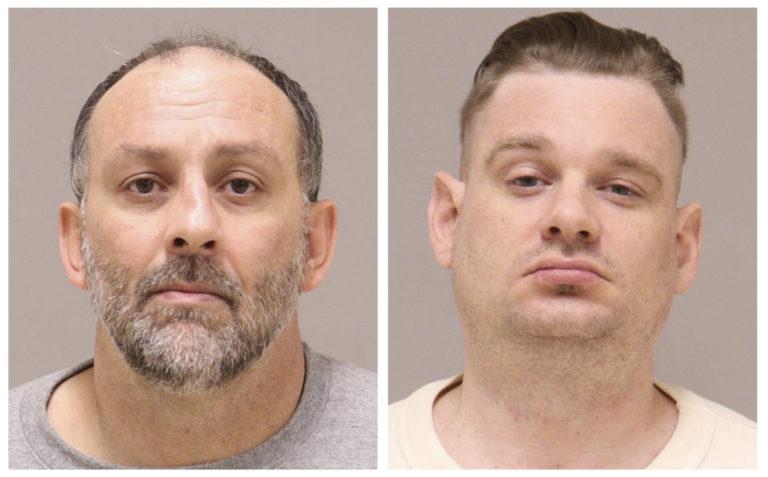
(Ken Silva, Headline USA) Adam Fox, who was convicted last August of being a “ringleader” in the 2020 plot to kidnap Michigan Gov. Gretchen Whitmer, said Tuesday that he will not be testifying in the upcoming state trial for three men facing similar charges.

One of the men on trial, Eric Molitor, presumably wanted Fox to testify about how the kidnapping plot was largely driven by corrupt FBI informants and their handlers. Fox recently recorded a message about the FBI’s role in the Whitmer plot earlier this year, before he was transferred to a supermax prison facility to prevent him from speaking to the public.

Molitor said in a motion last month that Fox was willing to wave his Fifth Amendment right against self-incrimination, and that his testimony is necessary for Molitor to receive a fair trial.

But at a hearing over the matter on Tuesday, Fox changed course and declined to testify.

“I will invoke my Fifth Amendment [right against self-incrimination],” Fox told the presiding judge.

Molitor’s attorney, Bill Barnett, asked state prosecutor William Rollstin whether he’d be willing to grant Fox immunity from state charges since he’s already been convicted federally, but Rollstin declined.

Following Fox’s decision, his mother, Christina Fox—she has a different last name now, but Headline USA is using her previous name at her request for privacy reasons—accused the government of witness intimidation.

“Once again a witness invokes their 5th Amendment rights outside of the jury’s presence due to the government’s intimidation to prosecute the witness if they were to testify,” she said. “Banana Republic justice is what the DOJ has reduced our judicial system to.”

Molitor’s trial is set to begin on Aug. 21. His two co-defendants are brothers Michael Null and William Null. Shawn Fix and Brian Higgins have pleaded guilty to the state charges of providing support for terrorism, and will testify against those defendants.

At a separate state trial in Michigan last year, Joe Morrison was convicted of supporting terrorism along with his father-in-law, Pete Musico, and Paul Bellar.

On the federal level, Fox and Croft were found guilty last year of plotting to kidnap Whitmer, while Brandon Caserta and Daniel Harris were found not guilty.

Ken Silva is a staff writer at Headline USA. Follow him at twitter.com/jd_cashless.

Arrests of Illegal Aliens w/ Criminal Convictions at Border at Record Highs

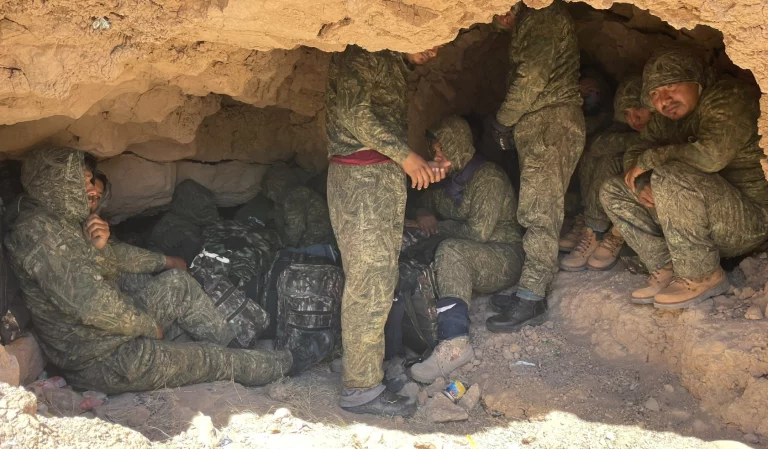
(By Bethany Blankley, The Center Square) If the current trajectory continues, U.S. Customs and Border Protection Office of Field Operations agents are on track this fiscal year to arrest the greatest number of illegal foreign nationals with criminal convictions in recorded history.

By contrast, Border Patrol apprehensions of gang members and weapons seizures are down significantly, and a former border chief tells The Center Square those numbers are down because far fewer agents are in the field – between ports of entries – to make such seizures and apprehensions.

The majority of people with criminal convictions who are being apprehended and arrested are being caught at ports of entry, according to CBP enforcement data, where OFO agents work. Fiscal year to date, OFO agents encountered more than 15,000 people with criminal convictions, up from roughly 6,500 in fiscal 2021. In fiscal 2022, they apprehended nearly 17,000.

Among them, agents arrested 8,452 identified in the National Crime Information Center (NCIC) compared to 10,389 arrested in fiscal 2022 and 5,929 arrested in fiscal 2018.

The apprehension data refers to “noncitizens who have been convicted of crime, whether in the United States or abroad, so long as the conviction is for conduct which is deemed criminal by the United States,” according to CBP.

The NCIC is the national database law enforcement officers use to share information and run background checks on individuals. CBP arrests noncitizens and citizens who are identified in the NCIC and coordinates with respective law enforcement agencies where the outstanding warrants are held.

Also this fiscal year to date, Border Patrol agents encountered 9,244 illegal foreign nationals with criminal convictions or who are wanted by law enforcement. That’s compared to 2,438 encounters with criminal noncitizens in fiscal 2020, and 12,028 in fiscal 2022.

However, BP arrests of noncitizens with outstanding wants or warrants is down significantly. Under the Trump administration, in fiscal 2019, 4,153 people were arrested in this category, the most in the past seven fiscal years. Fiscal year to date, 655 have been arrested.

Apprehensions of gang members is also down. Fiscal year to date, agents have apprehended 493 gang members compared to 751 last fiscal year. Under the Trump administration, they apprehended the most gang members of 976 in seven fiscal years.

The majority of gang members consistently being apprehended are MS-13, Paisas, and 18th Street.

Weapons and ammunition seizures have also dropped significantly. This fiscal year, 3,200 weapons and ammunition have been seized compared to nearly 14,500 seized in fiscal 2020.

Former Border Patrol and CBP chief Mark Morgan told The Center Square the reason for fewer gang members being apprehended and less weapons being seized is because fewer agents are in the field to apprehend them, not because less are coming through.

“In many areas, there are 80% or more fewer Border Patrol agents on the line because they’re relegated to doing administrative work processing and releasing the millions of illegal aliens they’ve apprehended. Fewer agents on the line means more criminals will get thorough undetected.

“It’s common sense. There have been more than 1.7 million total gotaways in the past 29 months. The number of murders, rapists, pedophiles, aggravated felons, and gang members among the gotaways who now call the U.S. home is staggering and should terrify us all.”

Since January 2021, over 8 million illegal border crossers have entered the U.S., greater than the individual populations of 38 states.

Why Are Some US Street Lights Turning Purple?

(By Peter Jacobsen, FEE) I saw it for the first time in Wichita, Kansas. My coworker was driving a shuttle carrying myself and a few students from a guest speaker event, and I noticed something strange—a purple street light.

I initially brushed this off as some weird mishap, but as we drove on I noticed dozens of purple street lights throughout the city.

We started brainstorming ideas in the car. Maybe purple was the color of one of the local high schools? Maybe there was some sort of disease awareness month we were unfamiliar with? Did it have to do with environmental concerns?

We abandoned most of those ideas for a simple reason—the lights seemed too unsafe to be explained by any of those reasons. It’s possible that the purple lights were just as bright as normal lights, but the problem isn’t the brightness. Drivers aren’t used to a monochromatic purple-hued environment, and it was obviously difficult for the driver to adjust. In some ways it seemed worse than having no street lights at all.

After searching, I found reports from other cities. Lots of local news stations chronicle the mystery of the purple lights. Ultimately, the presence and pervasiveness of the new purple lights is best understood with two explanations: one technological and one political.

One Street Light Company to Rule Them All

After doing some digging, I found the initial explanation. Adam Rogers writing for Business Insider documents how one firm, Acuity, dominates the Solid State Lighting (SSL) market. SSL systems are systems which incorporate LED light in a particular way which is often considered advantageous for things like street lamps. Rogers says, “every city with purple lights that responded to my queries or has public records on the matter bought its LED lights from Acuity.”

So what was the issue? Well, Rogers talked to a representative from the City of Vancouver who says the cause is ultimately an issue with a defect unique to LED lighting. “There’s a laminate on the fixture that gives it its white color. As that laminate began to degrade, it caused the color tint to change toward purple.”

In one sense, this is our answer. A company seems to have had a manufacturing defect which is causing a new technology to glitch leading to purple roadways.

But this explanation falls short of answering an important question: why does one firm have so much effect on the lighting of the US (and Canada)?

Acuity was the largest manufacturer of lighting by market share in 2017 when the bad bulbs began to be created, according to research by Rogers.

It’s unclear how much Acuity dominates access to municipal markets based on the data, but the widespread presence of this defect suggests it has a decent amount of influence as a contractor for government at local and state levels.

Why is this the case? Well, the market for government lighting is a winner-take-all discussion. Street lights tend to not be purchased individually. Rather, governments at various levels accept bids for companies to create products on a large scale.

So say a city government wants to update its old street lights with new LED technology. It’s not as if agents shop at the discount street light store. They solicit companies who will provide the street lights, and the winner gets the whole project.

This sort of environment creates a scenario where a few winners begin to dominate the market, and smaller companies simply can’t compete for these larger projects.

Compare this to your own light bulb selection criteria. Do you select one brand of light bulb to light your entire house? Most people don’t. Instead myself, and many others, buy light bulbs one pack at a time based on who gives us the best deal.

This doesn’t mean a single company will dominate all lighting. Competition is more robust than that. But government contracting does lead to markets which are likely more concentrated than they would be if not for the contracting.

Without contracting, perhaps individuals or neighborhoods would work with private companies to provide lighting they are willing to pay for. It’s difficult to imagine exactly what this would look like, but “less centralized” seems like an intuitive answer.

This issue is only compounded by the fact that new government regulations to ban incandescent bulbs are now in effect. Changes like this further harm competition by preferencing companies more able to adapt to arbitrary energy efficiency criteria.

So if you’re driving along at night and your vision is obscured by a strange, purple hue, remember that, although the light was the result of a manufacturing mistake, the impact of the mistake is predictable when you consider the incentives at play in government contracting.

Vince McMahon Subpoena Raises Concerns of Deep State Trying to Kneecap MAGA-Friendly WWE, UFC

(Mark Pellin, Headline USA) WWE Chairman Vince McMahon ranked among the victims of President Joe Biden’s politically-weaponized Justice Department targeting friends and allies of former President Donald Trump, court documents released Wednesday showed.

Last month, federal law agents served a search warrant and grand jury subpoena on the MAGA-friendly McMahon, according to a regulatory filing. McMahon is taking medical leave from his WWE post following recent spinal surgery, it was also learned.

The search warrant and subpoena Guillotine Choke that hit McMahon in July came nearly a year after federal prosecutors and Biden’s SEC started investigating McMahon over his alleged payout to a departing WWE female employee.

That was around the same time the Wall Street Journal had reported that $5 million in contributions “to Donald Trump’s charity in 2007 and 2009 were among $19.6 million in unrecorded company expenses Vince McMahon paid out before he stepped down from World Wrestling Entertainment Inc. amid misconduct allegations.”

McMahon’s MAGA ties include his wife, Linda, who served as Trump’s administrator of the U.S. Small Business Administration.

In what a growing number of Republicans and conservative commentators have claimed is an effort to deflect attention from the multiple corruption allegations engulfing Biden Inc., the disclosure of McMahon’s subpoena followed a day after the Biden DOJ announced its Trump J6 indictment.

The parallels did not go unnoticed, and caused some to speculate at an even more insidious motive: putting a permanent sleeper hold on the MAGA-friendly WWE and UFC, along with their largely pro-Trump fan base.

“They came for Trump’s friend Vince McMahon and they’ll eventually come for Trump’s friend Dana White,” tweeted one commentator. White is president of the Ultimate Fighting Championship and a long-time Trump ally, who delivered rousing speeches at the 2016 and 2020 RNC and has attended multiple Trump events.

“Reminder that neither WWE or UFC are independent anymore,” noted the same commentator. The WWE is on track to merge with the UFC as part of the Endeavor Group under its CEO Ari Emanuel, who also happens to be the brother of infamous Obama henchman and former Chicago mayoral grifter Rham Emanuel, credited with the leftist mantra of never letting a crisis go to waste.

‘Pretendians’: 3 College Profs. Accused of Pulling a Fauxcahontas

(Robert Jonathan, Headline USA) Not one, but three University of Kansas faculty members stand accused of allegedly falsely claiming Native American heritage.

One of them, Prof. Kent Blansett, who was apparently hired at KU through a minority scholar program, is considered to be an expert on indigenous history.

“Blansett is among three KU professors to have allegations publicly raised about their claimed lineage by Native American individuals and groups that frequently challenge people claiming Native identity. None of the men is enrolled in a tribe,” the Kansas City Star reported in a very detailed story.

The other two who are also suspected of allegedly being “pretendians” are Profs. Raymond Pierotti, a biologist, and Jay Johnson, a geographer.

Native American grassroots groups and researchers “say, based on independent research of the men’s family trees, that the professors are white, and white only, and that they’ve built careers and profits off of a lie,” the news outlet added.

Journalist and genealogical researcher Jaqueline Keeler, a member of the Navajo Nation, told the Star, in reference to the controversy, “They’re on the colonial party bus. Most of these folks are engaged in absolute fraud.”

Keeler “created a list of ‘alleged pretendians’ that has drawn both criticism and praise,” the Star noted.

In an interview with the College Fix website, Keeler declared that “Kent Blansett is an opportunist who counts on people not checking his claims. He fabricates information and he often changes and embellishes his story.”

“Keeler said Johnson and Pierotti also have been investigated and found to have falsified their family history,” the website added.

Keeler added that “During the Civil Rights movement, all we  wanted was to be equal researchers instead of just a research subject. Now 60 years later, academia has responded by hiring pretendians who are white people [live-action role playing] as Natives.”

In an email to the College Fix, Lianna Constantino, co-founder of the Tribal Alliance Against Frauds organization, asserted that “Those KU professors you mentioned are indeed ethnic frauds pretending to be American Indians. They are not. Their genealogy is up on our website.”

A university spokesperson told the Star that “the identities of their faculty are not an institutional issue.”

The KU teacher trifecta would hardly be the first time that Caucasians on campus allegedly claimed to be somebody they’re not to perhaps fast-track their careers.

U.S. Sen. Elizabeth Warren, D- Mass., the former Harvard Law School professor, is one of the more well-known examples of fake ancestry.

Back in May, a University of California Berkeley professor apologized for being a “white person who has incorrectly identified as Native my whole life.”

In general, academia tends to be a diversity-celebrating bastion that laments the existence of white privilege and condemns what it deems systemic racism in the larger society.

According to Keeler, academia has, however, become “a pretendian factory.”

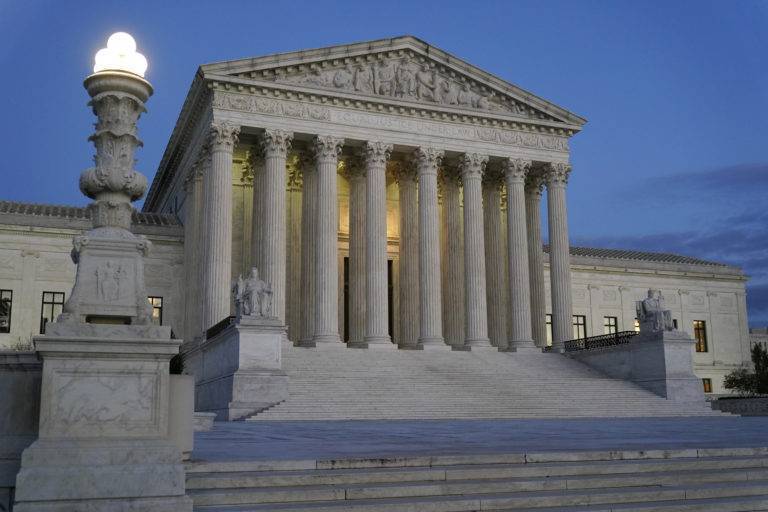
Supreme Court Will Overturn Trump Conviction, Dershowitz Warns

(Luis Cornelio, Headline USA) In a Tuesday appearance on Fox News’ Hannity, prominent legal scholar Alan Dershowitz expressed his belief that the Supreme Court is likely to overturn any potential conviction against former President Donald Trump. 

Dershowitz’s remarks followed charges filed by Biden-appointed Special Counsel Jack Smith against Trump’s alleged efforts to thwart the 2020 presidential election. 

Dershowitz discussed the possibility of the Supreme Court reviewing the case, stating, “I think you will probably win the United States Supreme Court.” He emphasized his confidence in Trump’s legal position and suggested that the case might not survive appellate review. 

Earlier in the interview, Dershowitz noted a crucial argument in Trump’s defense, stating, “They claim that Donald Trump actually believed that he lost the election, that everything he did was fraudulent, that he conspired with unnamed lawyers to affect the election.”

The legal scholar stressed that Trump genuinely believed he had lost the election and acted according to that belief.

“You’re allowed to challenge elections. Indeed the best way to challenge elections is to come up with a slate of alternate electors,” Dershowitz said, according to the Post Millennial. “The government has the burden of proof beyond a reasonable doubt that subjectively, Donald Trump actually believed that he lost the election and acted contrary to that belief.”

Dershowitz challenged the 45-page indictment’s claims. “There is no smoking gun,” he said. “There is no one who is credibly prepared to testify that Donald Trump said to him, ‘I know personally I lost the election.’ There’s a lot of evidence that people told him he lost the election, but you know Donald Trump, and you know that he’s gonna make up his own mind.” 

According to Dershowitz, the case should be granted review by the Supreme Court because of the significant implications it holds. He emphasized the importance of upholding the highest standards of justice when the president targets a political opponent during an election. 

The charges filed against Trump have triggered a political firestorm, with GOP lawmakers torching the Biden-led DOJ for what they perceive as politically motivated actions.