Post-Janus, Gov’t Union Empire Has Gotten Smaller, but It Is Still Inflicting Massive Harm on America

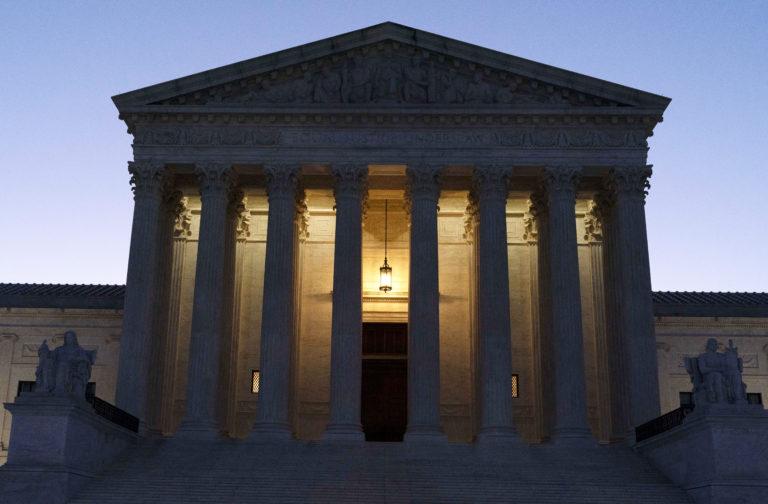
(By Stan Greer, RealClear Wire) Five years ago this summer, the U.S. Supreme Court decided that government employers across the country may not cut deals with Big Labor officials to fire civil servants for refusing to pay dues or fees to a union they don’t want, and never asked for.

The ruling that government-sector forced union dues and fees violate the First and Fourteenth Amendments came in Janus v. American Federation of State, County and Municipal Employees Council 31, a case argued and won free of charge on behalf of independent-minded Illinois civil servant Mark Janus by then-National Right to Work Legal Defense Foundation staff attorney Bill Messenger. (This spring, Messenger became the Foundation’s vice president and legal director.)

In addition to Right to Work Foundation attorneys, attorneys for the Winston & Strawn law firm and the nonprofit Liberty Justice Center in Chicago furnished Janus with free legal aid.

At the time Janus was announced, 25 states already had Right to Work laws on the books prohibiting compulsory financial support for all government unions. Moreover, two other pro-Right to Work statutes, respectively signed into law in 2011 and 2012 in Wisconsin and Michigan, protected most kinds of public employees from being fired for refusal to bankroll a union, but made certain exceptions.

Nevertheless, as of the 2017 calendar year the overwhelming majority of America’s nearly seven million unionized state and local public employees still resided in jurisdictions without Right to Work protections.

In the months prior to the Supreme Court’s June 27, 2018, release of its Janus opinion, some Organized Labor observers recognized that a pro-free speech decision could potentially mean an ongoing annual loss of hundreds of millions or even billions of dollars in coerced union dues and fees for government union bosses.

To avoid major financial setbacks, Big Labor knew it would have to persuade, by hook or by crook, vast numbers of workers to support unions voluntarily who, before Janus, were only forking over union dues or fees because they had to in order to keep their jobs.

Assessing just how successful or unsuccessful union bosses have been in stemming their losses of dues and fee payers and revenue since 2018 is not easy for several reasons.  Unlike private-sector unions with annual revenues exceeding $250,000, government unions with no private-sector members do not have to file annual LM-2 forms reporting their membership totals and revenue sources.

Even among the government unions that do have at least a handful of private-sector members and consequently must file LM-2s, there is no requirement to use consistent criteria from year to year regarding who constitutes an “active member” of the organization.  In some years, retirees and affiliated members (whose dues assessments are virtually always far lower than those of unionized employees who are still collecting paychecks) may be counted as “active members.”  In other years, they may not be.

Fortunately, there is a resource that is far superior to LM-2 forms for assessing the impact of Janus on government union membership. State and local government payroll departments in all 50 states record how many employees are subject to “exclusive” union representation during any given pay period, and how many are having union dues withheld from their paychecks.

Public employee payroll records are not published, but interested persons may obtain them by filing freedom-of-information requests under state government transparency laws. And over the course of the five years since Janus, the Midland, Mich.-based Mackinac Center for Public Policy has systematically submitted FOIA requests to public employers in every state significantly affected by Janus to ascertain how many public employees have successfully exercised their constitutional right to opt out of union financial support.

The data the MCPP has been able to obtain covers most of the roughly 5.6 million “public workers employed in unionized workplaces” just prior to Janus in the states the group has been tracking.

According to a recently-published summary of the group’s findings by MCPP Vice President Jarrett Skorup, just before Janus there were 3.109 million people paying union dues or fees in the public entities included in its survey. In contrast, the most recent available data show there are just 2.563 million union dues payers employed by the same public employers.  Meanwhile, the number of workers subject to union contracts covered in the survey increased by roughly 184,000.

Based on the large sample for which it was able to obtain data, the MCPP estimates that there are roughly 1.2 million fewer actively employed civil servants bankrolling a government union today than there would be had the Janus case never made it to the Supreme Court, or had the court ruled the other way.

While annual union dues assessments per worker vary widely and there is no easy way to estimate what the average for public employees nationwide is, if one assumes it is $600, as the MCPP very conservatively does, that means Janus is now costing government unions roughly $720 million in revenue every year, and that number is likely to grow.

Why would a public servant choose not to support financially the union that wields monopoly power to deal directly with his or her employer on matters of pay, benefits, and work rules, once the employee has a free choice about that? No two independent-minded employees would offer exactly the same answer, but the answers commonly fall into one of a few categories.

Many public employees have solid grounds for believing that Big Labor work rules hinder them from performing their jobs to the best of their ability. For example, as Success Academy Charter Schools founder and CEO Eve Moscowitz explained in a June commentary for the Wall Street Journal, teacher union bosses in the New York City area have for many years successfully blocked the introduction in the schools they control of reading programs that require a wide range of educators, from assistant principals to art instructors, to help kids learn to read.

Even as the Success Academy has since 2006 demonstrated that poor and minority schoolchildren can outperform the New York State average for all schoolchildren in reading and other key subject areas when educational employees of all types work together to help them learn to read, United Federation of Teachers (UFT/AFT) union bosses have made it impossible for district public schools to adopt a similar or identical program.

That’s a key reason why, as Moscowitz reported, “only 12% of black fourth graders and 18% of Hispanic fourth graders” are proficient readers, according to National Assessment of Educational Progress test scores that were made public for the first time last month.

Many other public employees may refuse to bankroll a union because union officials refuse to stand up for rights that are important to the employees. A case filed this May in the Rhode Island Superior Court by three teachers who were fired for exercising their religious freedom not to receive a COVID-19 vaccine is a good illustration.

Whatever one thinks of mandatory vaccines generally, there was never a remotely plausible case for forcing public educators to get a COVID-19 vaccine to stay on the job. The fact is, there was never any solid evidence that any available vaccine prevents the transmission of COVID-19 from person to person. On the other hand, by late summer 2020 there was already compelling evidence that COVID-19 poses very little to risk to the health of school-aged children, and teachers are not at elevated risk of falling severely ill.

At the time they invoked the freedom-of-religion guarantees in the First Amendment as the grounds for their refusal to get the COVID-19 vaccine, Rhode Island teachers Brittany DiOrio, Stephanie Hines, and Kerri Thurber were all dues-paying members of the Barrington Education Association union, its statewide parent, and the National Education Association union.

Yet teacher union bosses who relentlessly boast about how they supposedly defend the interests of members and nonmembers alike refused to lift a finger to help them. The only reason they were ultimately able to get fully reinstated and receive back pay is because of a settlement won on their behalf by a private attorney they had engaged.

The most plausible explanation for why teacher union bosses did not hesitate to throw DiOrio, Hines, and Thurber under the bus is that, post-Janus, cultivating a sense of hysteria about COVID-19 has been one of AFT and NEA union bosses’ most effective ways of securing new sources of revenue to counterbalance the financial losses they are suffering as more and more educators cut off support for their organizations.

Most significantly, union bosses were able to leverage unscientific school lockdowns that continued throughout most of the 2020-2021 academic year to rake in a total of roughly $200 billion in federal “stimulus” money. This cash was funneled directly and indirectly to government school districts as part of the Biden “American Rescue Plan” scheme rammed through Congress in March 2021.

The fact that top teacher union officials like the AFT’s Randi Weingarten were able to exploit the ample legal monopoly-bargaining privileges still granted by state politicians to pull off this unprecedented coup shows that much more remains to be done to check the still-inordinate clout of Big Labor.
Congressional Pet Projects – Earmarks – Cost Taxpayers $16B in 2023

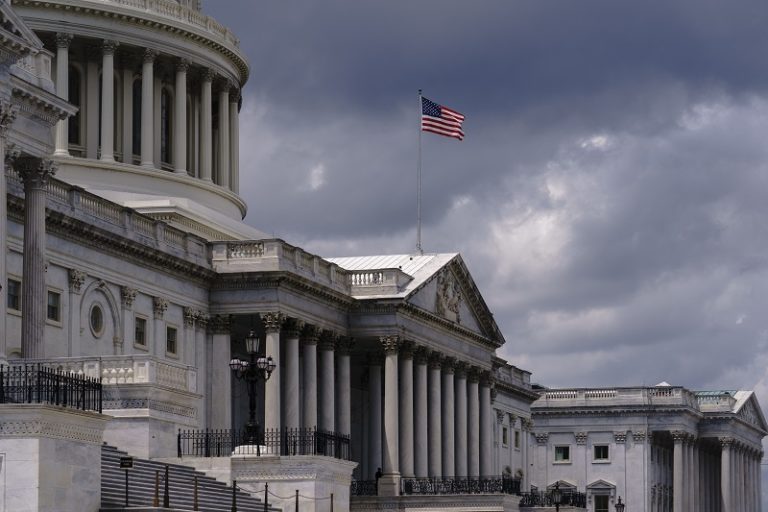
(By Adam Andrzejewski, RealClear Wire) In 2021, earmarks returned to Congress. The practice was banned for a decade due to its tendency to fuel corruption, but has since been embraced on a bipartisan basis, leading to extraordinary spending on thousands of pet projects across the country. Open the Books mapped $16 billion worth of earmarks across 7,509 projects in FY2023, and found rampant waste and abuse.

Earmarks are special grants that lawmakers can give directly to constituents or organizations in their districts or states. While rules have changed slightly for the next fiscal year, in FY 2023, House members were allowed 15 earmarks that in total couldn’t exceed more than 1% of net discretionary spending. The Senate had the same 1% cap across the board, but no limit per member.

Open the Books found broad bipartisanship in doling out earmarks. Of the top ten earmarkers, seven were Republicans, and the top three earmarked $1.66 billion. Republicans out-earmarked their Democrat colleagues in 21 states.

There was plenty of waste in FY2023 earmarks, like $5M to the Ozark Empire Fairgrounds, $2M for the National Great Blacks in Wax Museum, $1 million for a splashpad in Michigan, and $1 million for the Macadamia Nut Health Initiative.

Open the Books also found some shocking conflicts of interest in earmarks, including $30 million earmarked by retiring U.S. Senator Patrick Leahy to the University of Vermont Honors College. In May, the university renamed the college after Leahy.

Earmarks have been labeled the “currency of corruption” for a reason, and while Republicans have claimed to reform the process for the next fiscal year, Congress needs to go further and eliminate this wasteful practice entirely like it did in 2011.

Stop Blaming Inflation on Taylor Swift and Beyonce

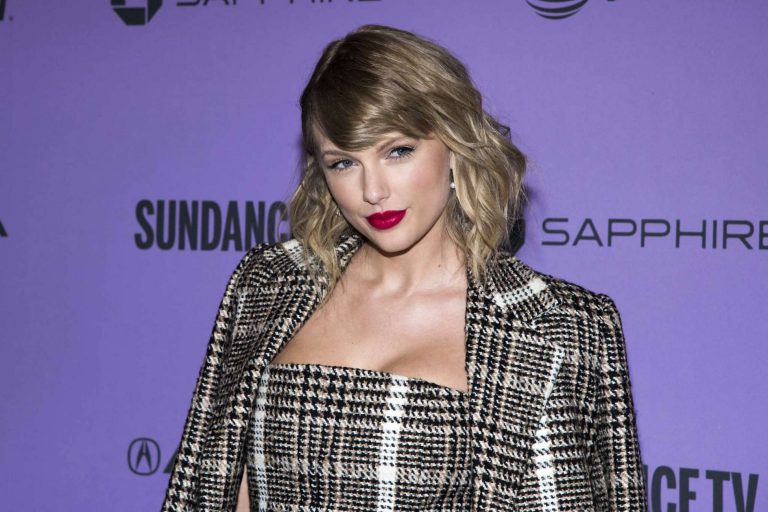
(By Jon Miltimore, FEE) CNN reported recently that we may have new culprits for inflation: Beyonce and Taylor Swift.

“Taylor Swift and Beyonce are impacting inflation and the GDP with their respective tours,” CNN tweeted with a segment discussing the macroeconomic impact of the tours of the two celebrities.

CNN isn’t alone. CNBC made a similar claim in a report on “tourflation” in July, which explored the surge in prices localities experience when Beyonce and Swift come to town.

“It’s not just that the tickets become more expensive,” Klaus Baader, global chief economist at Societe Generale, told CNBC. “It’s also that your beer or cider or your Coca-Cola or your hot dog at the venue has also gotten a lot more expensive.”

Baader is right that prices of goods and services at events go up a lot, which is why it’s not a surprise that massive tours such as Eras can rack up billions of dollars in gross domestic product. Fans spend lots of money at big events — whether it’s a Beyonce concert, a Yankees game, or a NASCAR race — where they buy expensive food, drinks and souvenirs.

This economic impact goes beyond the stadium. It was recently observed that hotel prices surge when Swifties descend on cities to attend concerts, much to the annoyance of some locals and other travelers.

But is this really evidence of inflation? In one sense, the question is tricky to answer because there’s more than one definition of inflation (more on that in a minute). But a closer examination reveals the answer is no regardless of the definition one chooses.

First, it’s important to understand that price changes are not in themselves evidence of inflation. Prices of goods and services are changing all the time because of changes in supply and demand.

For example, Ford recently slashed the price of its Lightning (an electric pickup truck) by $10,000. Ford didn’t do this because of any change in monetary policy, but because the market is experiencing a lower than anticipated demand for electric vehicles (and likely because Tesla recently rolled out a competitor to the Lightning).

Or consider gasoline. Prices are constantly changing, and usually these changes have little or nothing to do with inflation and much to do with supply and demand (of both gasoline and oil) — such as when Saudi Arabia recently announced it would cut oil production by 500,000 barrels a day.

The point is, higher prices don’t necessarily mean inflation. And the idea that “superstar tours” spur inflation is one on which the Economist recently poured cold water.

“Inflation is calculated by comparing the prices of a basket of goods, rather than measuring sudden price rises in one sector, such as hotels,” the magazine noted. “Concerts, theatre and cinema have a weight of less than 0.8% in the basket.”

And this brings me to how we define inflation. It was not until the 20th century that inflation was defined as “a general and sustained increase in prices,” which is the definition the Economist is using.

For centuries, there was a simpler definition: an increase in the money supply.

“Inflation is an increase in the quantity of money and credit. Its chief consequence is soaring prices,” Henry Hazlitt explained in Economics in One Lesson. “Therefore inflation — if we misuse the term to mean the rising prices themselves — is caused solely by printing more money.”

Did you catch that? Inflation, according to the long-standing definition, was an expansion of the money supply. The result of inflation was higher prices.

Many economists prefer this definition of inflation today because it’s a reminder that price inflation isn’t an accident.

“Inflation is a policy,” the Austrian economist Ludwig von Mises explained, “a deliberate policy of people who resort to inflation because they consider it to be a lesser evil than unemployment.”

One can, of course, see why so many politicians and policymakers don’t like how Hazlitt and Mises defined inflation and why they favor the newer definition. It makes it easier to blame “corporate greed” and Taylor Swift for inflation when it is defined as “a general and sustained increase in prices.”

In reality, basic economics makes it clear that the $6.5 trillion the Federal Reserve printed over 24 months is the real inflation culprit.

But who wants to take the blame for that?

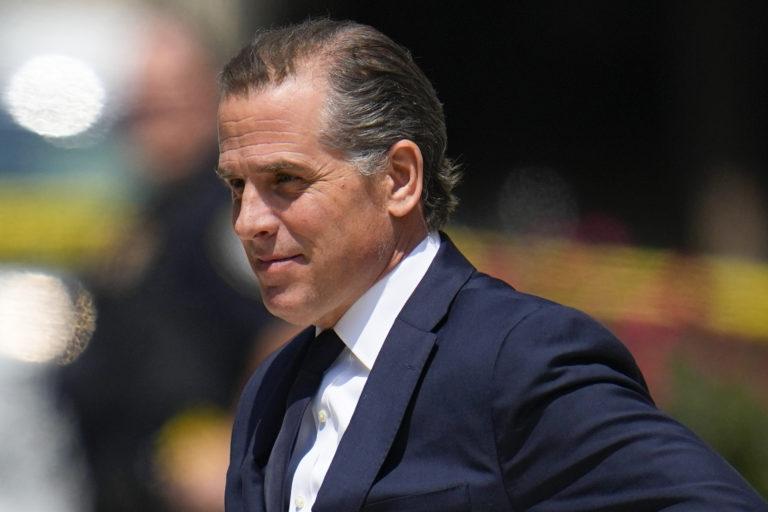
Hunter Biden’s DOJ Prosecutors Reject Push to Keep Sweeping Plea Deal Partially Intact

(Headline USA) A legal showdown over the derailed plea deal for Hunter Biden continued Tuesday as prosecutors asserted that an agreement on a gun charge was dead, along with the rest of the deal, as the case makes a major shift into a special-counsel investigation.

While the agreement that was supposed to have wrapped up the long-running investigation of President Joe Biden’s son largely unraveled during a contentious court hearing last month, prosecutors said the two sides had continued to negotiate until the defense rejected their final counterproposal the day before U.S. Attorney David Weiss asked to be named special counsel.

Lawyers for Hunter Biden have argued that prosecutors reneged on an agreement on tax charges but said a separate agreement sparing him prosecution on a gun charge remains valid. The agreement on the gun charge also contains an immunity clause against federal prosecutions for some other potential crimes.

Prosecutors denied reneging on any deal. While the agreement on the gun charge was signed by a prosecutor, probation agents didn’t sign it, and so it never became valid, they argued.

The conflict is now in front of U.S. District Judge Maryellen Noreika, who is weighing the prosecution’s motion to pull the tax misdemeanor charges they filed and potentially file them in another court like California or Washington.

Biden’s defense attorney on the case, Christopher Clark, also filed to withdraw from the case Tuesday, saying that he could be called as a witness over the negotiation and drafting of the deal and cannot also act as his lawyer.

He’s been replaced by another Hunter Biden attorney, Abbe Lowell. He said in court documents that he wouldn’t fight the prosecution’s move to pull the tax charges.

The plea agreement had been decried as a “sweetheart deal” by Republicans who are pursuing their own congressional investigations into nearly every facet of Biden’s business dealings and the Justice Department’s handling of the case.

The agreement had originally called for Biden to plead guilty to failing to pay taxes on over $1.5 million in income in both 2017 and 2018, and get probation rather than jail on the misdemeanor counts. A separate agreement was to spare him prosecution on the felony crime of being a drug user in possession of a gun in 2018 if he kept out of trouble for two years.

Attorney General Merrick Garland’s surprise announcement last week of Weiss as special counsel raised fresh questions about the case ahead of the 2024 election. Hunter Biden’s history of drug use and financial dealings have trailed the political career of his father, with Joe Biden having been deeply implicated in the latter, if not the former as well.

Although lawmakers in Congress have presented considerable evidence implicating the president and other members of the Biden family in bribery and influence-peddling schemes involving foreign governments, DOJ prosecutors have not made any accusations or charges against the president in probing the affairs of his son.

Adapted from reporting by the Associated Press

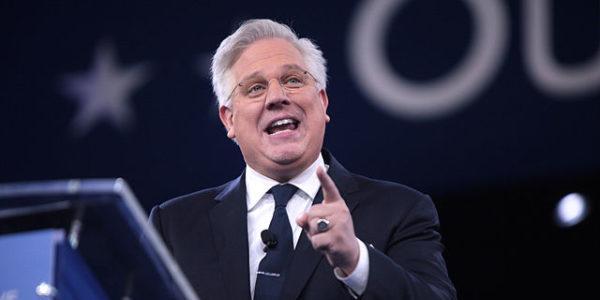
Apple Deplatforms Glenn Beck from iTunes

(Ken Silva, Headline USA) Prominent conservative personality Glenn Beck announced Wednesday that his podcast, The Glenn Beck Program, has been removed from Apple Podcasts.

Beck said in a video that he received an email from Apple, which said that the company “found an issue with your show … which must be resolved before it’s available on Apple Podcasts.”

Beck said Apple sent him a link for more details about why his show was canceled, but the link only reiterated that his show has been removed.

“So what’s the ‘issue’ Apple?!” Beck asked. “I cannot imagine what they are basing this one on. Have we even had strikes? No, nothing. This is crazy.”

Beck said it could have been a “glitch”—he used air quotes when he said that word—but speculated that these “glitches” will become more frequent as the 2024 presidential election nears.

“There’s nothing we’ve said that would warrant a removal. It’s probably just a ‘glitch,’ but it’s amazing we need a whole bunch of people to point out the ‘glitch’ before it’s found out and put back,” he said.

“I think the closer and closer we get to this election, the most ‘glitches’ are going to happen.”

Beck also speculated that he’s being targeted because of his ongoing coverage of what he called the Biden crime family. He said he has another broadcast about the Bidens set to air Wednesday night.

Previously an anti-Trumper, in recent years Beck has platformed increasingly radical right-wing thinkers—including the likes of Auron MacIntyre—and edgy personalities such as comedian Alex Stein.

This has resulted in Beck’s network, BlazeTV, attacking issues that used to be sacred cows in conservative media—such as the official narrative of the Sept. 11, 2001, terrorist attacks. It was on Stein’s show that Republican presidential candidate Vivek Ramaswamy recently made waves when he said he didn’t believe the official findings of the 9/11 Commission.

Beck has also questioned the official narrative of the Jan. 6, 2021, protest-turned-riot. Earlier this month, he announced the hiring of broadcaster Steve Baker, who was charged in relation to J6.

Apple didn’t immediately respond to a Headline USA email asking why Beck was apparently deplatformed.

Ken Silva is a staff writer at Headline USA. Follow him at twitter.com/jd_cashless.

Leftists Pounce over Video of Rep. Ronny Jackson’s Rodeo Scuffle w/ Police

(Headline USA) Police video released Monday shows Rep. Ronny Jackson, R-Texas, being taken to the ground by officers, profanely berating them and threatening to report them to the governor during an altercation at a rodeo last month.

The video has fueled yet another leftist-media feeding frenzy, although accounts of the events in question have thus far suggested that Jackson, a trained physician, was nobly attempting to act as a good Samaritan assisting with a medical crisis when law-enforcement initiated the confrontation with the two-term lawmaker.

In body camera video, the former White House physician can be seen approaching a group of people surrounding a 15-year-old girl who authorities have said was having seizures. Jackson later has what looks like an argument with one of the people attending to the teenager before she is put on a stretcher.

Shortly afterward, Jackson is wrestled to the ground by at least two officers. The 31-minute video, which has sound in only some portions, shows officers turning Jackson facedown and putting him in handcuffs before helping him to his feet.

“I’m going to call the governor tomorrow and I’m going to talk to him about this [expletive], because this is [expletive] ridiculous,” Jackson can later be heard telling a state trooper, his voice raised.

State police released the video footage days after Jackson defended his actions in a post on social media.

Kate Lair, a spokesperson for Jackson, reiterated the congressman’s comments in a statement Monday in which she said he was prevented from providing medical care to the teenager due to “overly aggressive and incompetent actions” by officers.

“Congressman Jackson, as a trained ER physician, will not apologize for sparing no effort to help in a medical emergency, especially when the circumstances were chaotic and the local authorities refused to help the situation,” Lair said, quoting Jackson’s Aug. 11 tweets nearly verbatim.

Chris and Jodi Jordan said they were at the rodeo in White Deer, a small town outside the Panhandle city of Amarillo, and witnessed some of what happened.

They said Jackson was trying to help the girl before medics arrived and that the deputies were needlessly rough in pulling him away.

“We were just appalled,” said Chris Jordan, 48, of Hereford. “The slamming to the ground I didn’t understand whatsoever.”

The Jordans said that after the incident they discussed talking to news reporters about what they had seen with an aide to Jackson. The congressman’s office referred the Associated Press to the couple.

Shortly after the encounter, Carson County Sheriff Tam Terry talked with Jackson by phone. According to the sheriff’s written report, Jackson repeatedly told Terry that there needed to be consequences for the deputies who had handcuffed him.

After Terry responded that he didn’t need to be threatened, Jackson said that “he would pull hell and high water and come and ‘bury me in the next election,’ ” the sheriff wrote.

Jackson was elected in 2020 after  serving as a top White House physician for both presidents Barack Obama and Donald Trump. A year later, following some of Jackson’s public comments questioning President Joe Biden’s mental and physical fitness, the Biden Defense Department’s inspector general released a scathing report about Jackson’s conduct while on the job at the White House.

The report concluded that Jackson made “sexual and denigrating” comments about a female subordinate, violated the policy on drinking alcohol on a presidential trip and took prescription-strength sleeping medication that prompted worries from his colleagues about his ability to provide proper medical care.

Jackson denied the allegations and said at the time that the report was a “political hit job.”

Adapted from reporting by the Associated Press

Top Fox Corp. Lawyer Stepping Down after $787M Dominion Defamation Debacle

(Headline USA) Fox Corp. said Friday that its chief legal officer who oversaw a $787 million settlement with Dominion Voting Systems over defamation allegations is leaving the company.

Viet Dinh, Fox’s chief legal and policy officer, will step down effective Dec. 31, the New York-based company said in a statement. He will remain a “special advisor” to Fox Corp., it added.

Fox News, a unit of Fox Corp., agreed to settle the case brought by the voting machine producer in mid-April following weeks of embarrassing media leaks disclosing the private text and email correspondence of its top personalities.

Records released as part of the lawsuit showed many Fox executives—and even some of its trusted news personalities—were idealogically aligned much farther left than audience members.

One Fox Corp. vice president called the concerns about the rigged electoin “MIND BLOWINGLY NUTS.”

During a deposition, Fox Chairman Rupert Murdoch testified that he believed the 2020 election was fair and had not been stolen from former President Donald Trump.

Even so, the settlement—which some speculate woke, ESG-pushing Fox shareholder BlackRock may have had a hand in coercing—also proved far more costly than the unprecedented payout.

As a rumored term of the agreement, Fox News shortly thereafter fired its top host, Tucker Carlson, prompting many of its loyal fans to jump ship as well.

While conservatives saw the series of events as a reason to eye the network with suspicion, leftists delighted in its legal defeat, claiming the settlement offered validation of their baseless claims that the 2020 election was the most secure in the history of the planet.

Despite the immense ramifications of the settlement and Carlson’s departure, however, many of the underlying circumstances and agreements remain shrouded in secrecy—ironic given the network’s standing as the No. 1 cable news station and the only major news network trusted by a large portion of the population.

The company did not say why Dinh was leaving Fox Corp. Brian Nick, a spokesman for Fox, said the company had no comment beyond its initial statement.

Adapted from reporting by the Associated Press

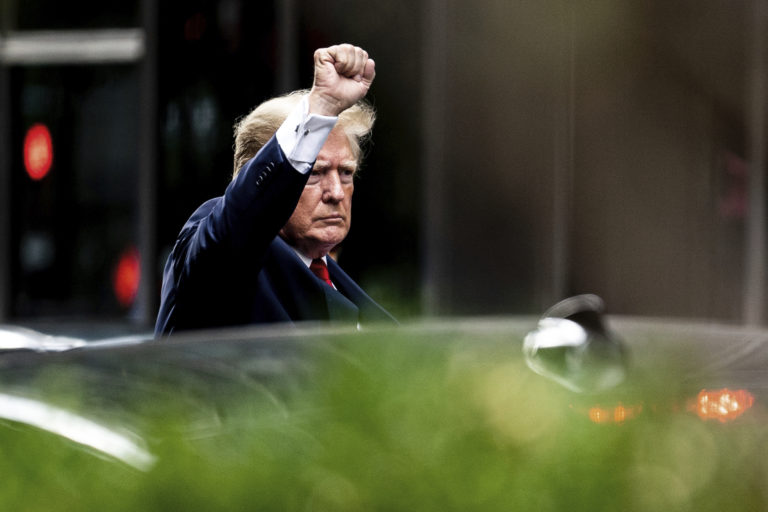
Fulton County Says Trump Will Be Booked in Jail After Turning Himself Over to Authorities

(Headline USA) Former President Donald Trump and the 18 other defendants charged in a Fulton County sham RICO indictment will be booked in the county’s jail after surrendering to authorities, the sheriff’s office announced Tuesday.

“In Fulton County, GA, the booking process and arraignment/appearance process in criminal cases are two separate things. In this case, some arraignments/appearances may be virtual as dictated by the presiding judge,” Fulton County Sheriff’s Office spokeswoman Natalie Ammons said in a statement.

“At this point, based on guidance received from the District Attorney’s office and presiding judge, it is expected that all 19 defendants named in the indictment will be booked at the Rice Street Jail.”

Fulton County’s Soros-funded District Attorney Fani Willis unveiled dozens of charges against 19 defendants, including Trump, this week over their alleged efforts to overturn the results of the 2020 presidential election. Willis announced during a press conference on Monday that the defendants have less than two weeks to turn themselves in to authorities.

“I am giving the defendants the opportunity to voluntarily surrender no later than noon on Friday the 25th day of August 2023,” Willis said, adding that she hopes to take the case to trial “within the next six months.” 

Ammons said the defendants, which also include former Trump attorney Rudy Giuliani and former Trump chief of staff Mark Meadows, don’t need to wait until the 25th and “can turn themselves in at any time.”

“The jail is open 24/7. Also, due to the unprecedented nature of this case, some circumstances may change with little or no warning.” Ammons said. 

Fulton County officials made it clear earlier this month that Trump would be subjected to “normal practices” if he were indicted, including having his mugshot taken.

“Unless somebody tells me differently, we are following our normal practices, and so it doesn’t matter your status,” Fulton County Sheriff Pat Labat said.

Trump has blasted the charges, accusing Willis of interfering with the 2024 presidential election.

“Like Manhattan DA Alvin Bragg, Deranged Jack Smith, and New York AG Letitia James, Fulton County, GA’s radical Democrat District Attorney Fani Willis is a rabid partisan who is campaigning and fundraising on a platform of prosecuting President Trump through these bogus indictments,” the Trump campaign said in a statement.

“Ripping a page from Crooked Joe Biden’s playbook, Willis has strategically stalled her investigation to try and maximally interfere with the 2024 presidential race and damage the dominant Trump campaign. All of these corrupt Democrat attempts will fail.”

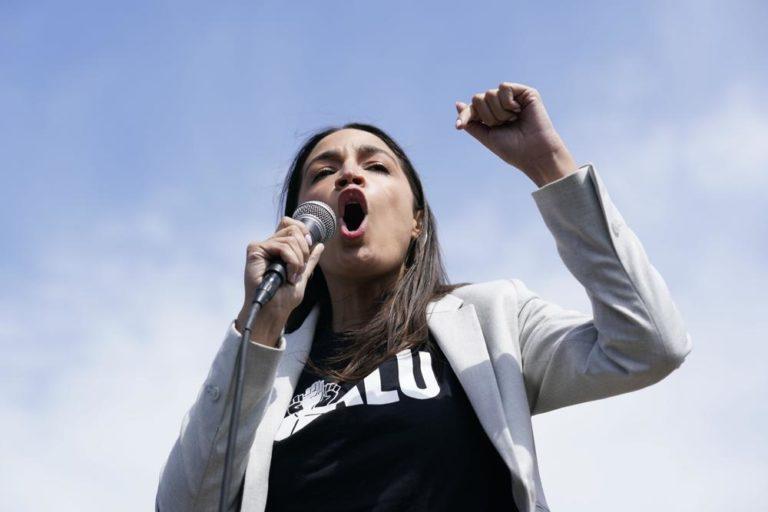
AOC Owes at Least $50K in Student Loan Debt While Pushing for Debt Forgiveness

(Headline USA) Rep. Alexandria Ocasio-Cortez, D-N.Y., one of the leading congressional voices for student loan debt forgiveness, owes up to $50,000 in student loan debt, according to financial disclosures.

Ocasio-Cortez’s latest filing shows she owed the Department of Education between $15,000 and $50,000 for her student loans as of 2022. 

She repeatedly has called on the Biden administration to “forgive” millions of dollars from borrowers — a policy that she would benefit from directly.

“Now would be a great time to cancel student loan debt, take significant climate action, and pass voting rights,” Ocasio-Cortez wrote on Twitter in May 2022.

She even demanded more from the Biden administration after President Joe Biden released a plan in August 2022 to “forgive” up to $20,000 worth of student loan debt for certain borrowers.

“I am very grateful for this watershed moment of a first step — it is so encouraging, thrilling, and has already changed SO many people’s lives. But I am also thinking about how this still leaves a question mark for those in the highest amounts of debt, who need the most amount of help. So let’s celebrate and keep going,” she wrote on Instagram.

Ocasio-Cortez isn’t the only Democrat who would benefit from student loan forgiveness. Fellow “Squad” member Rep. Rashida Tlaib, D-Mich., owes more than $100,000 to the Department of Education for her law degree, according to financial disclosures. She has demanded that the Biden administration forgive at least $50,000 in student loan debt for borrowers.

“I will continue to push for education debt cancellation of $50K or more, and I know many people out on the streets will do the same,” Tlaib tweeted last August. “This is not the end, this is just the beginning when it comes to bringing opportunity and equity to all.”

Biden’s student loan forgiveness plan was struck down by the Supreme Court earlier this summer after the justices ruled the president abused his constitutional authority by trying to unilaterally cancel debt.

Prosecutors Confirm Alec Baldwin Could Be Charged Again After Bombshell Forensic Report

(Headline USA) Alec Baldwin could be charged again for his role in a fatal shooting on the set of Rust in October 2021, following a new report from independent forensic firearms experts that concluded Baldwin pulled the trigger of the gun in order for it to fire.

Special prosecutors dismissed the involuntary manslaughter charges against Bladwin in April, but noted the charges could be refiled depending on what the independent forensic investigation found.

“The gun and broken sear have been sent to the state’s independent expert for further testing. The charges against Alec Baldwin were dismissed without prejudice because a possible malfunction of the gun significantly effects causation with regard to Baldwin, not with regard to Gutierrez,” they said at the time. “If it is determined that the gun did not malfunction, charges against Mr. Baldwin will proceed.”

The forensic report, released this week, found that the prop gun used by Baldwin  did not just malfunction but was triggered manually.

“Although Alec Baldwin repeatedly denies pulling the trigger, given the tests, findings and observations reported here, the trigger had to be pulled or depressed sufficiently to release the fully cocked or retracted hammer of the evidence revolver,” the report reads. “This fatal incident was the consequence of the hammer being manually retracted to its fully rearward and cocked position followed, at some point, by the pull or rearward depression of the trigger.”

Special prosecutor Kari Morrissey confirmed in a statement on Wednesday that new charges against Baldwin are being “considered” but said a “final decision” has not yet been made.

Baldwin has repeatedly denied pulling the trigger of the gun, denying any responsibility for the death of cinematographer Halyna Hutchins.

“I let go of the hammer of the gun,” Baldwin told ABC’s George Stephanopoulos. “And the gun goes off. I didn’t pull the trigger. The gun was supposed to be empty.”