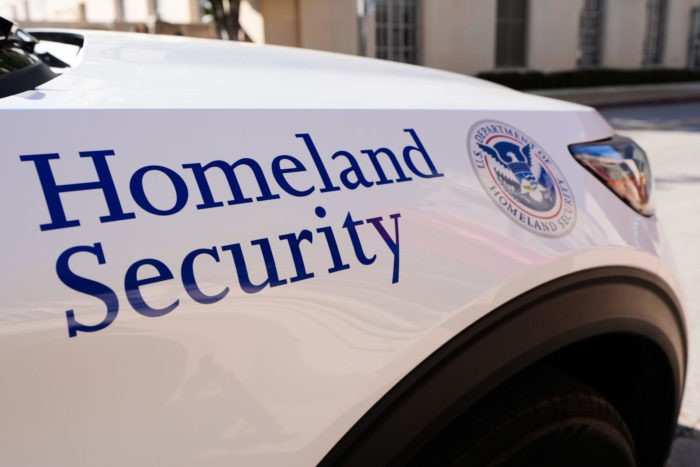
(José Niño, Headline USA) A breach of Department of Homeland Security records has exposed information concerning nearly 42,000 employees, revealing personnel assignments across immigration enforcement and other federal agencies. In a Wednesday report, Mikael Thalen of Straight Arrow said the disclosure included names, telephone numbers, email addresses, and job responsibilities.
A group calling itself the Department of Peace claimed responsibility. Straight Arrow obtained the records through Swiss hacker Maia Arson Crimew and the nonprofit archive Distributed Denial of Secrets, commonly called DDoSecrets. The outlet sought responses from DHS, Immigration and Customs Enforcement, and Customs and Border Protection, but none immediately answered.
According to Thalen, the attackers gained access through an Okta authentication service used by DHS. Such systems allow employees to access multiple authorized applications through one login. The reported intrusion does not establish that Okta’s own infrastructure was compromised. The timing of the breach remains unknown.
“This dataset is massive in terms of both size and impact,” crimew said. “It provides an unprecedented look into the Department of Homeland Security’s organizational structure, highlighting which people do what work across multiple DHS agencies, including ICE.”
Called “Icepick,” the collection covers approximately one-fifth of the department’s workforce, according to Straight Arrow. Beyond immigration agencies, it includes personnel from the Cybersecurity and Infrastructure Security Agency, Citizenship and Immigration Services, Federal Protective Service, federal training centers, and the Science and Technology Directorate. Some records concern sensitive operational assignments.
DDoSecrets released the material alongside a searchable interface developed by Crimew. Its stated purpose is to assist reporting, legal advocacy, and public investigation. Journalist and DDoSecrets cofounder Emma Best argued that the collection goes beyond “an indiscriminate directory,” identifying “many of the architects and drivers of DHS policy” and “officials responsible for overseeing covert and undercover operations.”
“It is a complete game changer for anyone investigating DHS, simplifying the identification of agents and their lines of command,” Crimew said. “It provides FOIA material for years to come!”
José Niño is the deputy editor of Headline USA. Follow him at x.com/JoseAlNino