


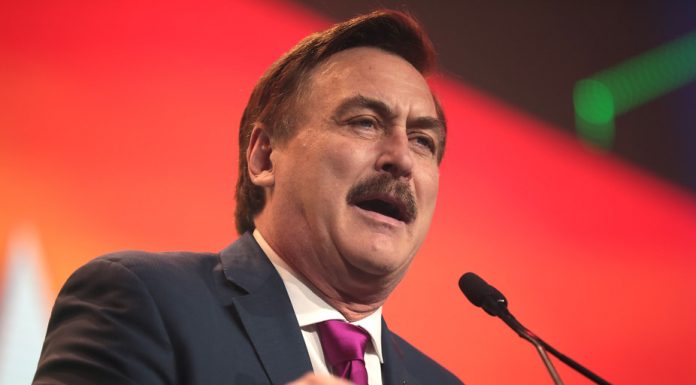
(Luis Cornelio, Headline USA) MyPillow CEO and Minnesota gubernatorial candidate Mike Lindell left some conservatives scratching their heads after embracing a series of pragmatic immigration policies that critics characterized as “amnesty.”
Lindell is seeking the Republican nomination for governor of Minnesota, with the primary election scheduled for Aug. 11. He entered the race as a leading GOP contender after receiving an endorsement from President Donald Trump in July.
Lindell explained in several interviews that he would support a conditional non-resident visa for foreign nationals who have maintained clean records during their unlawful stay in the United States.
The proposals would come alongside continued deportations of criminal illegal aliens. The plan would require foreign nationals to submit fingerprints and avoid criminal activity. It would also empower authorities to prosecute employers who pay workers below minimum wage or in cash to exploit illegal labor.
“I’d like the whole United States to do this, but let’s say I did it here in Minnesota,” Lindell said Tuesday in an interview with the Washington Examiner. “Six months, all the illegal immigrants would have to go get what’s going to be called a conditional work visa.”
He added, “I’m a person of second chances, if the only thing they ever did was cross the border and didn’t report back in because they were afraid of being re-deported.”
Lindell first discussed the immigration plan earlier this month during an interview with CBS News Minnesota.
Mike Lindell just surrendered to the radical left by supporting amnesty for illegal aliens.
– Conditional visas where you never have to leave the country regardless of citizenship.
– Drivers licenses for illegals.
– Government subsidies to illegals to gain legal status.“You… pic.twitter.com/acogy58jWR
— Dustin Grage (@GrageDustin) July 22, 2026
Lindell said the proposal came after he learned that some foreign nationals had themselves become victims of crimes committed by other immigrants. He also said he discovered that some employers may exploit foreign labor by paying below-minimum wage rates, effectively preventing American workers from competing for those jobs.
He emphasized that the proposal would not create a pathway to citizenship.
“Now, you’re not a citizen,” Lindell warned. “You can’t vote, but you have this card that now you can work and you can go be paying taxes, be functioning in society.”
It remains unclear how Lindell could implement the plan, as immigration policy largely falls under federal authority. Lindell’s position also appears similar to a previous idea embraced by Trump.
During a Cabinet meeting in April, Trump said he would allow some farm workers who are in the U.S. unlawfully to return legally if they voluntarily leave the country and if their employers vouch for them.
“So a farmer will come in with a letter concerning certain people, saying they’re great, they’re working hard. We’re going to slow it down a little bit for them, and then we’re going to ultimately bring them back. They’ll go out. They’re going to come back as legal workers,” Trump said.
He added, “We’re going to work with them right from the beginning on, trying to get them back in legally. So it gives you real incentive. Otherwise they never come back. They’ll never be allowed once a certain period of time goes by, which is probably going to be 60 days.”
Trump on deportations: We are going to work with farmers. If they have strong recommendations for their farms for certain people we’re going to let them stay in for a while… we have to take care of our farmers and our hotels and various places where they need the people pic.twitter.com/OQEScOnGkq
— Acyn (@Acyn) April 10, 2025
Trump has also embraced the H-2B program, which allows companies to hire immigrant workers for specific industries like hospitality and entertainment.
Trump also offered a pathway to citizenship for DACA recipients in 2018 in exchange for $25 billion in funding for a border wall.
At the time, then-Senate Minority Leader Chuck Schumer, D-N.Y., and then-House Minority Leader Nancy Pelosi, D-Calif., opposed the plan.