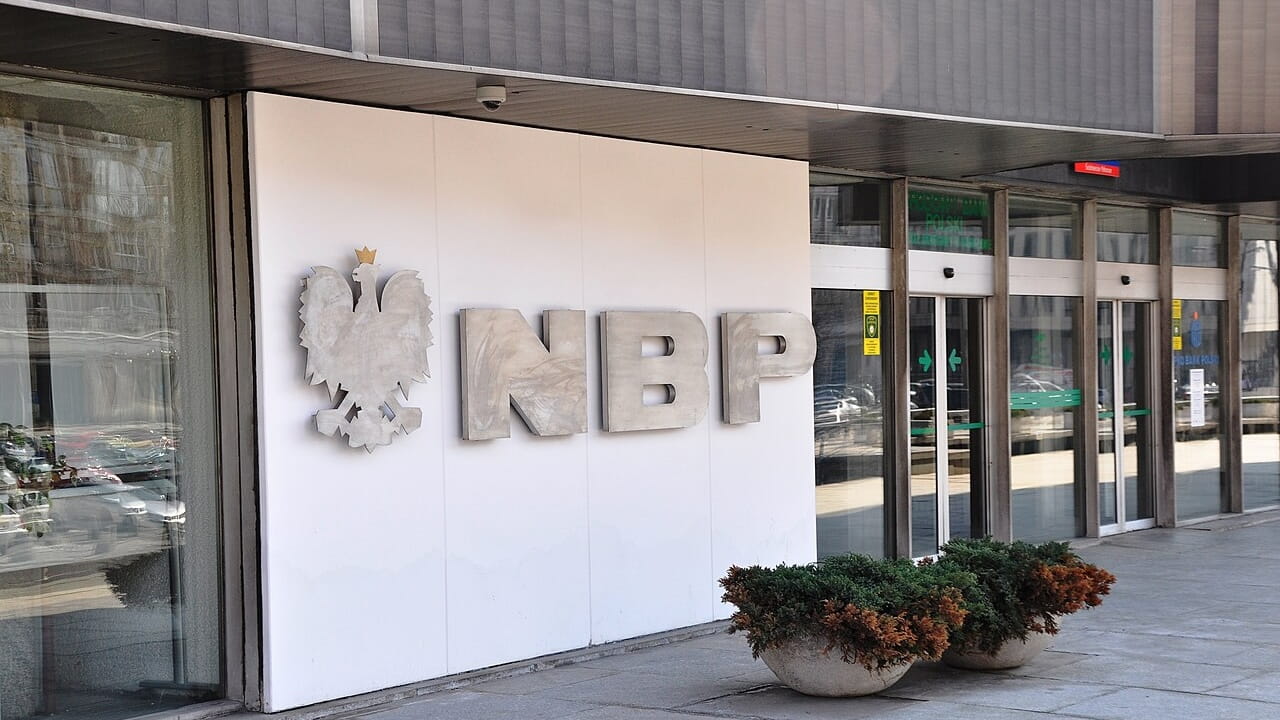
(Mike Maharrey, Money Metals News Service) In January, the National Bank of Poland announced plans to buy another 150 tonnes of gold, bringing its reserves to 700 tonnes.
Last week, National Bank of Poland (NBP) Governor Adam Glapiński said he would leave the door open for additional purchases now that it has reached that 700-tonne goal.
Poland purchased more gold than any other central bank in 2025 (based on officially reported data), and it continues to lead all buyers in 2026. So far this year, the National Bank of Poland has increased its gold reserves by 123 tonnes. As of the end of September, it held 673 tonnes of the yellow metal.
At a press conference last Thursday, Glapiński said the NBP hit its 700-tonne goal last month, implying it bought 27 tonnes of gold in October.
“We had set a target of 700 tonnes, and we have achieved it, though the world is, of course, changing. We monitor what other countries are doing and monitor potential threats to Poland.”
The official October data has not been released.
Last year, Poland’s gold holdings eclipsed those of the European Central Bank. Officials say Poland’s gold reserves are valued at 356 billion zlotys ($91.4 billion).
To put the country’s gold reserves in context, the NBP only held 14 tonnes of gold in 1996.
When asked what comes next, Glapiński said, “We need to sit down and think it through calmly.”
“I see no reason why we should stop buying gold. I believe that our gold reserves should grow in line with our overall reserves.”
Poland has raised its gold reserve target three times in the last few years. It initially announced an increase in its gold holdings in 2021. Then, in 2024, Glapiński indicated the central bank planned to increase its gold holdings to 20 percent of its reserves.
“This makes Poland a more credible country; we have a better standing in all ratings, we are a very serious partner, and we will continue to buy gold.”
When he initially announced plans to expand Poland’s gold reserves, Glapiński called gold “the only safe investment for state reserves,” in these “difficult times of global turmoil and the search for a new financial order.”
In a 2024 interview, Glapiński emphasized that gold is not directly tied to any national economic policies, is a safe haven during crises, and retains real value over the long term.
“It is a symbol of stability that enhances our credibility in the eyes of investors and foreign partners.”
According to the NBP’s website, gold is not a liability and carries no counterparty risk.
When he announced the initial plan to expand its gold reserves in 2021, Glapiński said holding gold was a matter of financial security and stability.
“Gold will retain its value even when someone cuts off the power to the global financial system, destroying traditional assets based on electronic accounting records. Of course, we do not assume that this will happen. But as the saying goes – forewarned is always insured.
“And the central bank is required to be prepared for even the most unfavorable circumstances. That is why we see a special place for gold in our foreign exchange management process.”
Glapiński also pointed out that “gold is free from credit risk and cannot be devalued by any country’s economic policy.”
“Besides, it is extremely durable, virtually indestructible.”
Poland has also brought some of its gold home. In 2019, the Polish central bank covertly moved 100 tonnes of gold from London vaults to a facility in Warsaw.
Glapiński said most of the country’s gold is in London. Ultimately, he wants to store a third in New York, one-third in London, and the rest in a vault in Poland.
“The issue with our own vault is that we do not currently hold that one-third share there, because these rapid acquisitions take place in London and that’s where the majority is.”
Glapiński said the bank will increase the amount of gold held at home after it completes the renovation of a Warsaw building that will house “a state-of-the-art, large-scale vault.”
Mike Maharrey is a journalist and market analyst for Money Metals with over a decade of experience in precious metals. He holds a BS in accounting from the University of Kentucky and a BA in journalism from the University of South Florida.