


(Luis Cornelio, Headline USA) National news outlet Semafor came under fire after acknowledging that it had paid at least three political operatives to help recruit high-profile guests for its events and summits. The news website, however, did not initially disclose the financial arrangements in stories that mentioned the operatives.
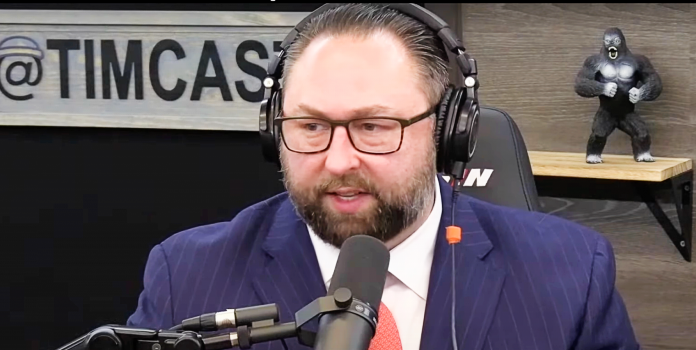
While the payments raised questions about potential conflicts of interest and journalistic ethics, much of the criticism directed at Semafor appeared to focus on one of the three operatives who had been retained by the outlet: Jason Miller.
Miller, a longtime adviser to President Donald Trump, runs his own political consulting firm and has no official role in the Trump administration.
Notably, Semafor had also retained Adrienne Elrod, a prominent Democratic operative who worked for the presidential campaigns of Joe Biden, Kamala Harris and Hillary Clinton.
The third operative paid by Semafor was Kellyanne Conway, who served as a senior adviser to Trump in his first term.
Semafor was founded in 2022 by former New York Times media columnist Ben Smith (now editor in chief) and former Bloomberg CEO Justin B. Smith.
Reached by email on Saturday evening, Ben Smith did not directly address Headline USA’s questions about the criticism and instead directed this outlet to spokesperson Meaghan Koppel.
Koppel acknowledged the payments after The Washington Post began inquiring about a $100,000 payment from Semafor to Miller’s firm, Scipio Strategic.
The news company said the payment was tied to its World Economy 2026 summit in Washington, D.C. Miller had been retained to assist with booking Trump officials.
Koppel defended the arrangements as standard practice among media companies.
“Like many other media companies, Semafor works with bookers and consultants across the political spectrum to secure speakers for our events. We don’t pay speakers. Both our speakers and guests come for tough, fair, and independent interviews,” Koppel told the Post.
Koppel clarified that Semafor did not quote Miller or mention him “during our engagement.” She acknowledged, however, that Semafor “did make two passing references of him in business coverage.”
Koppel added that Semafor updated the Miller stories with disclosures. Stories about Elrod and Conway received similar updates.
The disclosures triggered criticism from fellow journalists and media personalities, many of whom have ties to Semafor’s competitors.
Headline USA found no apparent criticism of Semafor’s decision to also pay Elrod, a Democratic operative.
Paul Farhi, a former longtime writer for The Washington Post, called the payment arrangement “ethically dubious.”
Justin Baragona, a columnist for leftist outlet Zeteo, dismissed Semafor’s explanation as “straight up horseshit.”
Grant Stern, the executive editor of Occupy Democrats, suggested Semafor was part of “Hyper-corporate journalism.” Podcast host Keith Olbermann declared: “This is called a bribe.”
By contrast, former CNN political analyst Chris Cillizza defended the payments, arguing that they were “not complicated” given Semafor’s events business.
“To get big name guests, you need people who can convince them to do these events,” Cillizza wrote. “Miller has turned himself into that person for Trumpworld.”