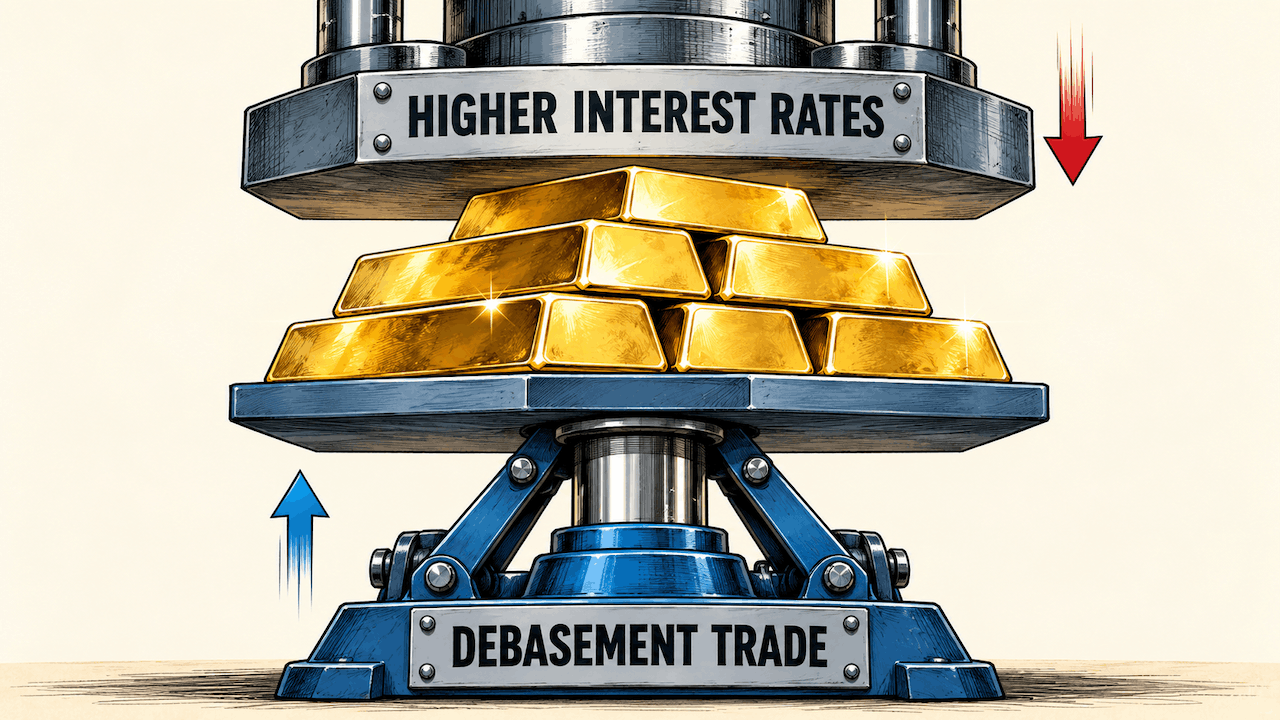
Bond yields have risen to levels not seen since 2007. This has created significant headwinds for gold and silver; however, the metals have shown more resilience than one might expect in this environment.
Higher interest rate environments have traditionally been bearish for gold and silver. Since they are non-yielding assets, owning metals when interest rates are high comes with an opportunity cost.
But despite persistently rising bond yields, gold has maintained support over $4,000 per ounce.
Why?
According to a Reuters report, a “post-2022 demand premium is proving more durable than expected.”
And what is driving this demand premium?
The debasement trade – an investment strategy that emphasizes holding tangible assets such as gold, silver, and other commodities to protect against the decline of fiat currencies caused by monetary debasement.
The debasement trade took off after the U.S. weaponized the dollar after Russia invaded Ukraine, and it’s getting a boost from worries about the U.S.’s fiscal malfeasance.
Reuters explained it this way.
“Typically, gold – a non-yielding asset – moved largely in the opposite direction to real yields, and from 2000 to Russia’s 2022 invasion of Ukraine, interest rates and U.S. dollar movements explained most of bullion’s price. That relationship changed after Western sanctions froze roughly half of Russia’s official reserves. Central banks, particularly in emerging markets, accelerated efforts to diversify reserves away from dollar assets, supporting gold even when higher yields would normally weigh on the price.”
MKS PAMP metals specialist Nicky Shiels told Reuters the “debasement and de-dollarization” premium has risen from about $120 an ounce before 2022 to an average of more than $1,000 since then.
She said it currently stands at roughly $840 an ounce.
Morgan Stanley commodities strategist Amy Gower agrees, saying gold’s ability to hold $4,000 per ounce despite rising yields signals another significant demand factor at play.
Valent Asset Management portfolio manager Jay Tatum compared gold to a “compressed spring.”
“The temporary headwinds for gold are enormous and, in almost any other environment, would probably have pushed prices significantly lower. Prices are not lower because underlying factors are so strong.”
The war with Iran has compressed that spring.
It’s as if the war put a lid on the gold market. Every time there is even the slightest hint the conflict could resolve, gold spikes. Conversely, every time we get bad war news, gold gets pounded lower. This indicates that when the war ends once and for all and the lid comes off, gold could take off very quickly.