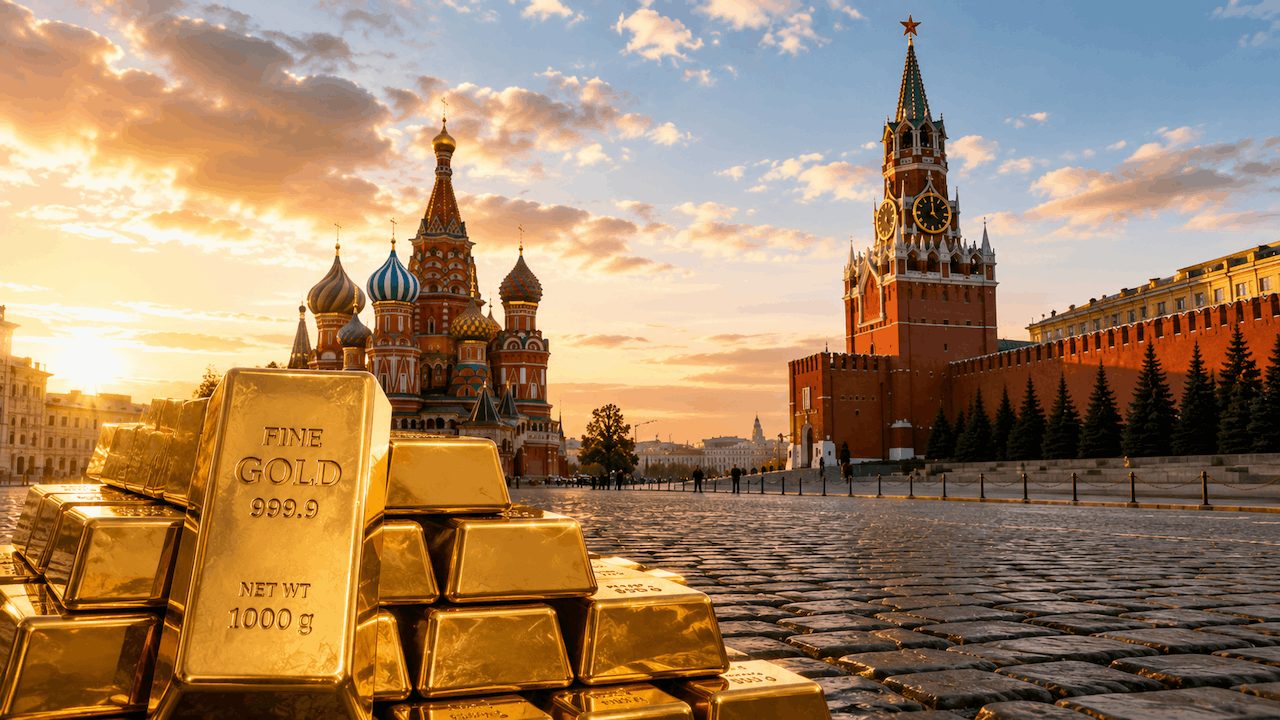
(Mike Maharrey, Money Metals News Service) Many central banks are stacking gold. However, there is a notable seller – Russia.
This underscores the fact that governments hold gold for a reason.
According to the latest data compiled by the World Gold Council, Russia has sold around 44 tonnes of gold since the beginning of the year. The Russians are tapping into their gold reserves to fill budget holes as the ongoing war with Ukraine and economic sanctions strain the country’s economy.
The Bank of Russia has sold gold every month this year, decreasing its reserves by nearly 10 tonnes in June alone.
Economists estimate Russia has raised about $5.6 billion through its gold sales.
Russia’s government budget has grown to around ₽7 trillion ($89 billion).
The Moscow Times noted that the drawdown of Russian gold reserves is the largest in decades, including during the pandemic era.
“Even during the pandemic, when authorities sold assets from foreign exchange reserves to support the ruble and the budget, the Central Bank sold six times less gold—7.6 tonnes—between July 2020 and April 2021. As of July 1, 2026, the Central Bank’s gold reserves had fallen to 2,283 tonnes (73.4 million ounces), the lowest level since February 2020.”
The Times said the central bank has been selling gold into the domestic market. The Russian Finance Ministry has been conducting similar gold sales through the National Wealth Fund (NWF).
Freedom Global analyst Vladimir Chernov explained the mechanism behind the Bank of Russia gold sales.
“When oil and gas revenues fall below the level stipulated by the fiscal rule, or when fund assets are allocated for domestic investment, the Bank of Russia carries out offsetting transactions involving liquid reserve assets. In doing so, the Central Bank is executing the technical aspect of the mechanism rather than making a specific decision to cover the budget deficit by selling gold.”
Chernov pointed out that the very nature of gold makes these transactions possible despite aggressive sanctions that have effectively cut Russia off from the global economy.
“Gold is suitable for such operations because it is stored in Russia, remains accessible to the regulator under sanctions, and has appreciated significantly in recent years.”
Russia was prepared for this.
The Bank of Russia launched a gold buying spree beginning in 2014. Over the next six years, the Russian central bank increased its reserves by around 40 million ounces (1,244 tonnes).
During this period, the price of gold ranged from $1,100 to $1,500 an ounce.
When the war began, Russia held about half of its reserves in dollar, euro, and pound sterling assets. The other half was in yuan and gold, which remain accessible.
The Russians also made a shrewd move before the invasion of Ukraine, transferring their National Welfare Fund holdings into yuan (60 percent) and gold (40 percent). A RAND Corporation study notes, “This was an indication that Russia was preparing for increased Western economic pressure. During the war, Russia has been using these funds to support the budget.”
Russia’s recent selling reveals just why central banks hold gold. It serves as a long-term reserve free from counterparty risk. And since its value is recognized around the world, it can serve as an emergency fund – even if you’ve been locked out of the global dollar-dominated financial system.
Mike Maharrey is a journalist and market analyst for Money Metals with over a decade of experience in precious metals. He holds a BS in accounting from the University of Kentucky and a BA in journalism from the University of South Florida.